Showing posts with label Japan. Show all posts

Sunday, May 17, 2026

Diary Publishing Boom Reflects Desire to Find Connection with Strangers, Read Honest Thoughts

From japannews.yomiuri.co.jp

By Yuki Kobayashi

Reading and collecting ordinary people’s diaries is rising in popularity. Writers selling their own diaries is a booming business. An increasing number of books and magazines about the appeal of reading diaries are also being published and there is even a plan to establish a physical museum dedicated to collecting diaries.

Publishing own diaries


Nikkiya Tsukihi in Setagaya Ward, Tokyo, displays the diaries of ordinary people published in book form as well as published diaries by celebrities


Diaries are familiar to Japanese people, as keeping one is a typical summer vacation homework assignment.

“There is a phenomenon that could be called a ‘diary book’ publishing boom, in which people publish their own diaries in book form,” said Reina Hisaki, director of Nikkiya Tsukihi, a store specializing in diaries that was established in Tokyo’s Shimokitazawa district in 2020.

Hisaki says that the number of applications to participate in the store’s biannual diary book sales events and to sell diaries at the store have both surged to several times the numbers seen when the store was established.

This trend is partly driven by the increased ease of book production, facilitated by the widespread use of personal computers and improved services from printing businesses. There is also a growing tendency for people who want to express themselves through writing to choose the diary form, as it is a familiar format.

Recently, diaries published in book form that are compiled from messages on dating apps or book reviews have become popular reads.

When asked about the appeal of reading diaries, Hisaki said, “Even when you read a stranger’s diary, you can find some connection with that person and gain the sense that their life somehow exists in parallel with your own life.”

With today’s online culture, which tends to focus on winning debates, reading people’s differing views in diary form discourages outright rejection of those ideas but rather makes us recognize the simple truth that “there are many different kinds of people,” Hisaki said.

Diaries may have the power to help us re-examine our relationships with others and with society as well, he added.

In December, Hisaki launched the quarterly magazine “Kikan Nikki” (Quarterly diary) as editor-in-chief, intending to spread the appeal of diaries further. The magazine features diaries by cultural figures and essays on the charm of keeping a diary. It has sold well and is already in its third printing.

Library of datebooks

The Yomiuri Shimbun
                                            Masafumi Shirado talks about the appeal of reading diaries and the like

Freelance programmer Masafumi Shirado published a book titled “Tanin no Techo wa ‘Mitsu’ no Aji” (The secret pleasure of peeking at others’ datebooks) in shinsho format by Shogakukan Inc. in October.

Since 2014, Shirado has collected handwritten diaries and the like, such as datebooks and appointment books, each filled with their owners’ freely expressed thoughts and ideas. He wrote the book as a result of his serious exploration of why reading ordinary people’s diaries is so interesting.

While the book title implies “peeking,” Shirado states that the appeal of reading diaries goes much further. Diaries and the like, intended to remain private, record how personal time and space were used and how the writers felt. The readers may also find that “intimate details” such as the writer’s writing habits, styles and changes in handwritten letters are naturally exposed.

“As you enjoy looking at them, you’ll probably discover how interesting humans are and realize that you must respect individuals,” he said.

To let people “hold in their hand and appreciate” such diaries, Shirado established the “Techorui Toshoshitsu” (Library of diaries and the like) initially in Shibuya Ward, Tokyo, in 2017. It relocated to Minato Ward, Tokyo, in February.

As the library’s collection has grown to over 2,000 volumes and he has some collaborators, he established a branch in Fujisawa, Kanagawa Prefecture, in July.

In recent years, as many people feel it is harder to express their true feelings online where aggressive feedback often follows, keeping a diary has become meaningful again, Shirado says.

Easing social media fatigue

The Yomiuri Shimbun
                                   The “Diary Museum” makes portions of its collection available on its website

Yusuke Kaneko, a company employee, launched a website called the “Diary Museum” in 2021 during the COVID-19 pandemic.

Kaneko became fascinated with diaries in high school, after reading his grandfather’s wartime diary following his death.

Realizing that his grandfather had narrowly survived the war, Kaneko had the strong feeling that “it is not true that only the lives of the people featured in textbooks are interesting. The records of everyone’s lives are worth preserving.” He then conceived the idea of collecting diaries.

Kaneko plans to establish a physical museum by 2032, and is preparing by actively purchasing diaries from ordinary people.

He has so far collected about 200 diaries from 60 people, some of which he has already released online.

“Diaries don’t make money. When the writers die, their diaries are usually discarded,” Kaneko said. “I didn’t want collecting diaries to end as just a hobby. I created the online museum to build a system for preserving as many diaries as possible. I want it to continue even after I’m gone.”

Kaneko lists the appeal of diaries, including the power of handwriting, giving a glimpse into the prices and social climate of the era in which they were written, and putting the readers’ worries into perspective.

“On social media it feels like people only show carefully crafted highlights of special days, and the writing is somewhat affected. Diaries are the complete opposite. That’s probably why tired people find reading diaries a fresh, enjoyable experience, and why they find it soothing.”

Liberation from norms

According to Associate Prof. Yusuke Tanaka, a diary culture specialist at Meiji Gakuin University, “diary booms” have occurred multiple times since the end of World War II. Around 1980, “kokan nikki” (exchange diary), or taking turns to write in a shared diary, was popular among young people. In the 2000s, the blogging style boomed.

Tanaka says that reading ordinary people’s diaries is a key feature of the recent boom.

He praises Shirado’s “Techorui Toshoshitsu” library, saying: “It makes people realize a little-known fact that things written by people are very interesting, even fragmentary records written by ordinary people. It is a sharp point of view.”

Tanaka also says that in the current situation, diaries by ordinary people are being published one after another, which is a significantly different trend from the past.

Previously, it was primarily great politicians, famous authors and other celebrities whose diaries were published. Aside from their narratives being considered major historical testimonies, the contents of these diaries satisfied people’s desire to glimpse the writers’ unique experiences or attributes, for example.

In contrast, in recent years, the contents of some published diaries have diverged significantly from the traditional style of candidly writing facts to include elements of creativity.

“Their writers create and accept their own stories without trying to attract business-oriented publishing companies, and share them with others by influencing each other. People are becoming liberated from the authority and norms related to writing,” Tanaka said, analysing this recent phenomenon.

https://japannews.yomiuri.co.jp/society/general-news/20260517-327919/

Wednesday, April 15, 2026

Medieval Japanese Diary Helped Scientists Trace a Historic Solar Storm

From discovermagazine.com

Learn how scientists are combining Medieval literature and modern scientific techniques to study space weather 

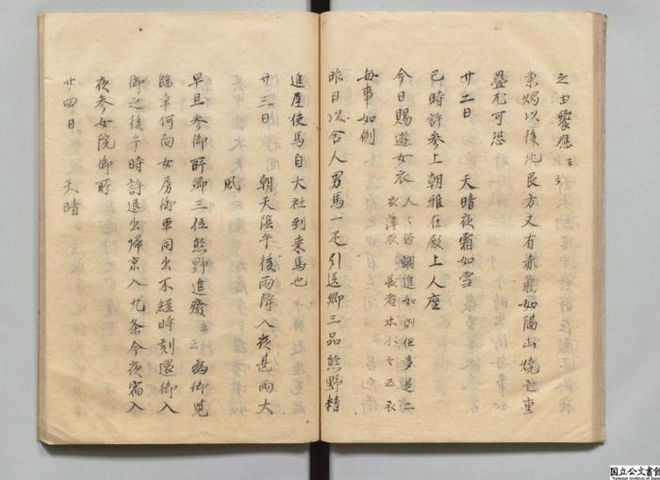
Fujiwara no Teika (Sadaie) was an influential poet and courtier who documented the events of his life in the twelfth and thirteenth centuries in Japan. It is in one of his diaries, Meigetsuki, that he recorded an extraordinary event that took place in 1204 C.E.: for three days straight, Kyoto’s sky was cast in red light.

Now, researchers at the Okinawa Institute of Science and Technology (OIST) in Japan have used Teika’s diary to determine the timing of a weather event that occurred almost a thousand years ago. By combining medieval literature with modern scientific approaches, the team discovered a sub-extreme solar proton event occurred between the winter of 1200 C.E. and the spring of 1201 C.E. — a few years prior to Teika’s red lights over Kyoto.

The research published in the journal Proceedings of the Japan Academy, Series B, also led to another surprising discovery. Solar cycles then were markedly shorter than they are today.

Detecting Historic Solar Proton Events

illustration of Japanese poet Fujiwara no Teika.

Illustration of Fujiwara no Teika.

(Image Credit: Kikuchi Yosai)

Violent activity on the sun can trigger large expulsions of plasma (coronal mass ejections), which in turn can cause solar particles to hurtle towards Earth at a pace close to the speed of light (solar proton events).

Our magnetic field provides an effective shield, but some particles make it through the barrier, entering at weak points near the poles or when space weather is particularly strong. These particles interact with atmospheric gases, forming carbon-14 and beryllium-10 compounds.

By measuring and dating traces of these compounds, scientists have been able to calculate the timings of particularly powerful solar proton events. The largest detected to date occurred in 775 C.E., 5259 B.C.E., 7176 B.C.E., and 12350 B.C.E., but smaller, sub-extreme events (10 to 30 percent the size of extreme events) are thought to occur more frequently.

Combining Literature With Science

Like their more extreme counterparts, sub-extreme solar events can be timestamped with high precision by measuring carbon-14 compounds in trees. The problem is that the process is incredibly time-consuming and involves a lot of repetition, and so the challenge becomes knowing where to look.

To narrow their options, the team turned to literature. Teika’s diary included descriptions of what appears to be an aurora in February 1204 C.E. While aurora and solar proton events are not directly linked, both are associated with high levels of solar activity and often occur at the same time.

                                        A red aurora seen from Engaru, Hokkaido, Japan.(Image Credit: Tomohiro M. Nakayama) 

The particularly striking aspect of this observation was its length: “Each aurora will disappear within 24 hours, so this three-day event suggests recurrent large solar flares had occurred,” Hiroko Miyahara, Professor Hiroko Miyahara from the Solar-Terrestrial Environment and Climate Unit at OIST, told Discover.

Other historical documents from China, Korea, and Japan record large sunspots and red aurorae at various points throughout 1200 to 1205 C.E., again indicating a period of intense solar activity.

The team analysed concentrations of carbon-14 found in buried asunaro trees in the northern part of Japan’s main island. While there was nothing that could be specifically linked to the three-day aurora, there was a notable spike that occurred sometime towards the end of 1200 C.E. and the beginning of 1201 C.E., suggesting a sub-extreme solar flare. The team was also able to use the data to reconstruct solar cycles during that period.

“Today, the sun’s activity fluctuates over eleven-year-long cycles, but we’ve found that the cycle was just seven to eight years long back then, indicating a very active sun,” Miyahara said in a statement. “The SPE we have dated occurred at the peak of one of these cycles.”

13th century diary from Japan

A hand-copied version of Fujiwara no Teika’s diary, Meigetsuki. (Image Credit: National Archives of Japan)

Predicting Future Events and Why It’s Important

While Artemis II was a success, solar proton events could derail future missions and leave astronauts at risk of hazardous radiation.

“Radiation exposure caused by solar proton events is the greatest barrier to human space exploration,” Miyahara told Discover. “So, it is essential to improve our prediction capabilities, particularly for large events.”

Miyahara hopes the research will improve prediction capabilities. Meanwhile, the team hopes to continue combining literature and science to learn more about solar activity and its influence on weather and climate.

“There are several more records of low-latitude aurorae in literature in Japan,” said Miyahara. “Our venture has just begun.”

https://www.discovermagazine.com/medieval-japanese-diary-helped-scientists-trace-a-historic-solar-storm-48954

Thursday, October 2, 2025

VOX POPULI: The human urge to share our lives will outlive any platform

From asahi.com 

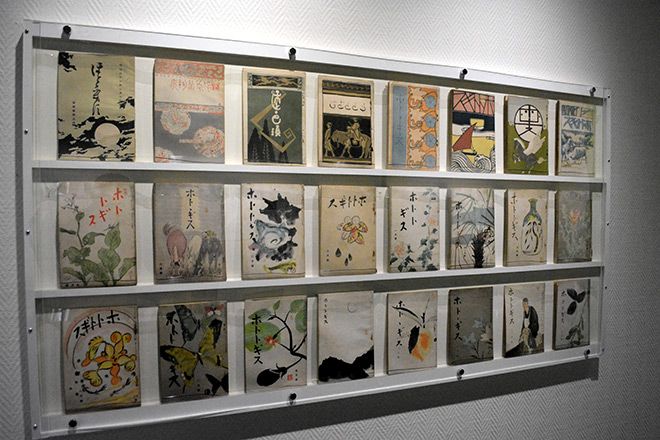
For a time during the Meiji Era (1868-1912), the Japanese haiku magazine Hototogisu invited readers to keep a diary for a week and submit it for publication.

Here is a school teacher’s entry on the 11th of an unspecified month: “Jolted awake at 6 a.m. by wife who told me the alarm had sounded. Dashed off and reached the school five minutes before eight o’clock.”

None of the published journals had anything to do with news-making events or some celebrity trying to look “just like anyone.”

Among the authors were a foundry worker and a parent with a sick child. They were all just ordinary citizens telling the world about their daily goings-on. What does this mean?

Photo/IllutrationCovers of the haiku magazine Hototogisu, published from the Meiji to early Showa eras, in Sapporo, Hokkaido, in April 2024 (Asahi Shimbun file photo)

Come to think of it, I believe the desire to record—and share with many people—one’s thoughts, impressions of things one has seen and so on, has always been ingrained in human nature.

In our digital society, the fulfilment of that desire was made dramatically easier by blogs.

Gaining prominence in the early 2000s, they grew popular as a digital journal and a tool for sharing one’s messages on the internet.

In Japan, an anonymous blog by a desperate young mother caused a national sensation. Her child had been denied admission to a day care facility, and she took her fury out on the nation: “Day care didn’t take in my kid. Drop dead, Japan!!!”

But all things come and go.

I just read the news that gooBlog is shutting down in November. Unless something is done, all the data will be lost.

Line and Yahoo have already discontinued their blog services, seemingly signifying “the end of the blog era.”

I am sure many people have found encouragement in blog entries by authors who were in predicaments similar to theirs, such as when facing work-related issues, struggling with child care, having health problems, and so on.

It is truly unfortunate to lose all those records of “invisible words” that bound one to someone else.

Columnist Takashi Odajima (1956-2022) once noted, “The motivation to write is maintained by the act of writing.”

When I struggle with writer’s block, I remember his words and sometimes visit his blog.

The Asahi Shimbun, Oct. 2

https://www.asahi.com/ajw/articles/16065964

Friday, August 29, 2025

Late Hiroshima girl's diary behind drive to preserve A-bomb Dome

From mainichi.jp/english

HIROSHIMA -- Words in a diary left by a teenage girl before she died of acute leukemia 15 years after the Hiroshima atomic bombing became a driving force in preserving the Atomic Bomb Dome in this city's Naka Ward.

While the dome, which withstood the intense heat rays and blast from the bombing, has passed down the devastation to the present day, some locals once called for tearing it down due to the ruins reminding them of horrific memories. The diary written by the girl before she passed away at age 16 pushed the movement forward toward the dome's preservation.

The girl was Hiroko Kajiyama (1944-1960). She was 1 year old when she was exposed to radiation from the atomic bomb at her home in Hiroshima's Hiratsukacho district, now part of the city's Naka Ward, about 1.2 kilometers from the bomb's hypocenter. Unscathed, she grew up healthily, until she developed acute leukemia at age 16 and subsequently died. On Aug. 6, 1959, around eight months before her passing, she wrote in her diary:

"Will that painful Industrial Promotion Hall (present-day A-bomb Dome) alone forever remind the world of the dreadful atomic bomb?"

Ichiro Kawamoto, who attended the memorial service on the seventh day after her death, was handed her diary from her mother, and this passage caught his eye.

Hiroko Kajiyama is seen in this photo provided by the Hiroshima National Peace Memorial Hall for the Atomic Bomb Victims, located in Hiroshima's Naka Ward

Kawamoto, who was exposed to radiation upon entering Hiroshima after the bombing, was calling for donations from people across the country to erect a statue commemorating Sadako Sasaki, who died of leukemia at age 12 in 1955, 10 years after being exposed to the atomic bomb in Hiroshima. The statue, called "Children's Peace Monument," now stands at Peace Memorial Park in the city. Kawamoto also later served as a facilitator for the "Hiroshima Orizuru no Kai," a group of elementary, junior high and high school students in Hiroshima.

Back in those days, there was deep-seated sentiment among residents of Hiroshima, such as, "I feel pained every time I see the dome, which reminds me of 'that day.'" The Hiroshima Municipal Government was also unenthusiastic about preserving the ruins.

Kawamoto, together with children of the Orizuru no Kai, launched a signature and donation drive to keep the dome alive.

Eiko Mikami, 78, who joined the campaign as a high school student at her friend's invitation, stood on the streets to raise donations after school and on weekends alongside Orizuru no Kai members. She often faced criticism, such as, "Why are you preserving the dome, which evokes that horrific memory?"

Mikami nevertheless continued her campaign with a sense of urgency, thinking, "If the A-bomb Dome is gone, the memory of the war will be forgotten." She recalls that Kawamoto said, "Out of sight, out of mind." Kawamoto died in 2001 at age 72.

Their steady efforts eventually began to move society. In 1965, then Hiroshima Mayor Shinzo Hamai suggested his intentions to preserve the dome, followed by a Hiroshima Municipal Assembly decision in 1966 to permanently keep it. Mikami, now a resident of Hiroshima's Minami Ward, recalls thinking at the time, "The wishes of Kajiyama have come true." After preservation and anti-seismic work, the A-bomb Dome was registered as a World Heritage site in 1996.

Masahiro Terada, a junior high school classmate of Hiroko Kajiyama, is seen in front of the Atomic Bomb Dome in Hiroshima's Naka Ward on Aug. 20, 2025. (Mainichi/Deockwoo An)

While Kajiyama's words significantly impacted the drive to preserve the dome, she is not very well known even in Hiroshima, her hometown, compared to Sadako Sasaki, famous both at home and abroad for paper cranes she folded to pray for her recovery.

In 2019, a group of three junior high school classmates of Kajiyama published a book about her at their own expense out of their wishes to let her be known globally for serving as a catalyst for the dome's preservation. The classmates spent around six years interviewing those who had interacted with Kajiyama, gathering newspaper articles of the time, and compiling their findings into the book, whose title roughly translates to "The A-bomb Dome and Hiroko Kajiyama -- Hiroko's diary and the preservation of the A-bomb Dome."

Masahiro Terada, 82, one of the three classmates who edited the book, recalls that Kajiyama was "full of energy" in their junior high school days, being on good terms with everyone and having a vibrant personality. Terada says he was unaware Kajiyama had been exposed to the atomic bomb.

An entry in her diary dated Aug. 6, 1959, states, "They say people exposed to the atomic bomb would die early. Whenever I hear things like that, I feel I might die tomorrow, or even today."

It was years later that Terada, now a resident of Hiroshima's Asaminami Ward, got to know Kajiyama's feelings despite being healthy at the time. "It is as if she were foreseeing her own death. She was insightful," Terada thought.

The book records her upbringing and how she was exposed to the atomic bomb, as well as how her diary led to the preservation of the A-bomb Dome. The three classmates initially planned to print 100 copies to distribute to fellow classmates, but after orders flooded in from researchers, libraries and others, they have printed a total of 400 copies by now.

"Had there not been that diary, the A-bomb Dome would have been demolished. It is precisely because the dome exists that the tragedy of the atomic bombing can be passed down to future generations," Terada believes.

(Japanese original by Deockwoo An, Hiroshima Bureau)

https://mainichi.jp/english/articles/20250827/p2a/00m/0na/009000c 

Sunday, May 25, 2025

Edging Toward Japan: Samuel Pepys and Sei Shonagon - the ultimate love match

From mainichi.jp/english

By Damian Flanagan

    A few weeks ago, I attended a rather unusual concert in Cambridge, England. All the pieces of music dated from the time of the famous English diarist Samuel Pepys (1633-1703). My knowledge of the pop songs of the 1660s is not what it should be and I didn't have a particular strong conception of what music from this period actually sounds like.

    We are talking here about going back to a time before virtually all the famous classical composers -- before Beethoven, before Mozart, even before Bach. As it turns out however, the music of the 17th century gets on perfectly well without all of them and is teeming with beautiful pieces and charming songs played to the accompaniment of the strangest of instruments.

    We started off with some songs played on the spinet, a kind of early harpsichord, and then the musicians produced an extraordinary instrument called a "theorbo," which is an extravagantly oversized lute. Pepys himself loved music and probably owned the very spinet on which the songs were performed, and ordered the making of a "theorbo" which he proudly declared in his diary to be as good as any in the country. When not writing his diary or helping to run the British admiralty (his day job), he even composed songs himself. 

    Of late, I've found myself getting more and more interested in Pepys and his world. Years ago, I listened to actor and director Kenneth Branagh reading extracts from the voluminous diary (which covers the years 1660-69) and recently I've been reading Claire Tomalin's prize-winning biography of Pepys, "The Unequalled Self".

    What is fascinating about Pepys is partly the turbulence of the time he lived -- the nine years of the diary cover the chaos and anxiety in England following the death of Oliver Cromwell, the initially jubilant restoration of Charles II, the Great Plague of 1665 and the Great Fire of London in 1666, and the war against the Dutch amongst many other happenings. But amidst all these mammoth events, there is the even greater fascination of being immersed in the domestic minutiae of Pepys' daily life, sharing with him his passions and disappointments, his surreptitious affairs and ambitions, his bowel movements and flatulations, his moments of anger, grief and joy.

    Tomalin recounts that Pepys was an astoundingly good diarist because for him every day of life was an adventure in human consciousness, filled with the sheer thrill of being alive, of being able to sense and enjoy everything the world had to offer -- its food, its music, its voluptuous women, its poetry, its conversation and company, its seasons and heats and frosts, and, not least, his cherished books. All these things were part of his all-consuming embrace of life that makes him a thrilling literary companion.

    Samuel Pepys (Portrait by John Hayls, 1666. Public domain)

    These days, if I feel like disappearing for a while into an alternate universe, then I might turn to Pepys and transport myself back into the 1660s. Yet Pepys is not the only explorer of consciousness that I have turned to of late.

    On recent trips to Japan I wanted to introduce my two daughters to a writer who might capture their interest and so began listening with them to a reading (in English) of "The Pillow Book" by Sei Shonagon. As we had our breakfasts every morning in Japan, we would be transported to Sei Shonagon's world of the Imperial Court in Kyoto around the year 1,000 where Shonagon was a courtier. We would enjoy her sometimes caustic and always beautiful observations on the men and women around her, the changing colours of the mountains, the preferred etiquette of her lovers, the seasonal colours of the mountains, the sound of the flute in the night air...

    I must admit that I am a fairly recent covert to Sei Shonagon. In my younger days, I had a far greater appreciation of Shonagon's contemporary and rival, Murasaki Shikibu, the author of the monumental "The Tale of Genji". Shonagon seemed to me much the inferior of the two. But rediscovering "The Pillow Book" with my daughters, I now see that Shonagon is a much more fascinating, individualistic personality than I first appreciated.

    She is never less than her own woman and, like Pepys, is an admirably honest and perceptive contemplator of the sights, sounds and flavours of her own existence. Unlike Pepys, she was not keeping a day-to-day journal, but rather a compendium of observations on diverse subjects that cumulatively add up to an almost cubist portrait of a world now vastly lost in time.

                                                                        Sei Shonagon (Painting by Uemura Shoen, 1917-18. Public domain)

    Sitting in an autumnal chapel in Cambridge, England, listening to the music of the 1660s, I found myself strangely thinking about Sei Shonagon and about how fundamentally similar she and Samuel Pepys were. In their professional lives, they were robust and worldly, but in their private lives they were seekers of (sometimes illicit) joy and things of beauty, candid in their assessments of themselves and others.

    I was thinking that this strange linkage of Samuel Pepys and Sei Shonagon was a whimsical idea all my own, when my daughter surprised me at breakfast the next morning by suddenly saying, "Last night I dreamt of Sei Shonagon and Samuel Pepys..."

    When I responded that I had been thinking about them too and that they would have made a great couple, my 14-year-old daughter recoiled in distaste at the idea. "Ugh!" And yet I'm still thinking it could have been a match made in heaven, or in hell, to put two such quick-witted, intelligent and highly opinionated minds together.

    We live in a world in which, to a tiresome degree, people are compartmentalised according to their nation, their race, their gender, their sexuality. Yet sometimes, people from vastly different cultures at completely different historical periods can appear profoundly similar in their thrilling engagement with the sheer mystery of being alive. We make a mistake, I suspect, when we keep Sei Shonagon cloistered in a room called "Heian Court Literature", alongside (to her probably insufferable) companions like Murasaki Shikibu.

    Pepys himself, I suspect, would have found boundless joy in the colours and beauty of the Heian court, stealing through the night-time garden of a Heian lady, intent on begging entrance for a moonlit tryst. While Sei Shonagon longs, I think, to burst into a wider world, to explore Pepys' library of Western books, to smoke a pipe and drink some wine, and sing songs of love while Samuel flirtatiously accompanies her on the theorbo.

    https://mainichi.jp/english/articles/20250517/p2a/00m/0op/004000c