Showing posts with label Sylvia Plath. Show all posts

Monday, March 24, 2025

A deep dive into diaries

From varsity.co.uk/arts

Sadia Batool asks how we should read the diaries of great artists and whether or not we should read them at all 

In a practical criticism supervision on Mark O’Connell’s fourth issue of Tolka: The City of the Dead, the topic of diary writing came up. We began talking about the age at which we each took to the habit. One of my peers recalled first writing during the pandemic and imagining her work being featured in future history textbooks or archives. It is this thought that calls into question the very founding principle of the diary – the belief in its own privacy. If we’re beginning to write with publication in mind, the intimacy and freedom that distinguishes the diary as its own thing ceases to exist.

Instead, we might define the piece in terms of its commitment to the calendar. The English ‘diary’ or ‘journal,’ German ’Tagebuch,’ French ’journal intime’ and Russian ’dnevnik’ all derive from the same root word, meaning ‘day.’ Even as the addressee becomes ambiguous, the first person quotidian narrative style remains. With the exception of these qualities, it is difficult to say anything about diaries which is true for almost all of them. We realise this when we try to categorise by genre. Take its imbalances between literary and historical writing, the spontaneity of reportage and reflectiveness, selfhood and events and subjectivity and objectivity, for example. By disturbing attempts to summarise its characteristics within formalised boundaries, the diary proves to be a misfit form of writing.

Having derived from bookkeeping and the practice of daily religious self-examination, the early modern diary can be seen as an account of one’s personal economy – financial, emotional, and spiritual. In the age of the Enlightenment, Puritans and Pietists used diaries to monitor their sinful selves (and as far as the latter was concerned) to bring about an internal conversion that might lead to salvation. Romantic diarists were inspired by a new historicist sense whereas Fin de Siècle positivists used them for scientific self-observation, tracing connections between the physical and the psychological. Only in the twentieth century does the diary completely absorb itself in the modernist impulse for deliberate self-creation.

‘The journal is a vehicle for my sense of selfhood… Therefore it does not simply record my actual, daily life but rather – in many cases – offers an alternative to it’José Vieira Couto de Magalhães / Public domain via Wikimedia Commons

Clearly, pains are taken to produce pieces for historical testimony, self-fashioning, and self-improvement. The first of these motives gives the mundane tasks of everyday life a new colour. In times of distress, victims have sought to log incidents to fully understand their effects and make sense of what’s happened. In both cases, diarists write with the intention to publish for posterity. Only if the latter is primarily concerned with survival, there is little reason for their being inauthentic. Calamities strip individuals of their identity so their writing becomes at once, historical testimony, and a means of self-construction.

Susan Sontag describes the diary as that which enables her to express herself more openly than to any person:

“The journal is a vehicle for my sense of selfhood… Therefore it does not simply record my actual, daily life but rather – in many cases – offers an alternative to it.”

This alternative is what appealed to Virginia Woolf, who began diary writing at fifteen all the way up to her death at 59. Right before her suicide, she left a note asking her husband to destroy all her papers. Instead, he sorted and saved a vast mass of materials, including manuscripts, essays, and most pertinently, diaries. The many mean and offensive remarks made the publisher at Granta declare that the “language used and views expressed in the diary… are those of the respective authors in their time.” If her diary was never intended for reading, her thoughts were never supposed to be criticised. As such, we cannot police her thoughts without being wrong ourselves.

W.H. Auden is also among supporters of the diary for the sake of disciplining “laziness and lack of observation.” This concern is the reason Tolstoy kept a diary from age eighteen to 82. His early diaries tried to develop a narrative template that would create an ordered account of his time. Each evening, he made an account of how today measured against the plan for tomorrow made yesterday. Their never matching left him in search of himself. The old Tolstoy however, attempted to transgress the confines of the temporal order imposed by the first person narrative form. Plath too began keeping a diary at the age of 11. Six years before her suicide, she captures its role:

“Just now I pick up the blessed diary of Virginia Woolf which I bought with a battery of her novels saturday with Ted. And she works off her depression over rejections from Harper’s (no less! – – – and I hardly can believe that the Big Ones get rejected, too!) by cleaning out the kitchen. And cooks haddock & sausage. Bless her. I feel my life linked to her, somehow. I love her – – – from reading Mrs. Dalloway for Mr. Crockett.”

What might’ve been dull to Woolf is vibrant to Plath. Woolf’s diary is just as consolatory as her own and proves to be more than the mere ‘warm up’ she deemed it. What was once a superfluous feminine pastime has proven worthwhile – taking new form entirely.

https://www.varsity.co.uk/arts/29345

Tuesday, November 19, 2024

How a Young Sylvia Plath Found Her Literary Voice Through Diary Keeping

From lithub.com

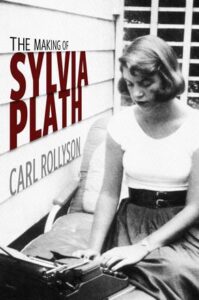
Carl Rollyson on the Teenage Years of One of America's Most Famous Female Poets

For two weeks in July 1944, Sylvia Plath attended Camp Helen Storrow at Buzzard’s Bay, Massachusetts, averaging a letter a day to her mother, reporting on her swimming and hiking and her enjoyment of arts and crafts and of shows, masquerading with charcoal on her face as a “pickaninnny.” The world was white, although for purposes of play you could be Black. Nowhere in Plath’s comments on people she called Negroes is there evidence of any significant engagement with racial issues, or even much empathy for Black victims of discrimination. She grew up in the era of civil rights protests (for example, the Montgomery Bus Boycott, 1955–1956) but showed no interest in the marches for equal treatment under the law. She read newspapers but did not comment on the plight of minorities (except for Jews). She lived in a white World.


Near the ocean, the all-white camp revived her memories of an early childhood by the sea. She made a ninety-page book listing her favourite actresses (Shirley Temple, Margaret O’Brien, and Elizabeth Taylor), her schedule at camp, the enormous quantities of food she consumed, the length of her walks, and other camp activities.
At an early age, Plath realized you could incorporate yourself in a medium.

Sylvia’s diaries, meticulously kept for almost every day from 1944 to 1949, reflect her early realization that you could broadcast your own life, as Jack Benny did on his radio show (another of her favourites). The show dispensed a running commentary on his funny failings, his desire to get ahead, and his preening, and had a cast—including Rochester, the faithful, if not uncritical African American factotum—that became Benny’s retinue, commenting on his every mercenary move.

Later, in London, in the last years of her life, Plath would speak of a desire to create a salon of writers, a following that would situate her at the centre of literary life. At an early age, Plath realized you could incorporate yourself in a medium. You could reach out to the public and command a hearing. She would later exploit this medium in her appearances on BBC radio. Her best poetry, she would come to realize, should be spoken aloud, perfected in a voice that she worked on, transforming a regional New England accent into a broader Anglo-American style of speaking that reflected her transcontinental ambitions.

These early diaries show a sensibility already well formed and with a presentiment of destiny, which she defined in her diaries by setting down certain markers:

January 20, 1944: Today is the biggest day of my life. I had a dreamless sleep and woke as fresh as dew on spring buttercups. All day I was in another world, far better than this. I took the bus to Boston with mother and Warrie to see Shakespeare’s “The Tempest” at the Colonial Theatre. It was too perfect for words. I am keeping the program as a souvenir. We took the train to Wellesley and there were no separate seats. I sat next to a young sensitive boy from the navy. He had blond wavy hair and blue eyes. In all my life I will never love anyone as I did him. Our talk was of travels, life, Shakespeare.

Later, her marriage to Ted Hughes would seem impulsive and hasty, but in fact she had been looking for just such a man almost as soon as she could write. She had a sense of the transcendent, of how art can supersede all else, before she turned twelve.

Wayne Sterling remembered that sometime in 1944, when Sylvia was twelve, she initiated a conversation about what it was like to be Jewish. She had no contact with Jews in Winthrop or Wellesley, so Wayne couldn’t say what prompted her interest. Her diary entry for January 15 mentioned “trying to make a crazy statue of Hitler in the snow with no success.” Perhaps that swastika on the flagpole in Winthrop had caught her attention. Her diary entry for November 25, 1945, recounted a “very interesting” Sunday School talk by a Jewish girl about Jewish customs and beliefs. “She promised to take us to a Jewish Synagogue in the future. I had a beautiful time listening to her.” On January 25, 1946, a neighbor, Mr. Norton, took her to the Temple of Israel in Boston. The light in the shape of the Star of David entranced her, as did the impressive white marble pulpit and the Torah in the ark. She listened to a rabbi explaining Judaism. She was impressed. “I had a beautiful time,” she confided to her diary. She drew a kiddish cup, challah, and a Star of David.

School assignments like a “problem paper” on “Roman People’s Places, and Things” and the work for her Scout “World Knowledge Badge” meant that as she entered adolescence Sylvia Plath was already attuned to the history and geography that propelled her later work. By the age of twelve, Plath’s school curriculum included a social studies class that covered, for example, units on the Albany Plan of Union (an early effort to unite the American colonies in a common defense) and General Braddock’s North America campaign against the French during the Seven Years War. She drew several maps of the United States and mapped out important historical events like the Louisiana Purchase and the issuance of the Monroe Doctrine.

At twelve, Sylvia measured five feet three and one-half inches, weighed about ninety-five pounds, and was athletic, participating in volleyball, baseball, field hockey, and basketball, where she played the position of guard. She collected stamps from all over the world and exulted in a trip to  to purchase a stamp album at the Harris Stamp Company. She tended her own garden and marvelled how in the spring it looked “lovely as it is full of sprouting green leaves and sweet smelling, fresh overturned earth.” She watched birds. “I saw the most beautiful bird today,” she wrote in her diary. “It was a little smaller than a robin and had the most beautiful blue plumage and red breast. I found out later that it was a bluebird and the first I have seen this spring.”

On March 27, 1945, her class visited the Christian Science Monitor building where she saw the printing room and watched how the newspaper was cut and printed, an excursion she meticulously documented in her diary entry about a “magic afternoon.” Some of her first articles would be published in the Monitor. Her own diaries, profusely illustrated—sometimes in color—suggest the importance of book making to her. In the eighth grade, on the staff of her school publication, The Phillipian, she was determined to put out a “super magazine.”

*

The war was an ever-present part of young Sylvia’s life. She played a game called “Russia” about the German invasion of the Soviet Union. On April 11, 1945, she mentioned she was put in charge of Defense Stamps at school. The next day she recorded her shock: “ROOSEVELT DIES!,” adding: “He died, like Lincoln, soon—very soon before the peace treaty and end of a long, cruel war!” On August 8, 1945, Sylvia wrote in her diary: “Atom bomb!” She read that 60 percent of Hiroshima had been destroyed, but made no comment other than to report President Truman’s statement that nuclear energy could be used for both destructive and constructive purposes.

On August 14, at 7:00 p.m., Sylvia heard on the radio the “official word…that Pres. Truman has received the note from Japan saying ‘We surrender unconditionally.’ The end of World War II!!!!!! How the people shouted! How the whistles blew. At night we set off firecrackers and rockets. We all thank God for answering our prayers.” The war penetrated her consciousness in other ways too. DPs, as displaced persons were then called, appear in a diary entry describing how she joined a group of girls dressed in “old rags” who “went to one house to pretend we were refugees, but, fortunately, (for us, probably), no one was home.” Does it make too much of this early effort to say she was already impersonating the persecuted, even if others would be offended and would call a poem like “Daddy” a despicable act of appropriation?

Sylvia read widely in teen and young adult novels that exposed her to many different cultures and to European and world history. On September 23, 1945, she mentions finishing A Sea between Us, reviewed in Commentary. This novel, by Lavinia R. Davis, struck close to home: “The heroine encounters the dragon of anti-Semitic prejudice early in the story during a visit to her fiancé’s family in a locality resembling Cape Cod.” The reviewer concluded: “For the problem of anti-Semitic prejudice, long underground in American life, to have forced its way through the pasteboard walls of a story for girls probably indicates that its pros and cons are more largely discussed today than many of us realize. It is comforting to learn even from a young ladies’ handbook that our society’s mores still denounce discrimination against Jews as unfair and undemocratic.”

*

Wayne Sterling remembered a bike ride in which he discussed with Sylvia the suicide of a Wellesley student who had hung himself from a tree. Sylvia seemed mainly concerned with what it would be like to be “almost dead”—a curious phrase that calls to mind her later interest in D. H. Lawrence’s “The Man Who Died,” about a resurrected Christ-like figure, and also, of course, her own “Lady Lazarus,” which suggests the speaker has a gift for coming back from the dead. Was Plath, with the early death of her father, already drawn to near-death experiences and beginning to think of life as a series of resurrections? This is the premise of Connie Palmen’s biographical novel about Plath and Hughes, Your Story, My Story.

Plath’s early diaries (1944–1947), studded with exclamation marks in many entries, and her letters and postcards from camp to her mother and Warren express an exuberant personality, eager to share her adventures and pleasures with her family. Warren and Aurelia reciprocated and Sylvia rejoiced in their “fat” and “meaty” letters that other campers envied. She made going to camp seem like a family enterprise, and that dynastic delight carries through right to her final days in England, when she wrote home wishing that newly married Warren or his wife could join her.

Her desire to assemble a salon, a group of likeminded souls, is reminiscent of her days at camp when she celebrated in letters and diaries the new friends that formed a circle around her. She began diary entries “Dear Diary,” as if addressing an alter ego and putting her life in order. “Dear Diary—you’re one of the ‘musts’ for peace of mind,” she wrote on October 11, 1945. Sometimes she wrote as if addressing a future self: On April 29, 1946, she announced: “Today the most wonderful thing happened!” She had sent in a “picturesque speech” to The Reader’s Digest: “A milkweed parachute hitchhikes on a passing breeze.” To her diary, she confessed “It may sound amateurish to you later, but to me it sounded pretty good.”

Entering her teens, diary entries no longer are studded with quite as many exclamation marks. She was developing a remarkable vocabulary, composing a poem, “A Winter Sunset,” that describes a sky of “copen shades.” Ice on the trees shimmers like diamonds. Teachers noticed her talent. Mrs. Warren told her she had a “flair” for English. “She firmly believes I have a talent for oral talks,” Sylvia recorded in her diary for February 12, 1946. A month later, Mrs. Warren took her aside and told her any professor would regard her work highly and she could apply to college as a scholarship student. But like most students, she tired of the school regimen: “Ugh! I am getting very eager for vacation,” she confided to her diary on March 25.

Was Plath, with the early death of her father, already drawn to near-death experiences and beginning to think of life as a series of resurrections?

Some days were just ecstatic. Coasting with Warren on the playground: “We had a super time. The hill rose shining, white and vacant. We flew down and the stinging wind brought tears to our eyes. It was glorious!” She drew a picture and wrote: “I’ll never forget the feeling of those silver runners slashing through the crusty snow!” These early revelries in snow would in just a few years dissolve into the symbolism of a numbing snow/cold that would haunt her later letters and depressions. In “Tulips at Dawn,” a poem written on the cusp of 1947/48, she speaks of plunging into the “depths of austere whiteness,” and of “white flashes of cold” lancing her wings, a “captive / Of white worlds.”

Sylvia liked to write about cooking in Food class—quite a variety of desserts, sandwiches, and main dishes—not to mention making her favorite molasses cookies at home (“yum yum”). She also took up knitting. On January 28, 1946, she recorded a visit to an Observatory: “I will never forget my first view of Saturn through the telescope! I expected a little point of light and gasped as I saw the three rings of moonlets whirling about the silvery planet.” Like other bright young girls of her generation such as Susan Sontag, Plath enthused over Richard Halliburton’s travel books: The Royal Road to Romance, The Flying Carpet, The Glorious Adventure, and New Worlds to Conquer. “They’re full of lovely expressions and descriptions,” she wrote to a friend. When a schoolmate lent her Richard Halliburton’s Complete Book of Marvels with a picture of him on the back, she confessed: “I am in love with him. I feel as though I understand him. (Being on his fourth book.)”

But another kind of adventure also appealed to her. On April 8, 1946, she had her first dream about the “lives and works” of American artists. Her imagination took another turn with mystery-horror stories like “The Mummy’s Tomb,” which began: “[A] gloomy atmosphere of foreboding pervaded the chill air.” She added a sentence to her friend Margot’s horror story: “The delicious smell of frying flesh reached my nostrils.” She hoped that after camp was over, she could spend part of the summer with Margot: “Can’t you just see us lying on soft pine needles,” she wrote to a friend who also wrote stories, “and writing best-sellers in the quiet serenity of the woods?”

But it wasn’t ever just a make-believe world for her: In a Memorial Day school assembly (May 29, 1946), a soldier spoke about “incidents of war and victory overseas, not forgetting to mention the long rows of white crosses filling the many green clearings holding the American and allied dead. It was really quite sad. Oh! but I do hope that there will be no more wars”—a sentiment she expressed many times in her diaries, and a few years later in an antiwar poem, “Seek No More the Young,” inspired by Wilfred Owen and Siegfried Sassoon, depicting the “iron men” who fall limp on “spattered stone” with “eyes glazed blind.” She felt “very strongly about the subject of world peace,” she asserted in an April 2, 1947, diary entry: “I felt as if I had suddenly come into contact with the turbulent political world outside when Carrie showed us the paper, among those distributed by the Socialist party…I was gripped by a cold, tense excitement that made me and my ideas an important part of the chaos in the world today.”

With only the chirping of purple grackles, and the sight of her Grampy’s “cheery pile” of “treasured compost,” she wondered how “murder and ugly quarrels” could go on in such a “beautiful world.” But then a fire engine came “screeching around the corner.” She would remain the same, more than a decade later, cultivating her own garden in her Court Green country home retreat, thrusting her hands in the soil while worrying about the strontium 90 radioactive fallout in mother’s milk.

Excerpted from The Making of Sylvia Plath by Carl Rollyson, Copyright © 2024 by Carl Rollyson. Published by University Press of Mississippi. All rights reserved.

https://lithub.com/how-a-young-sylvia-plath-found-her-literary-voice-through-diary-keeping/ 

Wednesday, June 14, 2023

Does Journalling Actually Improve Mental Health?

From thewalrus.ca 

Writing down your thoughts can be helpful. But getting the perfect notebook isn’t a substitute for professional care

IN THE FALL of 1962, Sylvia Plath wrote to her mother, “I am a genius of a writer, I have it in me. I am up at 5 writing the best poems of my life. They will make my name.” Before then, she’d struggled to find her voice, writing verse that was stiff and sometimes derivative, but in the months after her separation from husband Ted Hughes, she was able to let go and charge headlong in a new direction. These poems, which would be published posthumously under the title Ariel, were vivid, furious, and personal—like formal versions of some of the most memorable passages from the journals she’d kept for more than half her life.

Plath began keeping a diary when she was eleven years old and continued to do so right up until her death in 1963 at the age of thirty. She wrote about everything: sex, school, her challenging relationship with her mother. A frequent topic was the tension between her drive to have a career and her desire to be an ideal wife and homemaker—passages about her publishing successes are written with just as much relish as those about the elaborate meals she cooked for her husband.

Plath used her journals to exult when things were going well, to scold herself when they weren’t, to push herself always to do more, and more, and more. She could be critical, and even cruel, toward herself. One passage from 1953 begins with the words, “Letter to an Over-grown, Over-protected, Scared, Spoiled, Baby.” But when I discovered her journals, the entries that I found most interesting were the ones in which she analysed (obsessively, often unsparingly) her own feelings. I remember reading her diaries with a shock of recognition. I saw in them the same quality I saw in my own journals: the need to write through any and every experience to unravel its exact meaning.

I didn’t start keeping a journal as a conscious way of coping with stress, but it didn’t take long for me to figure out that, if I was in a bad mental state, writing everything out provided some relief. I now realize that that sense of unravelling, of pulling apart my feelings, is a form of therapeutic journalling. And while people have been chronicling their lives for thousands of years, journalling as a wellness practice has experienced a recent boom. As countries started locking down at the start of the COVID-19 pandemic, many people turned to journalling as a sort of therapy—a space to vent and lament over the challenges of living through unprecedented times. A representative of the California-based lifestyle brand ban.do told a reporter they saw a 37.5 percent increase in journal sales from the previous year in the first four months of the pandemic alone—a figure similar to those of other brands across the country, according to Vox.

Journalling can be a valuable tool, and it’s quickly become a very popular one. But if so many of us are working out our feelings in notebooks, shouldn’t we all be feeling a whole lot better?


DIARIES, OR JOURNALS, as we understand them today—that is, regularly kept records of someone’s life, thoughts, and feelings—first started in Japan in the tenth or eleventh century. In the West, they didn’t appear until the early modern period. Samuel Pepys, one of the best known early diarists, is probably most famous for his accounts of the Great Plague of London and the Great Fire (he even wrote about burying cheese and wine in his garden to save them from the flames), but he also included very personal passages, like descriptions of fights he had with his wife and details about his frequent infidelities. The latter type of entry was often recorded in French and/or Spanish; an example from 1666 reads, “And thence to the Abbey, and so to Mrs. Martin and there did what je voudrais avec her, both devante and backward, which is also muy bon plazer.”

Journalling continued to gain traction during the seventeenth and eighteenth centuries, but it wasn’t until the early nineteenth century, when several diaries—including Pepys’s—were published, that the practice really exploded. But while people have long used journalling as a processing tool, its formal use as a widespread therapeutic practice didn’t begin until 1966, when American psychotherapist Ira Progoff developed a program he called the Intensive Journal Method. Progoff had realized early on that journalling can have tangible benefits for mental health by reducing symptoms of anxiety and depression and boosting emotional regulation. Evidence also suggests that having a regular journalling practice can improve memory function.

Since Progoff’s time, many different systems of therapeutic journalling have been created. One of the best known is that of Kathleen Adams, author of the 1990 bestseller Journal to the Self.

Adams received her first diary (which she describes as “the kind with a lock you could pick with a bobby pin”) for Christmas when she was ten years old, marking the beginning of a lifelong practice. Years later, when she entered a master’s program in psychology and counselling at the Boulder Graduate School in Colorado, her use of her writing as a processing tool became so well known among her friends that they began asking her to teach them how to journal in the same way. She went through her old notebooks to see if she could pick out a few helpful writing techniques, turning her methodology into a twelve-hour workshop. The response was overwhelmingly positive. Adams had found her calling.

Not long after, Adams began working at a psychiatric hospital, running an in-patient journalling program for women with post-traumatic stress disorder, most of whom had experienced severe trauma beginning in childhood. Many of the women had tried journalling before but had struggled with feelings of re-traumatization when doing so.

“The number one thing that they told me was that, often when they were trying to write about their trauma and understand it, they described this process of falling off a cliff or going to a deep and dark place that they can’t get out of,” said Adams. “Many of them were doing stream-of-consciousness writing, but I realized that, in trauma work, what these women really needed was structure, pacing, and containment. At least to begin with.”

When Adams left hospital work and moved into private practice, she discovered that her journalling program wasn’t just helpful for people diagnosed with PTSD but was also an effective clinical model for all kinds of mental health issues. In fact, there are only a handful of people for whom Adams wouldn’t recommend journalling: people who are experiencing disordered thinking (that is, thoughts that aren’t rational to other people), since writing in that state can take them deeper into those thoughts; people with highly manipulative tendencies, as they’re no more likely to be honest in their journals than they are in real life; and, finally, people who are struggling with impulse control in a specific area (for example, trying not to drink or have a cigarette), since writing about what they’re craving can sometimes turn into rationalizing why they should give into it. Otherwise, she believes journalling can be a powerful tool for just about anybody.

In the years since Adams published her first book, therapeutic journalling has gained enormous popularity. You can now find resources that cater to just about any social condition. There are guided journals for soldiers, for Catholics, for students, for grieving parents, and almost any other group you can think of. The practice has been embraced by the larger wellness industry, and it’s not hard to see why: therapy is expensive, and notebooks are comparatively cheap. But, as in the case of many other things associated with the wellness movement, journalling for mental health can feel like a bit of a double-edged sword: it can be helpful, but it’s no substitute for proper care overseen by a licensed practitioner. It can also feed into the idea that if we can just buy the perfect notebook and invest in the right routine, all of our mental health problems will be solved.

I started journalling when I was eleven years old, which is also around the same time that I started to really struggle with feelings of hopelessness and unworthiness. My first diary was a bright-orange Hilroy notebook with a picture of a marten glued onto the front. I chronicled the social upheavals of my small group of friends and my own uncertainty about how to handle them. By the time I was in high school, I’d switched from lined notebooks to hardbound sketchbooks in dark colours, which seemed better suited to my adolescent scrawl. These days, I’m a sucker for Moleskine-style notebooks, though I still prefer them to be unlined.

I don’t follow any specific therapeutic formula. I just write my way through whatever stressful thing I’m experiencing until I’ve finally figured out how I really feel about it. Sometimes it turns out that I’m actually upset about something completely different than whatever set me off, and sometimes I just write in circles until I’ve exhausted myself. Either way, the act of sitting down and committing it all to paper gives me enough space from my original heightened state that I feel like I can take a breath. But that breath doesn’t last long—journalling offers me only a temporary reprieve at best. And I have to admit that after years of trying to navigate mental health care in Canada, I’m burned out on solutions that put more responsibility onto people just trying to survive.

To say that the system is broken feels glib but, for proof, look no further than the numbers. In 2019, the average national wait time between a general practitioner’s referral and an appointment with a psychiatrist was nearly eleven weeks, while the average wait time between the appointment with the psychiatrist and the beginning of treatment was nearly fourteen weeks. That means that the overall time between seeing your family doctor and beginning treatment is over six months. For some provinces, wait times are disproportionately longer—like in Nova Scotia, where it typically takes over a year to receive treatment.

For those who do manage to endure the wait time, the options are often limited when it comes to treatment. Talk therapy and/or counselling is not covered by any provincial health plans unless it’s done by a medical doctor or through a medical clinic, but such programs are few and far between. Meanwhile, the average cost of private psychotherapy runs upward of $100 per session. To state plainly, these are resources that are out of reach for many Canadians.

Beyond the issues of scarcity and cost, the system can be incredibly complex to navigate. Margaret Eaton, national CEO of the Canadian Mental Health Association, has told the CBC that it’s a “patchwork quilt” of services. If you have a primary care physician (and 6 million Canadians do not), you might start there for a referral, but that’s just the mouth of the labyrinth. Once you enter the system, you’ll likely face wait lists, assessments, tests, invasive personal questions, and piles of paperwork, all while you’re struggling with debilitating psychiatric symptoms.

So I’ll admit that I bristle a bit when discussions about mental health involve suggesting things like journalling to people who are struggling. Of course, everyone has some responsibility for their own health, and mood-boosting activities like going for walks, taking baths, or going to the gym certainly have their place in a daily routine. On the other hand, what does it say about our existing mental health support systems if so many people are left to cobble together their own solutions?

WHILE SYLVIA PLATH’S WRITING is well regarded, she’s arguably most famous for her death by suicide. So often when we talk about Plath’s death, we can make it seem fated, inevitable. But the reality is that she was not passive in her crisis. In fact, she was doing everything she could to survive it. She wrote prolifically in her last months—letters to friends and family, part of a second novel, the poems she told her mother would make her name, and a final journal, which was destroyed posthumously by her husband.

What often gets left out of that part of her story is the fact that she was fighting to get care right up until her last days. She was attending regular doctor’s appointments. She was trying new medication. She was reaching out to friends for support. She was doing everything we tell people to do when they’re struggling with their mental health.

In her last days, Plath was on a wait list to receive in-patient psychiatric treatment. When her doctor had tried to have her admitted at several hospitals, he was told that all the beds were full. In the end, her writing couldn’t save her. She needed real, substantial medical care. A person alone with their journal can only do so much.

https://thewalrus.ca/mental-health-journal/