Published for the first time this month, the Irish writer’s record of his months in pre-war Germany is a fascinating insight into his understanding of, and unease with, Nazism
War was not yet on the immediate horizon when Samuel Beckett visited the German city of Hamburg in October 1936, but after watching the apoplexy that Adolf Hitler’s braying induced in ordinary Germans, the Irish playwright was certain that peace could not last. “They’ll need to fight soon (or burst),” he noted in his diary on 6 October.
The six notebooks that Beckett compiled during his six-month journey across Germany between late September 1936 and April 1937, published for the first time by German publisher Suhrkamp on 20 August this year, put paid to a commonly held view of the author of Waiting for Godot as a poet of pure pessimism, interested in despair and stasis but unconcerned by real-life politics.
On the basis of letters and diary extracts, critics of the past concluded that the 1969 Nobel Prize winner travelled across Germany in a state of self-absorption, without paying attention to the rise of totalitarianism. But the notebooks in their entirety show that Beckett was studying National Socialist resentment in close detail.
He noticed changes in fashion, such as the predominance of the “Hitler coat”, and collected the “holy phrases” of the Nazi movement in lists: Führer (“leader”), Bewegung (“movement”), Blut und Boden (“blood and soil”), and Freiheit und Ehre (“freedom and honour”), even if they repulsed him. Ihre Kraft durch Freude Unterhaltung macht mich fertig, he noted in German on1 November 1936: “Their Strength Through Joy conversation is killing me.”
‘They’ll need to fight soon (or burst)‘ … crowds at Pariser Platz, Berlin, on the city’s 700th anniversary in 1937. Photograph: ullstein bild Dtl./Ullstein bild/Getty Images
For now Beckett, who would join the French resistance in 1940, kept his disgust mostly private, merely taking pleasure in subtle parodies of totalitarian behaviour, by “(sticking) the wrong arm out” when invited to give the Nazi salute.
“He was aware that his diaries could have been confiscated,” said the notebooks’ co-editor Mark Nixon, a professor of modern literature and Beckett studies at the University of Reading. “He has to be careful as he has to get out of Germany with them. Maybe he could have been more explicit had this danger not hung over him. But they do clearly form a rebellion against Nazi rationalising discourse.”
Samuel Beckett as a young man. Photograph: Estate of Samuel Beckett c/o Rosica Colin Limited, London
Beckett’s tour of some 30 German towns and cities, including Hamburg, Berlin, Dresden and Munich, was motivated by a desire to view works of art and to improve his language skills. An interest in German – his third language after English and French – was probably influenced by lengthy visits between 1928 and 1932 to his cousin and sweetheart Peggy Sinclair and her family, who lived in Kassel.
The curiosity about German language and culture was reminiscent of the American English writer Christopher Isherwood, who, asked how he documented Germany between 1929 and 1933, said: “I am a camera with its shutter open, quite passive, recording not thinking.”
Beckett’s observed the country’s descent into totalitarianism in an already depressed state of mind. Peggy had died in Germany of tuberculosis in May 1933, his father of a heart attack the following month. The remaining Sinclairs, of Jewish descent, had been forced to flee Germany in 1936.
By the time he set out for Cuxhaven, Beckett had two years of psychoanalysis behind him, and his diaries reflect deep anguish, psychosomatic complaints, medical ailments, bodily functions, financial woes and angst over his writer’s block. At times, it is hard to separate his own problems from the darkening political situation around him. Bald fange ich wirklich an zu kotzen. Oder fahr heim (“soon I’ll really start to puke. Or I’ll go home”) he writes on 15 January, 1937.
“Beckett writes what he sees, that’s the value of him,” Nixon said. “At the same time the diaries are an important part of the journey of Beckett becoming Beckett. In the diaries he keeps telling himself to be more minimal, which is the Beckett we know, who strips everything away that doesn’t matter.”
The writer’s subsequent move to France and involvement with the French resistance can be seen as a reaction to what he witnessed in Nazi Germany, Nixon believes. “He was an eye witness to totalitarianism,” he said. “His literature is very clearly based on this experience.”
‘Very dubious at the moment’ … Samuel Beckett’s 1936 notebook. Photograph: Laura Bennetto
Filled with tiny, hard-to-decipher right-leaning handwriting, the 545 pages of the German diaries were found in the cellar of his Paris flat after his death in 1989 by his nephew Edward Beckett, who has worked with the editors Nixon and Oliver Lubrich to bring the 120,000 words to publication.
They are, Nixon says, Beckett’s own personal witness statement, and were not meant for publication. Some entries reveal an unsavoury side to the revered modernist master, including misogynistic remarks and accounts of brothel visits.
“Their value as a historical document is in large part due to the fact that he never edited them. The reason it’s ethically OK to be publishing them is that he didn’t destroy them like he did other things.”
While Suhrkamp’s bilingual edition, translated by Gaby Hartel, is tailored to political historical interest, an English-language edition, expected to be published next April, will concentrate more on the place of the diaries in Beckett’s literary development. Rights have been acquired by China, France and Italy among other countries.
Written for her American boyfriend while she worked inside the Nazi Propaganda Ministry, Katrin Janecke Gibney’s journals—now available online, thanks to the College’s Archives & Special Collections—offer a portrait of daily life for a young woman in wartime Berlin
Katrin Janecke (below) worked inside Nazi Germany’s Propaganda Ministry during World War II, but privately despised her job. And though she likely kept her thoughts about her employment to herself at the office, she was unfiltered in her diary, where she recorded her doubts and fears about her profession, the war and the Third Reich, as well as her everyday goings-on in Berlin throughout the 1940s.
While many journals of Berliners survived the war and were published in the ensuing years, there’s an unusual (if not unique) twist to Janecke’s: She wrote them in English for her American boyfriend. Held by Amherst’s Archives & Special Collections for decades, the diaries, now fully digitized, offer a glimpse of what life was like for a young, cosmopolitan, English-speaking woman living in Berlin during World War II who was caught within the Reich’s apparatus.
“This collection of personal writing from an antifascist German woman divided between her affection for an American serviceman and her duty to the Nazi propaganda machine is a fascinating portal into the contradictions and privations of the Second World War,” said Sara Brenneis, Andrew W. Mellon Professor of Spanish, adding that they would “enhance any research project that aims to consider a diverse perspective on German sentiment during World War II.”
Born in Berlin in 1913, Janecke began keeping the journals in English — and in secret — while she was working at the lifestyle magazine die neue linie and then in the Nazi Propaganda Ministry. She and her American boyfriend, Arthur Vanaman, an Air Force officer with the American Embassy in Berlin, began seeing each other before the U.S. entered the war. When “Van,” as she referred to him, was called back to the United States in June of 1941, the couple decided that Janecke would keep a diary for him and write it in English.
Major General Arthur W. Vanaman (Photo: United States Air Force, public domain)
The relationship became a central emotional thread in the diaries, enduring even a startling episode in which she managed to bluff her way into visiting him while he was being held in a German prisoner of war camp — only to have him refuse to give her any sign of affection.
“I was terrified about the sad and hurt expression in your face, terrified about your attitude towards the colonel... terrified about your hatred against Germany,” she writes in an entry about seeing him after so much time apart. “I understood that there was a world between the two German officers and you, and that the barrier between you and myself was insurmountable. I understood that I would never get the permission to see you again, nor to write to you, nor, if I should work at the camp, ever to be able to speak a word to you. When I left the camp I had the impression that there was a door closed between us, that I could not open up again.”
The diaries end abruptly a couple of months after the conclusion of the war, when Janecke likely realized that Vanaman wouldn’t renew contact with her, said Mariah Leavitt, preservation manager in the Archives & Special Collections. Her last entry describes how a mutual friend of Janecke and Vanaman’s had stopped by while Janecke was out, and left a note that he would come back the following day. “I assume that the mutual friend either let her know that Van wouldn’t be resuming contact or that contact with the mutual friend forced her to realize that Van could get a message to her if he wanted and had chosen not to,” explained Leavitt. This makes Janecke’s final writing “kind of heartbreaking,” Leavitt added.
[Bill] was here. I can’t believe it. When I came home from my first theatre visit tonight I found a note from him. He will be back tomorrow. Oh, Van, Van, at last I will hear from you. He must have a message from you. But then, why didn’t he leave it? I am so excited. How will I ever pass the next 12 hours?
Late in her life, Janecke married screenwriter Sheridan Gibney, a member of Amherst’s class of 1925, one-time head of the American Screenwriters Guild, and winner of two Oscars for The Story of Louis Pasteur (1936). After living in Montana, she moved to Amherst in the early 1990s and gifted her husband’s papers to Archives and Special Collections in 1991. She subsequently donated her diaries in 1992, shortly before she died in 1996. (She also wrote an unpublished memoir based on the diaries, titled Angels Prohibited.) Although catalogued, the collection remained largely unused for decades.
Leavitt and her fellow archivists noted the material’s significance after rediscovering it in the early 2010s. The diaries were digitized and transcribed in 2014, with then-student Devin Lennon ’14 (at that time, Devin Pence) completing the labour-intensive transcription. Delays related to technology and the pandemic postponed publication for some time, but the materials are now fully accessible online.
Image
The diaries stand out for several reasons, said Leavitt. Written by a German woman who considered herself anti-Nazi, they offer a nuanced portrait of daily life in wartime Berlin. Janecke describes her work as a junior editor at a cultural magazine before it was shut down in 1943 by Adolf Hitler’s order. She also writes about then being recruited to work as a dramaturge in the propaganda ministry, where she privately criticized the regime while performing her official duties.
Her entries also chronicle the challenges of everyday survival (bombings and simply navigating war-torn Berlin day to day, for example) alongside her reflections on her relationships, gender roles, and moral uncertainty. She expresses some awareness of Nazi atrocities, said Leavitt, writing that the rumours were “too terrible” to fully process and acknowledging a sense of guilt.
“World War II, especially the Nazi side of it, is incredibly well-documented, but it’s mostly documented by the people in power,” Leavitt explained. “Katrin is kind of a fringe player in Berlin, and her diaries really are mostly personal. It’s a perspective we really haven’t seen much of, and it’s fascinating to read. I hope that her diaries, now that they are easy to read online, shed some new light on life in and the people of Berlin at that time.”
Learn more and view transcripts of the diaries in the Archives’ Consecrated Eminence blog post, “An Anti-Nazi Woman in the Propaganda Ministry: The Katrin Janecke Diaries (1941-1945).”
A wartime diary kept by a Wakefield soldier has been rediscovered decades after the Second World War revealing an extraordinary 27,000-mile journey through 13 countries and three continents.
The writings of Corporal Alwyn Day, found among family papers, form the basis of a new book, Empire’s Witness: A Soldier’s Secret War Diary 1942-45, reconstructed by his grandson, documentary filmmaker Philip James Day.
At its heart is an account of movement through one of the Second World War’s least understood supply routes, later known as the Persian Corridor, which carried vital Allied supplies from the Persian Gulf through Iran to the Soviet Union.
Alwyn (r) and Harry on camel, Egypt 1943
The author said the diary’s tone stood out for its restraint and quiet observation.
He said: “A couple of years ago, my grandfather’s wartime diary turned up in old family papers.
"He was Corporal Alwyn Day of Wakefield and the pages he wrote trace his journey through thirteen countries and three continents during the Second World War, over something like 27,000 miles.
"What struck me most was how little it tried to make a hero of him.”
Written between 1942 and 1945, the diary is filled with photographs, sketches, maps and personal items, capturing a mix of everyday detail, curiosity and hardship as Corporal Day moved through the Middle East, North Africa and beyond.
Entries include visits to the pyramids in Egypt, the Garden of Gethsemane and the Dead Sea, alongside difficult episodes like a breakdown in the Sinai desert without water and long convoy journeys through hazardous conditions.
In Cairo, he recorded seeing entertainer Josephine Baker perform at the Royal Opera House.
Alwyn, officer, local, Egypt ,1944
Elsewhere he described an invitation to the home of a millionaire racehorse owner in Tel Aviv and sailing on one of King Farouk’s yachts in Alexandria.
Despite these moments, much of the diary is shaped by wartime censorship rules that discouraged soldiers from recording sensitive operational detail.
To understand the full picture, the author cross-referenced the diary with military and convoy records, placing the journey within the wider Allied logistics system operating across the region.
New material has continued to emerge from the family archive following the recent death of a relative, adding further depth to the picture of his wartime experience.
A personal detail appears in an entry from February 14, 1943, when Corporal Day was in Qom, Iran, and recorded receiving a copy of his local newspaper, the Wakefield Express, a reminder of home reaching him deep inside the Middle East.
Mr Day said: “Incredibly we keep finding stuff as one of his daughters – my auntie – recently died and so a lot of archive papers have emerged that he had stored from Alwyn’s archive.”
He said the project was “a truly local story on an epic landscape”, tracing a man through a global conflict before he returned home, resumed ordinary life and left much of his experience unspoken.
An exhibition-style launch event will be held at The Hepworth on May 9.
The book will open for pre-order on May 8 (VE Day) and be published on June 6 (D-Day).
Imperial War Museums acquires ‘Forces’ Sweetheart’ collection including over 600 fan letters, 1944 India tour diary and tropical uniform
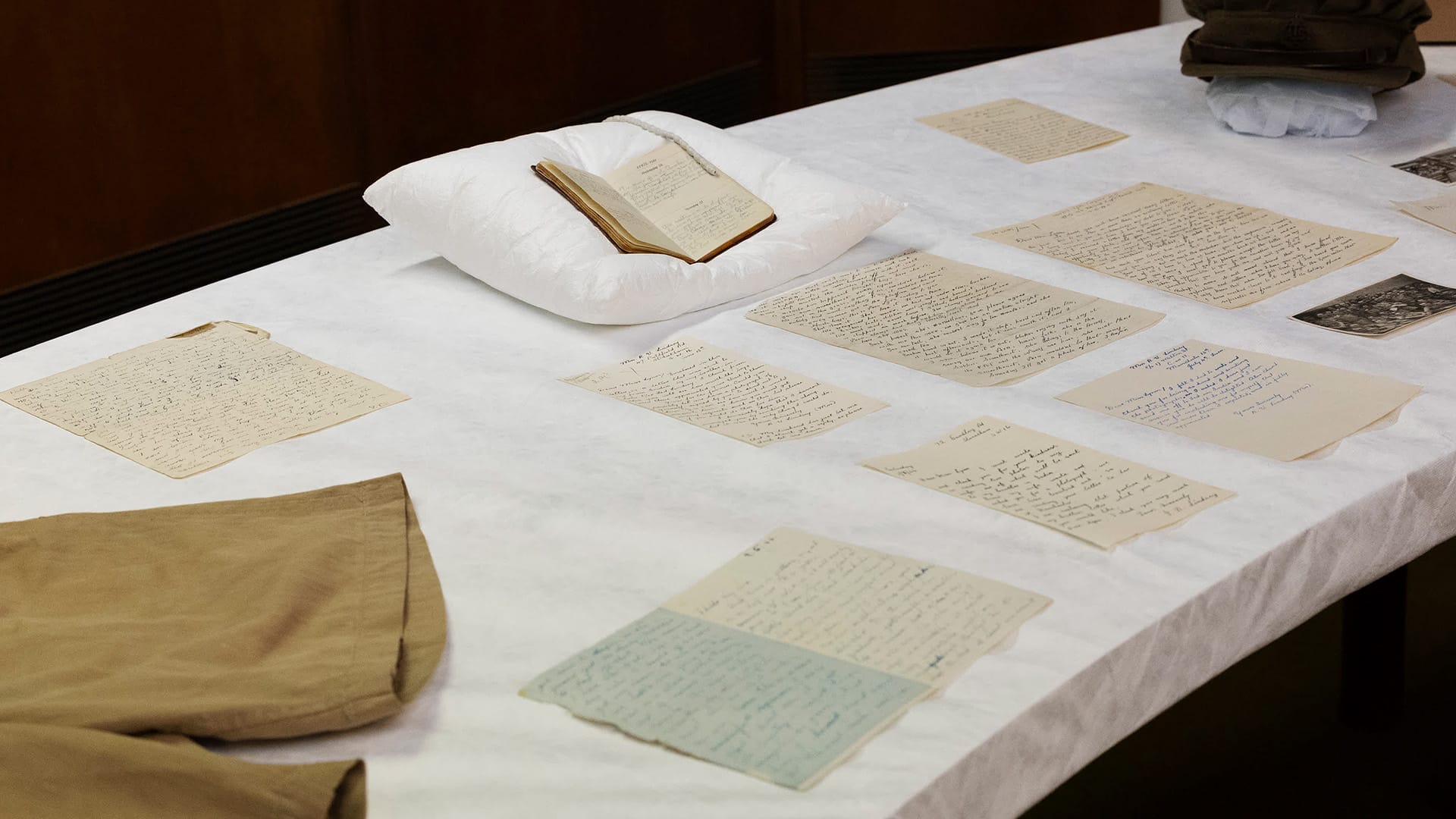
Imperial War Museums has acquired the complete Second World War archive of Dame Vera Lynn, including over 600 fan letters, correspondence with her husband Harry Lewis, a diary from her 1944 tour of India, and shorts and trousers from her tropical uniform.
A small selection of objects from the collection will go on display at IWM London this spring. The remainder will undergo the museum’s accessioning, documentation and conservation processes.
Dame Vera was the star of the BBC radio show Sincerely Yours, which connected troops abroad with their loved ones during the Second World War. Her tour of India from March to June 1944, where she entertained Empire and Commonwealth troops including the Fourteenth Army, established her reputation as The Forces’ Sweetheart.
The collection includes lists of names and addresses Dame Vera compiled whilst visiting hospitals in India, which she used to write to servicemen’s families informing them their loved one was well. IWM has acquired examples of these lists and letters thanking her for writing.
Dame Vera’s BBC contract for Sincerely Yours, which started in November 1941, is included in the collection. The show invited listeners to send song requests and messages for loved ones serving in the Armed Forces. She could receive up to 2,000 letters per week.
The 600 letters in the collection include correspondence from Mrs Rosamund Lindsey, who enclosed a letter from her brother-in-law Corporal David ‘Ted’ Lindsey describing Dame Vera’s appearance at an Entertainments National Service Association show in India. Dame Vera sent two signed photographs to lift his spirits. After the Lindseys were displaced by bombing, Ted later wrote directly to thank her.
The khaki shorts included in the acquisition were worn by Dame Vera during the tour, designed for the same challenging conditions faced by troops.
Simon Offord, Curator at Imperial War Museums said: “Dame Vera’s presence during national Second World War commemorations for decades to come means her name is forever connected to the conflict’s memory, and we are honoured to hold these objects, which tell the story of her remarkable legacy.
Dame Vera’s daughter, Virginia Lewis-Jones, said: “These items have been kept by my parents since the beginning of my Mother’s career, and when she passed on, I took over the reins of her Archive. I am very happy to know that these particular items will be kept for posterity in IWM’s Collection, and that a selection of them will go on display for everyone to enjoy and learn about her life.”
Other objects in the collection include 160 wartime contracts for over 200 engagements, receipts from The Decca Gramophone Co Ltd for records she sent to servicemen and prisoners of war, a fan club address book compiled by her mother Mrs Annie Welch, and account books showing earnings and expenditures from April 1941 to February 1947.
Released in the UK on Jan. 22, ‘Ninette’s War’ by journalist John Jay examines darkest chapter in French history through a Dreyfus scion’s diary entries, family papers and interviews
LONDON — On the morning of June 23, 1940, 12-year-old Ninette Dreyfus’s family learned that Hitler had forced France into a humiliating armistice the previous evening.
Her father’s reaction to the news was visceral and physical. Edgar Dreyfus collapsed on the stairs, suffering an asthma attack and struggling to breathe. “I had never seen him show weakness before. For a moment, I feared he was going to die,” Ninette later recalled. “The whole world of my childhood was falling apart.”
But unbeknownst to Ninette, her father, or France’s Jews, much worse was to come.
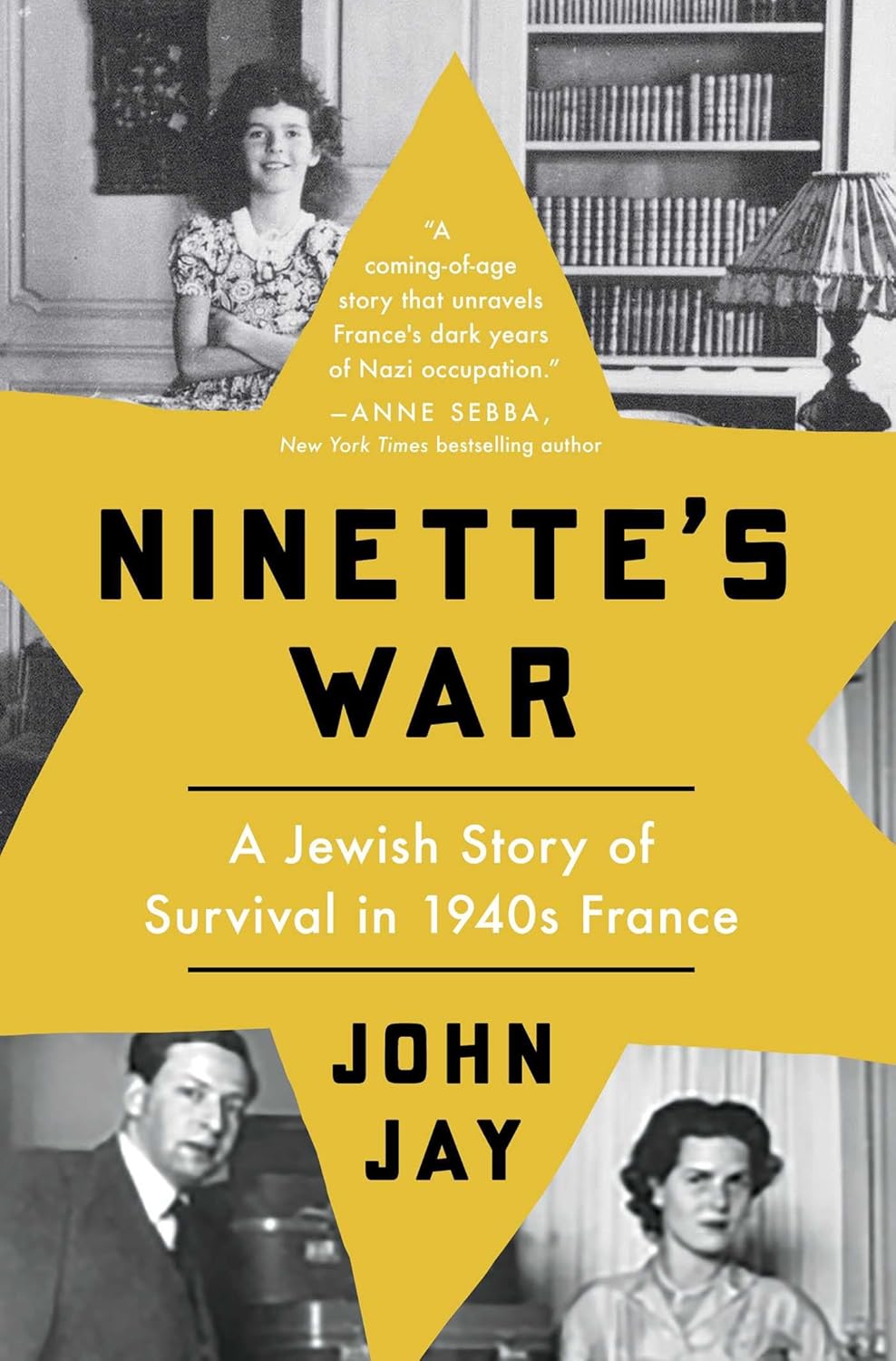
Released in paperback in the UK on January 22, “Ninette’s War: A Jewish Story of Survival in 1940s France” tells the remarkable wartime odyssey of one of France’s most prominent Jewish families — and the Vichy regime’s knowing complicity in the Nazis’ crimes.
The story has been painstakingly pieced together — like “restoring a mosaic” — by British journalist John Jay, drawing on Ninette’s youthful diary entries, family papers, and interviews she gave to the author in the years before her death in 2021.
As Jay makes clear, Edgar’s reaction to news of the armistice did not reflect a sense of foreboding about the likely fate awaiting his family.
“He was completely dumbfounded that the mighty French army could collapse in the way that it had done,” he tells The Times of Israel. “French Jews at that point had no idea of what subsequently was going to hit them.”
Ninette Dreyfus at home in her father’s Paris study, 1939. (Courtesy of John Jay and Lady Swaythling and her family)
Jay’s book tracks Edgar’s growing sense of disbelief and horror at Vichy’s brutal betrayal of France’s Jews.
The Dreyfus family — second only in influence to the Rothschilds in Parisian Jewish society — were, Jay says, a “classic cosmopolitan, Jewish Western European family, a mixture of Bohemians, Germans and Frenchmen.”
They were also fiercely patriotic and loyal to the French state, which, by and large, had treated French Jewry well. Edgar ran a bank owned by the family firm, La Maison, which had provided loans to help France’s war effort after 1914. A decade later, Edgar acceded to the government’s request to help fight off an inflation-induced run on the franc. He was made an officer of the Légion d’honneur in recognition of his services.
In their grand 16th arrondissement townhouse — which had once been owned by composer Claude Debussy — Ninette, her elder sister Viviane and parents Edgar and Yvonne lived a life of plenty and privilege. The family were secular and, until the outbreak of war, Ninette barely knew what being a Jew was. Occasional antisemitic playground slurs had little meaning for her.
Life as an ‘exode’
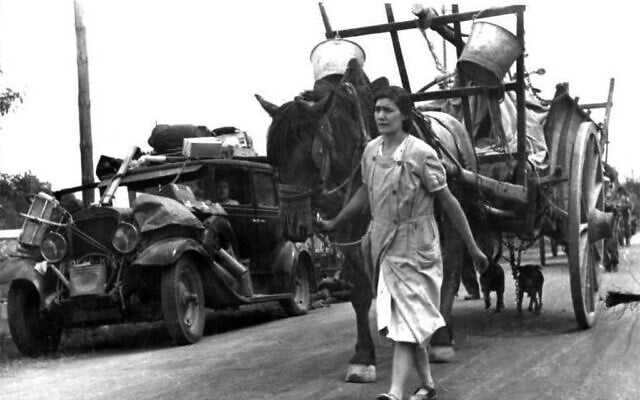
Hitler’s May 1940 blitzkrieg against France changed all that. One month later, with the sound of artillery growing closer and German forces crossing the Seine, the Dreyfus family joined the “exode” — one of the largest movements of people in history — as 6 million people took to the roads to flee the Nazi advance, among them some 100,000 to 200,000 Jews.
Refugees in the French ‘exode’ flee the invading Germans on June 19, 1940. (Bundesarchiv, Bild 146-1971-083-01 / Tritschler / CC-BY-SA 3.0)
After a three-week, 1,700-kilometer (roughly 1,050-mile) journey via Nantes, Bordeaux and Perpignan, Ninette and her family arrived in Marseille, where they took up residence in a hotel full of fellow exodians and Jews.
Already, the poisonous atmosphere caused by France’s defeat and humiliation had sparked a wave of antisemitism. Nonetheless, even as they travelled through Perpignan close to the Spanish border, Edgar, who had ties to the new Francoist regime, did not attempt to flee France.
The Riviera fell under the non-occupied “Free Zone,” which was governed from Vichy by the World War I hero Marshal Philippe Pétain. As Jay details, there was little to suggest Pétain — a onetime supporter of Alfred Dreyfus — harboured antisemitic inclinations. Indeed, alongside members of the International League Against Antisemitism, Edgar’s cousin, Louis, a senator, voted to grant Pétain authoritarian powers soon after the armistice.
But Pétain swiftly promoted antisemites to lead his new regime, creating a “permissive environment for antisemitism to flourish,” says Jay. In October 1940, the first antisemitic legislation barred Jews from certain professions, including teaching, journalism and the civil service, while sharply curtailing their role in the medical and legal professions. At Montgrand, Marseille’s grandest girls’ school, Ninette’s math teacher, Odette Valabrègue, was fired. Like the chief rabbi and French communal organizations, Edgar clung to the importance of the rule of law, even if the publication of now-infamous images of Pétain shaking hands with Hitler at Montoire in October 1940 led him to weep.
Nazi dictator Adolf Hitler, right, shakes hands with head of Vichy France Philippe Petain, in occupied France, October 24, 1940. (AP)
Any lingering illusions about Pétain ended with the passage of further, sweeping antisemitic legislation in 1941, which, in a sharp break with the Third Republic’s avowed secularism, required Jews to register in a special census and expanded the list of professions, including banking, closed to them. The measures, which forced Edgar to relinquish his role as chief executive of La Maison, came as a “personal hammer blow,” writes Jay.
“Pétain’s first statute drove his friends from public service and the media and limited their participation in law and medicine, but he was not directly affected,” he says. “Now, Pétain was depriving him of his career and driving his family into a legal ghetto.”
Ninette later captured the psychological impact of the measures on her father, recalling: “Work was everything to Daddy, and it was torture for him to contemplate life without work.” Nor was the future much brighter for Edgar’s daughters, with university places and professional work all but closed to Jews.
The legal assault, the establishment of the new Commissariat Général aux Questions Juives, which began to plunder Jewish wealth, and the promotion of antisemitism in the media were accompanied by, and fed, rising Jew-hate on the streets. Ninette’s family heard the thud of the bomb that exploded in Marseille’s synagogue in May 1941.
Joining the resistance
No longer needing to be in Marseille, where La Maison had offices, Edgar moved his family to Cannes, which, although no less antisemitic, was filled with family and friends. Their new home, Villa Rochelongue, was a Belle-Époque seafront house near the Palm Beach Casino staffed with butlers and a cook, cleaner and gardener. Despite the war and food rationing — which led the family to keep a cow and rabbits — life “felt like the old Côte d’Azur,” says Jay. When not obsessing over her upcoming 15th birthday, Ninette penned diary entries about clothes, accessories and cosmetics, ballet, cinema trips, school and social life, sailing in the baie de Cannes, and her “passion” for football and volleyball.
Although somewhat cocooned by her parents, Ninette was not oblivious to the pernicious forces imperilling Vichy’s Jews. Her school headteacher, Marcelle Capron, was a résistante who later sheltered Jews and helped them flee. However, the school had its share of antisemitic teachers and pupils. Ninette, a self-described tomboy, fought girls who were members of Avant-Garde, the Pétainist youth movement.
Edgar, too, chose to resist, crossing what his daughter termed a “personal Rubicon” in spring 1943 by refusing to obey an order requiring all Jews to have the word “Juif” stamped in their ID and ration cards. While most French Jews followed their communal leaders’ advice to continue obeying Vichy’s laws, Edgar’s decision was, Ninette said, “the most significant moment of the war.”
‘Ninette’s War,’ by journalist John Jay. (Courtesy of Pegasus Books)
“He was defining himself as an outlaw, no easy decision for a man in late middle age with teenage daughters and a position in society,” she said. Decades later, Ninette discovered files in France’s Archives Nationales revealing that he been denounced, triggering a police investigation. Six months late, Edgar led his family to the mairie to have their papers stamped.
Both Edgar — who joined a coastal reception committee for a Royal Navy boat carrying British agents and collecting résistants — and Vivian began to engage in secret resistance activities.
However, perhaps the most powerful example of the family’s resistance came in its evolving relationship to Judaism. As the atmosphere darkened, Yvonne recognized her daughters would be more resilient in the face of societal antisemitism if they felt pride in their heritage. She taught them that they should be both proud of Jews’ traditions and achievements, and recognize that with success came a responsibility to those in need. Those lessons bore fruit. Ninette remembered that her reaction to having her ID stamped with “Juif” was not one of humiliation, but pride.
“My parents became more interested in Judaism,” Ninette recalled. “Others ran away; we moved closer.” During Rosh Hashanah and Yom Kippur in 1942, Edgar and his wife and children attended services for the first time since participating in family bat mitzvahs in the 1930s. “For Mummy and Daddy,” Ninette believed, “taking part in a service after decades of non-observance was an act of defiance.”
However, back in Paris, which was occupied by the Germans, tragedy was enveloping members of the family — including Edgar’s sisters, Louise and Alice, Alice’s daughter, Maryse, and her husband, disabled veteran André Schoenfeld. André, a holder of the Croix de guerre and Légion d’honneur, was arrested in 1941 by French police at a reunion dinner for World War I wounded and sent to the notorious Drancy internment camp.
News of André’s arrest hit Edgar and his family hard. “Nothing would ever be the same again,” believed Vivianne; France was treating its Jews as “abject rot, putrid larvae to be crushed.” The family also learned of the horrors which had unfolded during the Val d’Hiv roundup in July 1942, when some 8,000 Jews, almost 4,000 of whom were children, were held together in the sports arena in appallingly overcrowded conditions for five days before being deported. “It is horrible, demonic, something that grabs you round the throat so you can’t cry out,” a letter from an eyewitness, a social worker, circulating on the Riviera revealed. “I’ll try to describe what it looks like, but if you multiply whatever you understand by 1,000, it will still be only part of the reality.”
But, even at this moment, elements of the family’s past life continued: That August, Edgar took his family on holiday to Mont-Revard’s Grand Hôtel, a luxury Alpine retreat they had visited before the war. In her diary, Ninette recorded she had “a fantastic time” riding horses and playing tennis, croquet, golf and ping-pong.
As Jay says, it is important to note that the family was “in ignorance of a lot of what was going on in the north and … didn’t know what was happening once the transports [took] people to the east.” As late as 1943, most exodians, he suggests, believed that forced labour was the worst fate awaiting French Jews. When two Auschwitz escapees, Haïm Salomon and M. Honig, returned to Nice looking for their families and detailed the horrors they had witnessed to a local Jewish committee, their testimony was dismissed. The men, it was decided, must have lost their minds, with one of Edgar’s pre-war friends, who chaired the committee, telling a colleague: “Such atrocities… are not conceivable… in the middle of the 20th century.”
Ninette (right) and Viviane Dreyfus outside the Martinez Hotel in Marseille. (Courtesy of John Jay and Lady Swaythling and her family)
However, even as a series of Allied victories in 1942 pointed to defeat for the Nazis, it was clear that the danger had by no means passed. Indeed, for the family, the moment of maximum peril came in autumn 1943 when the Germans occupied the Riviera and, to prevent it from deserting the Axis, invaded Italy.
Going into hiding
Having acquired false identification papers forged by a former employee of La Maison, Edgar, his wife and daughters travelled by train from Cannes to Marseille and then onto Pau, close to the Pyrenees. “It was exciting to hold those false papers,” Ninette recalled. “I felt like a character in a book.”
Their escape highlights that, amid the betrayals and collaboration perpetrated by Vichy and its friends, there were also those who attempted to assist their fellow Jewish citizens. As the Germans searched for Edgar, the family’s neighbours in Cannes provided them with shelter.
In Pau, Pierre Barthe, a horse breeder who knew the family, hid them in his villa while hatching the audacious plan that would see them safely guided across the mountains to Spain by Henri Delhiart, one of the Pyrénées’ great smugglers. The escape was hardly without incident. Barthe purloined an ambulance and had Ninette pose as a tuberculosis patient to speed their passage to the French spa town Cambo-les-Bains, where Delhiart took the reins. He chose a bar frequented by German border guards as their rendezvous point, correctly calculating, as Jay writes, that “the one place Germans would not suspect as a starting point for an evasion would be their own watering hole.” And Ninette remembered later hiding in a ditch from Germans troops who passed so close that she felt as if their dogs were breathing on her. Luckily, as Delhiart had planned, the wet night ensured the dogs couldn’t pick up her scent.
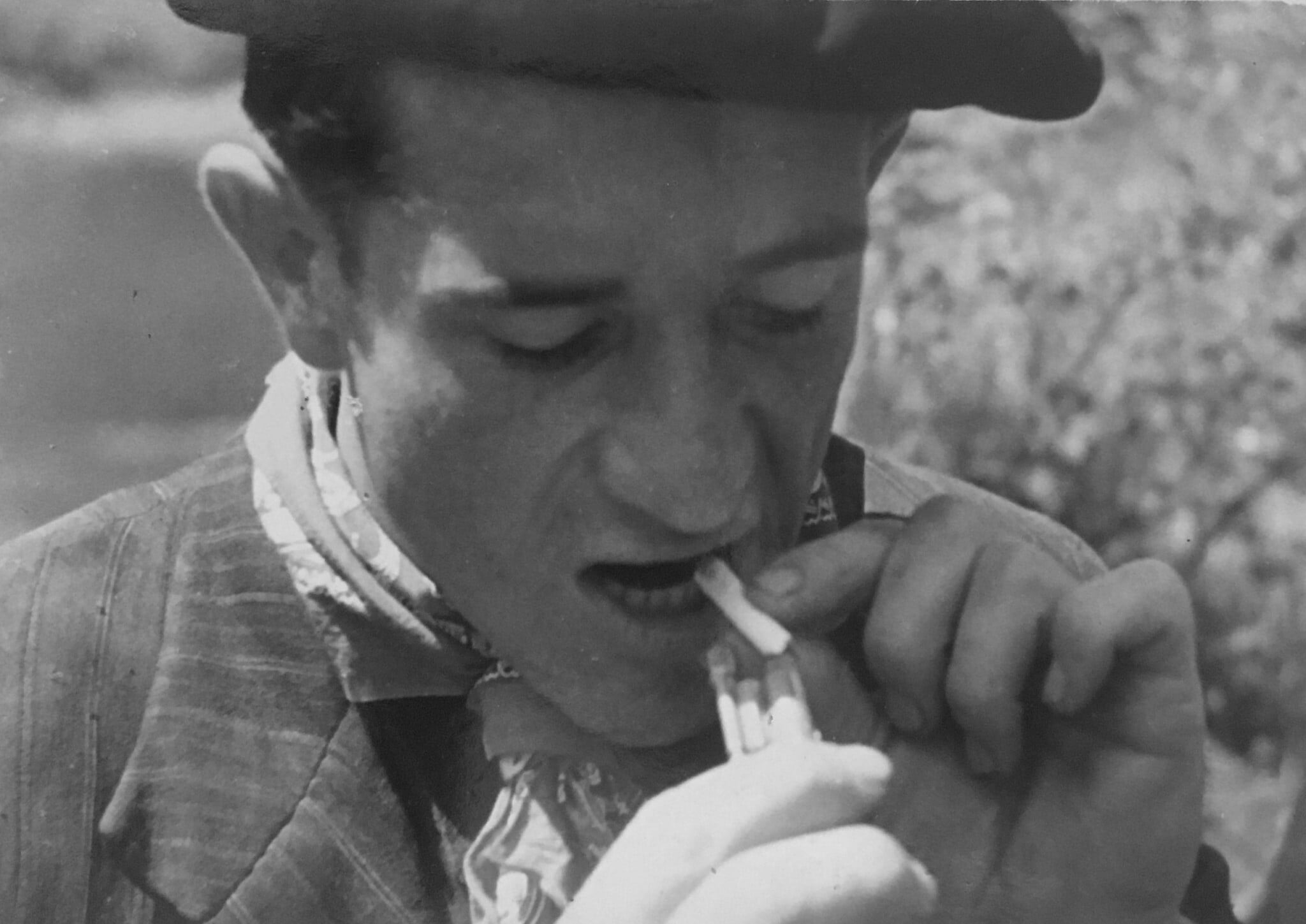
An undated photo of smuggler Henri Delhiart, who guided the Dreyfus family across the Pyrénées mountains from France into a safer Spain. (Courtesy of John Jay and Lady Swaythling and her family)
After reaching the safety of Spain, the family spent the final months of the war lodging at Madrid’s luxurious Palace Hotel, socializing with Anglophile monarchists and dodging the attentions of German spies and fascist sympathizers.
In April 1945, nearly five years after her departure, Ninette returned to Paris. But the occupation had shattered the family forever. As they slowly discovered, André and Maryse were murdered at Auschwitz in August 1943. With her possessions and property expropriated by the Nazis, Aunt Louise died alone in her attic room in Paris in May 1943, while, alongside 327 children, Aunt Alice was deported to Auschwitz four weeks before the city’s liberation.
Later in life, Ninette worked to ensure that those who had helped the family were recognized. Thanks to her efforts, in 1980 Yad Vashem declared Barthe and his wife Righteous Among the Nations.
But she would never shake the feeling that French Jews had been betrayed by their own.
“Her disdain for her countrymen was even greater than her abhorrence of German Nazis,” Jay writes. “The Germans were foreigners; the French were her people, yet they had turned their backs on her and worse during the years in which she came of age.”