Showing posts with label mental health. Show all posts

Sunday, April 26, 2026

Writing to feel better: why diaries are once again popular in 2026

From ma-grande-taille.com

In the age of all things digital and incessant notifications, taking the time to write for oneself seems like a true luxury. In 2026, the personal journal is experiencing a revival, appealing to young and old alike in search of calm, clarity, and mental well-being. What was long perceived as a teenage activity is becoming a valued tool for reconnecting with oneself.

An ancient practice, brought back into fashion

Keeping a diary is nothing new. For centuries, historical and literary figures have used personal writing to record their thoughts, emotions, and experiences. Today, this habit is experiencing a revival in a context marked by hyperconnectivity. Faced with the constant flow of information and digital overload, writing by hand allows us to slow down, refocus, and take a well-deserved break.

This return is also part of a broader movement towards "analog" activities: reading paper, creative hobbies, or simply the pleasure of touching and manipulating a notebook, away from the screen.

A recognized tool for mental health

Journaling is not limited to a nostalgic activity; it also benefits from scientific support. Psychological research, particularly the work of American psychologist James W. Pennebaker, shows that expressive writing can help better manage stress, structure thoughts, and gain perspective on difficult events.

Writing down your emotions, worries, or successes acts as an emotional release valve, especially during periods of transition or uncertainty. It doesn't replace professional support when needed, but it's an accessible and practical way to improve your daily psychological well-being.

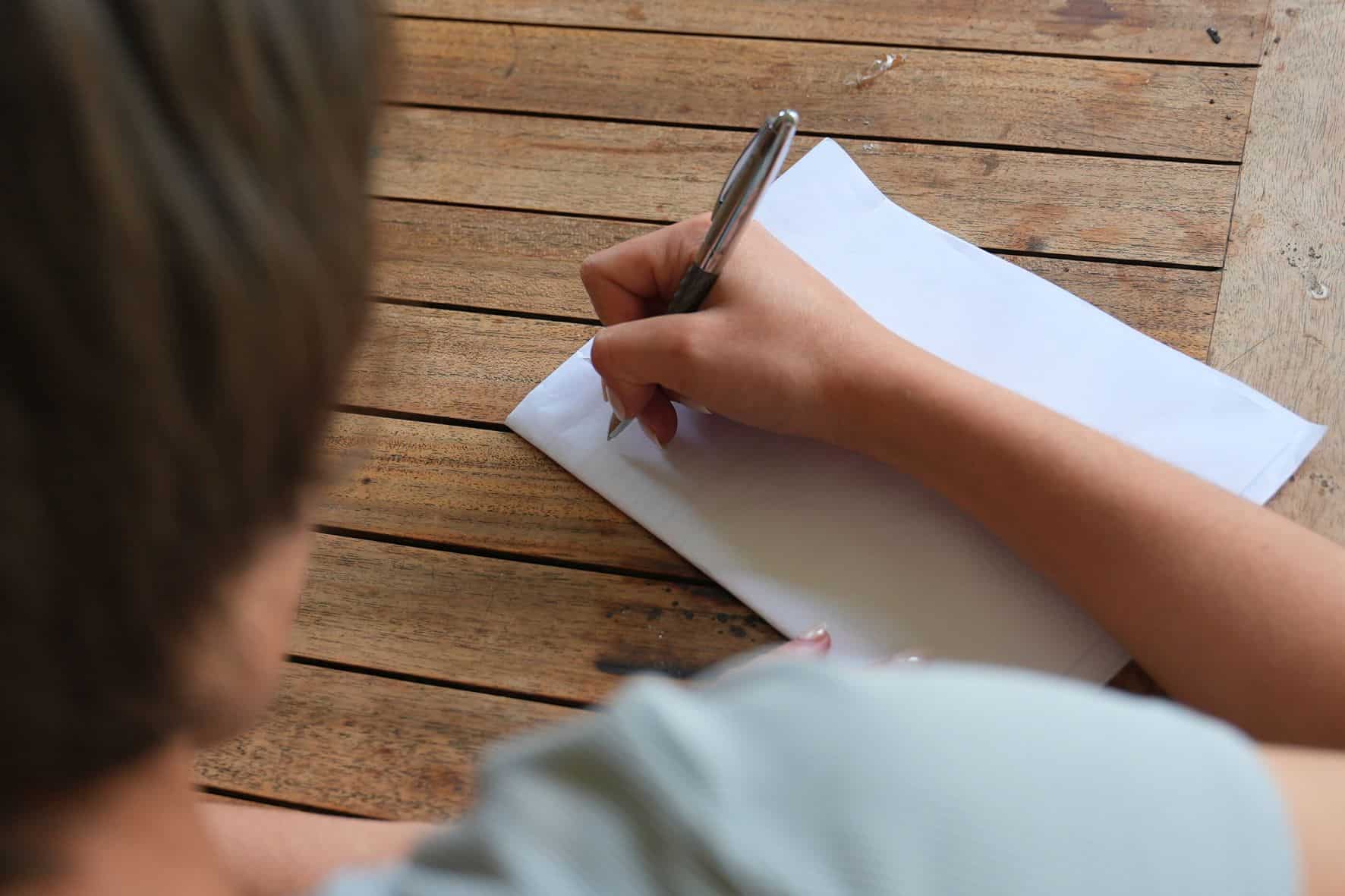
                                                                                          Photo d'illustration : cottonbro studio / Pexels

A space for oneself, completely private

In a world where almost everything is shared online, a personal diary offers a silent refuge. Here, there is no audience, no algorithm, no pressure to validate. This absence of external scrutiny fosters authentic and free expression: one writes without filters, without seeking to please or perform. This need for privacy affects teenagers as much as adults. Many find in it a personal space to reflect, listen to themselves, and understand themselves, sheltered from the eyes of others.

Formats suitable for everyone

The personal journal is no longer limited to a simple "blank notebook." In 2026, journaling comes in many forms: bullet journals, guided journals, structured journals, or dedicated apps. Some offer questions or exercises related to gratitude, emotions, or personal goals, making it easier for beginners to get started.

Meanwhile, creators are sharing their writing routines on social media, democratizing this habit and inspiring new generations to pick up a pen rather than a keyboard.

Writing to get to know oneself better

Beyond its calming effects, journaling fosters self-knowledge. Rereading one's writings allows one to identify patterns, observe changes, or better understand one's reactions to certain situations. This practice is part of a holistic approach to self-care, alongside meditation, therapy, or personal development. And the beauty of this habit lies in its flexibility: it can be daily or occasional, structured or spontaneous.

A simple, sustainable and accessible practice

The success of the personal journal also lies in its simplicity: a notebook and a pen are all you need. No special equipment or specific skills are required. In a world where wellness solutions can sometimes seem complex or expensive, this accessibility makes it a valuable tool.

Far from being a passing fad, the personal journal fulfils a fundamental need: to slow down, express oneself, reflect, and reconnect with oneself. It offers a discreet yet effective respite from an often hectic daily life, allowing for a better understanding of one's experiences and the nurture of one's mind.

In 2026, the personal diary is once again captivating people because it combines intimacy, freedom, and well-being. Simple, accessible, and deeply personal, it remains a silent yet powerful companion for anyone wishing to reconnect with themselves.

https://www.ma-grande-taille.com/en/sante/bien-etre/writing-to-feel-better-why-a-diary-is-appealing-2026-437242

Saturday, December 27, 2025

Why journaling is one of the healthiest ways to start 2026

From citizen.co.za

By Hein Kaiser

Journaling is making a comeback and could be a powerful tool for your mental health. Here's why and how to do it


There is a powerful tool that lives its best life between your fingers. As the adage goes, it’s mightier than the sword. But a pen is also an instrument of reflection, as much as it could be for power. A pen can slow you down, make you think – and when you journal, it can gift you the same stillness that meditation delivers.

Journaling, according to reams of research, helps with self regulation, self realisation and sometimes, pulling yourself towards yourself.

The habit or hobby has become popular again. It involves keeping a diary of your days, what you did and how you felt. It’s old school, but it’s found a new cool. It’s never too late to pick up a pen and jot down life’s nuggets and charcoal bits.

                                                                  Pen to paper with thoughts. It’s good for you. Picture Hein Kaiser

Get your reasons shuffled and aligned

Think about why you really want to journal. Research by PositivePsychology showed that journaling is most effective when it is intentional rather than just creating another habit.

Writing with a clear purpose improves emotional processing and reduces stress. Writing in a journal can be a place to untangle your thoughts.

The first sentence in your journal should be the reason you started in the first place. Read this line every time that you want to give up and instead watch some TV.

Choose your format

It’s the 21st century and we are no longer limited to pen and paper.

You can journal with your laptop, phone, tablet or even talk your way through it with a voice recorder that transcribes it later.

Studies referenced by The Papery note that people are more likely to maintain journaling habits when the tools they use feel enjoyable and personal. Any format can work if it first your lifestyle. The best kind of journal is the one that you’ll use.

Keep it straight and simple

A journal is not a legal filing system, nor is it meant to be a library with complex references and page annotations. Too many complications will tire you before January is done.

Research about habit formation has shown that simplicity increases follow-through. Keep it simple and create a daily ritual of a short daily reflection, a brief weekly summary and a monthly check-in.

Research cited in behavioural journaling studies indicated that structured reflection improves clarity and momentum by reducing decision fatigue around what to write each day.

journaling
Choose your format. Paper, a diary or even your PC. Picture Hein Kaiser

Prompt yourself

This can be a powerful tool at the end of each year. Reviewing your reflective writing has shown that prompts guiding you through it can help identify emotional patterns and cognitive blind spots. It’s said to be more effective than just jotting down random stuff.

A prompt framework means that you list emotional states, behaviours and other states of being to make it easier to refer back to at the end of the year. It helps journals reveal what worked, what didn’t and why.

This creates an opportunity for a reset before the New Year and can help resolve issues before January rolls around.

Make it easy to build the habit

Ambition to complete or sustain a task sounds impressive, but success lies in the small things. Repetition is what it’s all about.

Research summarised by PositivePsychology highlighted that even five to ten minutes of expressive writing can deliver measurable mental health benefits. Journaling does not work because it is time-consuming, but because it is regular. Remember, you are doing this for yourself.

Don’t make it simply event based

Simply noting when you woke up, what you did and what happened during the day will get you yawning super quickly. Journaling should be about values, and that is what you need to be writing down, too.

Studies on values-based journaling have shown that linking writing to personal values improves motivation and long-term behaviour change. Values like health, creativity or better interpersonal connections should be written down with intent.

It turns journaling into a decision-making tool rather than a record-keeping exercise.

Tweak it

Don’t wait until the end of the year to review what you journaled. Research has shown that some of the biggest benefits appear when reviews happen more often. Quarterly or monthly reviews allow you change direction, refine goals or even change your journaling style entirely.

Flexibility helps keep the project alive, identify emotional patterns and what stresses you out with mundane regularity.

https://www.citizen.co.za/lifestyle/why-journaling-one-of-healthiest-ways-start-2026/

Tuesday, September 3, 2024

Researcher reads hundreds of diary entries to quantify the restorative power of Scotland's lochs and rivers

From phys.org

By Megan Grace, The Conversation

In October 2021, a man recreated a walk he first completed 62 years ago by climbing just under 3,000 feet to reach the summit of Beinn Damh on the north-west coast of Scotland. The steep ridge walk provided unobstructed views across Loch Damh and Loch Torridon. The combination of dramatic vistas and poignant nostalgia left him feeling energised and restored.

Later that same year, a woman documented regular walks along the banks of the fast-flowing river Thurso, near Inverness, in search of otters. Over the winter months, sightings of wildlife on the riverbanks alongside cheerful exchanges with other walkers strengthened her connection with her local community.

In the spring of 2022, another man recorded the joy of swimming in a loch at the bottom of his garden in central Scotland: "Water was warm and enticing—took me five minutes to get waist deep—then… off I went for my longest swim of the year (5 mins and I was out). Refreshed and alive!!"

All three of these people took part in my environmental research project investigating whether Scottish freshwater environments can provide positive mental health outcomes over time. In total, 45 participants from across Scotland took part, with over 700 diary entries recorded between July 2021 and October 2022. Four groups of Scottish adults completed a three-month-long diary at different intervals during this timeframe.

Completed diaries captured first-hand accounts of the benefits of freshwater interactions and created a large database of freshwater experiences: from sailing and swimming to sketching by the water's edge.

This study was one of the first to use diaries to study our relationship with blue spaces. By analysing these , experiences and emotions, my diary study adds to the growing body of research quantifying the health benefits of spending time in nature.

                                                                               Credit: Pixabay/CC0 Public Domain

There were some challenges. Transcribing diary entries was time-consuming and deciphering handwriting was tricky at times. One note about watching  partying next to a riverside path intrigued me: "the ducks weren't overly alarmed, just retreated as the ravers headed towards them backwards." Months later, during a discussion with a fellow Ph.D. student, I realized they had been rowing, not raving.

Overall, my results highlight the potential for lakes and rivers to improve people's physical and mental well-being. Diary entries revealed that participants held a strong appreciation of Scotland's freshwater environments and consistently felt they gained restorative health benefits such as calmness and improved concentration levels.

Feeling fresh air and the meditative flow of the water led to a sense of escapism from everyday concerns for many participants. Interestingly, despite the timing of the project coinciding with ever-changing public health policies, COVID was only mentioned in two . Other research has found that the pandemic led to an increased appreciation of inland waterways.

Many participants had an  to the freshwater environments that they regularly visited. This helped to create a sense of belonging. However, this emotional attachment also meant that diarists could be adversely affected by .

Litter, agricultural pollution and timber harvesting regularly contributed to negative freshwater experiences. Investment in the maintenance and upkeep of freshwater environments therefore has the potential to have far-reaching benefits, both in terms of public health outcomes as well as biodiversity levels.

The process of journaling also proved to enhance the restorative effect of visiting Scotland's inland waters, as one person wrote: "this diary has been really helpful charting my progress and patterns, that I may even carry it on myself!"

https://phys.org/news/2024-09-hundreds-diary-entries-quantify-power.html


Wednesday, January 24, 2024

How to journal for mental health: 8 expert tips, from writing by hand to tracking your moods

From stylist.co.uk

Do you want to start journaling but you’re not quite sure where to begin? We’ve got tips from therapists on how to start off on the right foot… 

Journaling – not to be confused with diary-keeping, which is more about recording things in your life as they happen – is all about reflecting on your thoughts and feelings. It’s a great way to take some time for yourself, explore your creative side and express yourself without fear of judgment.

Pamela Roberts is an addiction therapist at the Priory Hospital in Woking and a big fan of journaling. She calls it “a method for self-exploration and growth” and argues that it can even be considered another branch of our support system, albeit an inanimate one not intended to replace people.

“Developing a support network is key in maintaining our wellbeing,” she explains, “and often this is understood as meaning people, but what about at 2am when ruminations take over? Journaling is a freely available and easily accessed resource within our network of support.

“It is a private outlet to notice one’s own judgments, prejudices or acceptance, without navigating the reactions of others at this stage. It offers the potential for creating clarity. It can help track triggers, offers self-understanding and ways to manage different situations become obvious as we get a clearer view of patterns of reactions, and we can therefore develop responses in accordance with our values. It’s creative and stimulates more creativity.”

That sounds pretty fantastic to us. If you’re a fan of the idea as well, read on for some expert tips on how to get your journaling journey started. 

Rule number one: there are no rules

Dee Johnson, a therapist at the Priory Hospital’s Chelmsford branch, says there shouldn’t be any rules when it comes to journaling.

“Journaling is such a wonderful, personal activity,” she says, “and it is important to remember that because it is about you and for you, you should allow yourself to make it what you need and want it to be. Do not make it a strict regime – it should not be an onerous task or filled with guilt and a sense of failure if you do not stick to the schedule, as that in itself may highlight some of the harsh expectations you may put upon yourself. It’s not uncommon for a patient to share that they felt they were ‘useless and could not even stick to a daily journal’.

“There are many fantastic journaling books you can buy now with sections, ideas and prompts to complete, which is great but remember that it is your journal, so it’s not mandatory to complete it in full each day. Alternatively, opt for a blank book or even make it a scrapbook – it really is whatever works for you.”

So with that in mind, the following tips are just that: tips, not hard and fast rules.

Remove all expectations

“Or if [expectations] are present,” says Roberts, “notice them and write about them. Gradually learning what’s helpful about journaling mirrors the very fact of being open and willing to learn and grow around our challenges, our conflicts and our issues in life. We cannot live without these things occurring but, as Leonard Cohen suggested, the cracks are where the light gets in. So, let’s benefit by journaling in a self-reflective way.”

Write by hand

“It is recommended, where possible, to keep journals handwritten,” advises Johnson. “This more mindful action is very helpful because you will slow down and think about what’s going on, and how you felt. You are ‘dumping’ all sorts of noise and information out of your internal chatter. By doing this we can really start to pull apart and focus on what matters in that moment. For example, what were stress and anxiety-based fears and thoughts, compared to what really happened?

“When we reread it, our brain knows it’s us, recognising our own handwriting so it really resonates and can naturally help us reflect more and possibly even bring about a little more self-compassion. If you need – or would prefer – to do your journal electronically, switch off the spell and grammar check and just let yourself free flow, as the auto-correct will keep jolting us out of the main focus of what we are feeling and needing to express.”

                                                                       Image: Getty

Get creative

Johnson says: “Being creative is a must for our mental health management. It helps us to process our emotions in a clearer and more focused manner; it is an energy boost and helps alleviate stress and low mood. Your journal does not have to be a ‘full on’ script – it can be bullet points, single words or sketches and drawings. Incorporating objects that have been of value or significance to you – a pressed leaf or flower, a sweet wrapper, a train ticket, a photo or picture cut out from a magazine, for instance – can all be useful and help ensure your journal is not rigid. Use different colours of inks, crayons, pencils, whatever you like, as these can reflect your moods in a non-verbal way too.”

Write with compassion

“Keep a reality check and recognise what’s going on, such as your thoughts, emotions, beliefs and influences,” says Roberts, “and acknowledge these with compassion, rather than criticism. A little self-critique is to be welcomed too, but condemnation can be so unhelpful. Enquire into whatever the journaling is revealing – any obvious roots for this way of thinking, for example, or any similarities in the past. Have things worked out or not? We can then start to see a clearing of what needs to be done now.”

Keep score of your mood

“Many people find it helpful to keep a regular score on their mood,” says Johnson, “so they can start to see patterns and what may influence that and realise that our emotions are transient and not always ‘stuck’, even though in that moment that is exactly what it feels like. So if 10 is great and 0 is rubbish, you can start to piece together what influences that, which can then help you to take action. Many of my patients share this in a therapy session and find it really helpful and insightful.”

Make space for gratitude

“Place more focus and gratitude on the everyday small things, develop a greater awareness, be in the moment and value what you have right now,” says Johnson. "Gratitude grounds us and makes us more aware, focused and connects us to each other in a caring and more productive manner. Even in ‘bad’ times, when we’re feeling hopeless and full of despair, making a conscious effort to find a small piece of something to be thankful for can just be enough to know there is hope beyond the pain. Noting in your journal whenever you can the small ‘wins’ such as having a good sleep, getting a parking space, a seat on the train, sharing a joke, hearing the birds sing, having a great cup of coffee, etc. Make this a regular focus in your journal as this will help and enhance your mood.”

Keep it secret, keep it safe

Johnson says: “Just ensure that however you decide to keep your journal, keep it safe from people you do not want to see it. A journal is a good place to vent and really get things off your chest. It is so personal it is sacred and should not be something that could cause you any harm, hurt or risk if someone got their hands on it.”


Frame Of Mind is Stylist’s home for all things mental health and the mind. From expert advice on the small changes you can make to improve your wellbeing to first-person essays and features on topics ranging from autism to antidepressants, we’ll be exploring mental health in all its forms. You can check out the series home page to get started.

https://www.stylist.co.uk/health/mental-health/how-to-journal/858785 

Saturday, January 6, 2024

Why Is It So Damn Hard To Keep A Journal?

From refinery29.com

By Kayleigh Dray

I’ve never been the sort of person who keeps a diary. There was that fluffy padlocked notebook in my tweens, but I only ever occasionally remembered its existence. If I could find it now in the ruins and cardboard boxes of my childhood, it would likely be 85% blank pages, 10% doodles, and 5% “spy notes” about my family (nothing quite like scribbling down all of your loved ones’ movements, eh?).

Still, like countless others, I’ve spent a lot of time watching influencers’ morning and evening routines on social media. A lot of time. And, yes, I’ve noticed that almost all of them include a journaling session or two. It makes a lot of sense: Studies have repeatedly shown that engaging in regular journaling can help reduce stress, manage anxiety and depression symptoms, enhance self-awareness, promote emotional regulation, provide opportunities for positive self-talk, and even strengthen resilience in the face of challenges. If you can stick to it. 

Intrigued by all of the above, and keen to see if it could help me get a better handle on my own stresses and worries, I decided to give it a go for myself — but not before consulting with the experts. And, as you’ve likely guessed already, it turns out my snarky tween diary definitely wouldn’t cut it when it comes to reaping the myriad psychological benefits of this popular pastime. 
“Journaling is essentially another way of saying ‘putting our thoughts and feelings down on paper,' giving them a place to exist outside of our heads,” explains mental health advocate, author of Therapy Is…Magic, and trainee psychotherapist Jo Love, describing it as a “tool that allows us to process our emotions and creates an opportunity for self-reflection.”
“Its effectiveness varies based on individual preferences and psychological needs,” adds author, psychologist and certified therapist, Kalanit Ben-AriPhD. “Reflective journaling is particularly beneficial for emotional release, processing feelings and thoughts, and reducing anxiety. It enhances self-awareness; as one writes, reads, and perhaps edits or adds to their entries, they create a psychological space between themselves and their thoughts and feelings. This process allows for framing experiences and opens the door for processing and reframing.”

Reassuring me that there are no set rules for how to journal “properly,” Love notes that “there are thousands of helpful ideas and prompts out there if you find yourself staring fruitlessly at a blank page.” 

“The main thing is to ditch the guilt about achieving perfection,” she adds. “Even if all you do is write a single line, then that is totally OK.”

“Personal preference absolutely plays a role,” agrees Dr. Ben-Ari. “Some find it beneficial to write in the morning to set intentions and establish a positive mindset for the day, while others prefer journaling before bed, which helps in reflecting on the day and calming the mind for a good night’s sleep.”
With their advice in mind, I dug an unused notebook out from the back of a drawer, scoured the house for a pen (a fruitless task: I wound up buying a pack of biros at the corner shop), and positioned them artfully beside my bed.

                                 “Even if all you do is write a single line, then that is totally OK.
Reader, I won’t lie to you: I found it incredibly difficult to think of anything to write for the first few nights and mornings. The words of my university’s creative writing tutor rang in my ears, however — just start writing, and the words will come — and so that’s what I did. I wrote banal little sentences about my day: about what I’d eaten for breakfast, lunch, and dinner. About how delayed the trains had been. About the weather (how incredibly, painfully British of me). Unsurprisingly, I began to view the journaling as a chore to be ticked off, rather than as valuable time for myself. 

This is normal: as humans, we are notoriously bad at forging new habits. In fact, research shows that 23% of people quit their resolutions by the end of the first week, and 43% quit by the end of January. “Like resolutions, you might start journaling with great intentions and goodwill, but find they often fade within a few weeks,” says Dr. Ben-Ari. “People might find it hard to stick to a journaling schedule, as it doesn't offer the same benefits for everyone's mental and emotional health.”

Thankfully, both of my experts had some tips on how to get more out of my tentative journaling experiment — in the hope that I might be able to keep the good habit in place for longer.

                                                                           PHOTOGRAPHED BY TAYLER SMITH

“Treat your journal as a private exploration space just for you and no one else,” suggests Love. “Take some time to reflect on your day, important events in your life, or decisions you’ve made. You might want to jot down anything you’re worried or bothered about. It can be helpful, too, to think about what has made you feel good or proud of yourself. And a letter to your past or future self can be a truly powerful experience.”
Dr. Ben-Ari, meanwhile, had another suggestion with regards to what to write. “In my clinic, I encourage clients to keep a dream journal, as dreams, which are easily forgotten, carry messages from our inner wisdom and unconscious,” she told me. “Writing them down serves three functions: remembering the dreams; learning about the dreams narratives and themes; and noticing the psychological shifts they reflect in therapy.”
I began taking a cup of chamomile tea up with me to bed and sipping it as I noted down all of my thoughts and feelings in a bid to make my head — and world — feel that little bit clearer. I’m the sort of socially anxious person who worries over every perceived slight, so I used my journal to explore these fears rather than lying awake obsessing over them. And, as someone whose inner critic is her biggest bully, it was genuinely lovely to take a moment each night to pay attention to the things I’d done well — no matter how small. 

As time ticked on, I found myself looking forward to curling up in bed with my journal. And, as someone who usually spends a great deal of time tossing and turning and fretting before eventually plunging headfirst into a series of anxiety-fuelled dreams (dreams which I’m now making a point of committing to paper, I hasten to add), I’m happy to report that I found myself falling asleep more quickly after journaling, too. The dreams have proven as erratic as ever, mind you, but I’m hoping that keeping this habit up will help to improve them over time.

If I’m being completely honest, my inner cynic wanted this experiment to prove a failure. I’ve never been fond of elaborate morning and evening routines — especially when they reek of “wellbeing washing” — and all of the “click to buy” links on people’s social media made me assume it was nothing but a cash grab. 

       "As time ticked on, I found myself looking forward to curling up in bed with my journal.
I also found that buying myself an extra-special sparkly notebook added a sense of occasion to proceedings, but anything will do the job in a pinch. All you really need is a few minutes each day: Yes, many people aim to write for 15 or 20 minutes, but starting small is honestly the best way to set a habit in motion (and, if you’re anything like me, you’ll find that you wind up writing more and more as the weeks tick by).
If you need some help getting started, Love suggests that you try something like “a ‘gratitude journal’ and jot down three things you’re grateful for, or a ‘one sentence a day’ approach to help take the pressure off, particularly for those who find writing hard or are out of practice. “Writing about whatever events, thoughts or feelings that came up that day can be another simple entry point to journaling,” she adds.
Just one word of caution: While this activity has proven incredibly beneficial to many people, and while I myself have been won over, it’s important to pay attention to how the activity makes you feel. Everyone is different.
“Reflective journaling, when feeling overwhelmed, offers a space to make sense of experiences and feelings, helping to calm the mind,” says Dr. Ben-Ari. “However, I generally don’t recommend journaling ‘to-do lists’ as they can add stress or distract from deeper issues that need attention. Also, writing that dwells excessively on negative events or feelings, a process known as over-rumination, can lead to increased stress. Concerns about privacy can also impact the honesty needed for reflective journaling.”
Adding that “it’s also important to note that not everyone enjoys writing,” Ben-Ari notes that its benefits can still be reaped “through art, drawing or other creative means as a way to process feelings.” We just need to remember that it is a tool, and use it in a way that works best for us as individuals.
On that note, I’m off to bed — and, yes, you’d best believe I’ll be journaling about the experience of writing about journaling. Things are about to get incredibly meta…