Friday, June 25, 2021

What can you do to improve your foreign language?

From raillynews.com

Knowing a foreign language has become a very important plus value today. In fact, knowing not only English but two or three languages ​​is considered ideal. Because, with the development of technology and communication networks both in business life and social life, contact with people in different countries has increased. The company you work with may have a foreign partner or staff, or it may be necessary to know a foreign language in order to shop and establish social relations while traveling abroad.

In addition to all these obligations, people can only be interested in any culture. In order to get to know that culture, he may want to learn the language spoken by that geography. At this point, for whatever reason, those who want to improve their foreign language can start to explore various ways.

So, what can those who want to improve their foreign language do? Here are the essential tips when learning a foreign language:

What can you do to improve your foreign language?

What can you do to improve your foreign language?

1. Watching TV Series & Movies in the Language You Want to Learn

We think that the most fun way to learn a language is to watch foreign series and movies. As you follow foreign series and movies, an ear familiarity develops in the language you want to learn. In addition, you have the chance to learn new words since you follow the movie or series with subtitles in the beginning period. You can write the newly learned words on small papers and paste them where you can see them often.

2. Changing the Phone Language

One of the most practical exercises you can do to improve your foreign language is to change the language of your phone. In this way, we can use smartphones, which are one of the tools we use most frequently, in a more beneficial way. Using a different language on the first day may seem strange, but we're sure you'll get used to it over time.

3. Following the Lyrics While Listening to Foreign Language Songs

Do you like listening to music in a foreign language? If you like it, you are lucky. You can discover beautiful songs about the language you are interested in and try to understand them with the words you learn. For this, you can also benefit from mobile applications where you can follow the lyrics of the music.

4. Keeping a Journal in a Foreign Language

Everyone says that the best way to learn a foreign language is to think in a foreign language. They are not wrong about this either. Thinking of sentences directly in a different language instead of translating your mother tongue into a foreign language speeds up the learning process. Therefore, keeping a diary in the language you want to learn can help you think in a foreign language and express daily events more easily.​ ​

5. Utilizing Foreign Language Development Applications

Today, there are many mobile applications for those who want to learn a foreign language. With mobile applications that you can easily access from your smartphone, you can learn new words and sentences without delaying your learning request. Let's list a few of the mobile applications you can use to learn a foreign language:

  • Memrise
  • Duolingo
  • Busuu
  • HelloTalk
  • HiNative

6. Attending Online Trainings

Of course, everyone's language learning capacity and ability is different. But if you spend a little time each day learning a language, we're sure you'll see the difference. With online trainings, it is much easier to spend time in a foreign language and attend courses wherever you are. In this regard, you can benefit from the programs of various foreign language courses or foreign language development applications such as Cambly or Skype Tutors, which have many foreign instructors.

7. Researching Language Schools in the Related Country

Of course, going to language school requires a sufficient budget. If you can allocate such a budget for language learning, you can quickly start researching a language school in a country where the language you want to learn is spoken. Because the easiest way to learn a foreign language is to be with people who speak that language as a mother tongue.

Getting Started with Level 8 Books

Reading a book is also a very important element that expands the vocabulary. And for those who want to read a foreign language book, there are various levels in this regard. In the periods when you are just trying to learn the language, you can start with the books with low difficulty level and gradually increase the level in the following periods. Thus, as you see that you understand what you read, you can be even more motivated.

9. Finding Online Dating

As we said before, the fastest way to learn a language is to talk to strangers on a daily basis and even make friends with them. For this reason, you can get language friends from different countries via the internet and mobile applications. In this regard, you can take a look at applications such as Tandem and italki.

10. Following Foreign Social Media Accounts

Have you ever wondered how many hours a day you spend on social media? Many people now spend a lot of time on social media. If you use social media very often, you can turn an area where you spend so much time into an educational platform. You can follow the social media accounts in the language you want to learn and try to understand the explanations under the posts. This method will also come in handy for learning new words and phrases.

https://raillynews.com/2021/06/yabanci-dilinizi-gelistirmek-icin-neler-yapabilirsiniz/

Friday, June 18, 2021

5 wise and wonderful tips for getting the most out of writing a diary

From stylist.co.uk

Keeping a diary is a brilliant way to look after your mental health and document your memories. Liz Beardsell, who has written over 10,000 diary entries in her lifetime, shares her advice on how to make writing a diary work for you.

Writing about yourself is probably something you did as a child, scribbling down lists of your friends and filling notebooks with adolescent dramas. Thanks to the recent renaissance of journaling, adults are starting to write about their thoughts and feelings again, with many people starting a journal to help manage their mental health. 

Research is clear that writing about your inner thoughts recreationally can be extremely beneficial. One study led by The Royal College of Psychiatrists found writing expressively for 15 to 20 minutes a day over a four-month period lowered blood pressure and resulted in better liver functionality.

Sitting down to write about your feelings might seem intimidating, especially if you’re struggling with your mental health. That’s why the traditional act of diary writing, where you recount events that have happened in your day, can be an easier, more accessible way to create an account of your life that you can look back on. 

One woman who knows a thing or two about writing a diary is podcaster Liz Beardsell. She has kept a diary since she was 12 years old and, at the age of 39, has written over 10,000 diary entries over her lifetime.

“I was quite a shy child so writing a diary was a way for me to express myself,” says Liz. “I can’t remember life without it.”

Liz makes the most of her extensive diary collections in her podcast Diary, She Wrote, where she reads out her diary entries, telling stories about her relationships, friendships and her health. “My diary is like a secret story I’m telling to myself – it’s a real release,” Liz says.

 “Writing a diary has really benefited my mental health because it means I process everything as it happens,” Liz says, adding that another key benefit of writing a diary is that “it gives you a time capsule of your life.”

Now lockdown is starting to lift and we can make new memories out in the world again, it feels more important than ever to document them. Here’s Liz’s advice on how to get the most out of using a diary and becoming consistent with it.

Liz’s advice for getting the most out of keeping a diary

Handwrite your diary, if you can 

The way you write your diary is totally down to you. You could type up your entries in a word doc or use an online diary tool like Penzu. Or, use the old fashioned method of handwriting your entries like Liz, who says that buying herself a new notebook and pen feels like a form of self-care.

“Handwriting slows your brain down more than tapping away at a keyboard,” Liz adds. “When you hit the letters on your keyboard, you’re not necessarily thinking the words through, so handwriting allows me to connect with what I’m writing more.” 

Zoom in on details in your day 

If you’ve spent the day working from home with minimal plans, you might feel like you have nothing to note down in your diary. But, Liz says you should still try and write something every day because you never know where your thoughts might lead. 

“What I’ve found through my podcast, is that capturing tiny details throughout my day is actually what helps differentiate one day from another when I’m looking back,” says Liz, advising that there’s no detail too small to explore.

Liz recommends beginning your diary entry from the very start of your day, but there’s no pressure to track your day from beginning to end. You can zoom in on particular details and events if they feel more interesting to you and explore how they made you feel.

Liz Beardsel in pastel living room wearing white blouse and blue jeans and holding pile of books

Liz Beardsel has written over 10,000 diary entries over the past 27 years

Try to write a little every day 

While you’re getting into the routine of writing a diary, Liz says you only need to set aside as little as five minutes a day to write your entries. 

“You can even bullet point thoughts and descriptions of your day if this feels more manageable,” she says, explaining that once you’re in the routine of writing, you can work your way up to writing for longer periods.

Liz uses A5 notebooks for her diaries and usually writes for about 15 minutes at a time, filling a page per day. “There are days where something really exciting has happened and I look forward to writing in my diary, so I’ll go to bed an extra hour early to do it,” Liz says. “But there are also more boring days and I never feel the pressure to fill a page. Sometimes, it’s just a couple of sentences.”

“Don’t put too much pressure on yourself,” is her advice. “If you haven’t got a lot to write, it doesn’t matter. There are going to be so many more interesting days in the future that you’ll be dying to write about.” 

Write alone and avoid distractions 

Because writing a diary is time you’re taking for yourself, Liz recommends being alone when you write. “Around 95% of the time I write my diary entries from bed on my own at the end of the day,” she says. She’s also written them from cafes and the beach when she’s been travelling.

The key thing is not where you are, but that you feel relaxed and comfortable. “It’s similar to meditation – you want to avoid any distractions to ensure it’s your own solo time,” Liz says.

Liz finds it best to write her diary entries at the end of the day because she can remember more clearly what has happened. But, if you’re more of a morning person, you could write your diary entry for the previous day in the mornings.

Another important thing when it comes to diary writing is not to put pressure on yourself to make your writing creative and impressive. “You just need to get thoughts out of your head and capture the moment, so don’t worry about your writing style,” says Liz. 

Read back your old entries 

Like most things, diary writing will come most naturally to you when it becomes a habit, so do try and keep up with it, even if you’re struggling to find the time or it’s not quite what you expected it to be just yet.

“I’ve been doing it so long that writing a diary is like brushing my teeth,” Liz continues. “If I stopped diary writing, I know I would feel anxious.”

One of the things that motivates Liz to be so consistent in keeping her diary entries up to date is that, if she doesn’t, her memories become blurred and she is keen to portray them as accurately as possible.

Liz recommends reading back your diary entries if you ever feel like giving it up. You’ll probably realise just how enjoyable it is to have them there and how much you can learn from them. “Reading back over my diary entries allows me to realise which people in my life make me feel my best and which people make me feel insecure,” Liz says. “You don’t necessarily tap into that in the moment.”

Writing about yourself on a daily basis isn’t for everyone, so Liz recommends trying it out for a month and then reading back your entries to reflect on how you’ve been feeling. You’ll also be able to see the effect writing a diary has had on your month. At this point, if it’s something that works for you, you’ll probably be able to see tangible benefits and be more motivated to continue.

https://www.stylist.co.uk/life/how-to-write-diary/533453

Monday, June 14, 2021

Money Diaries: A warehouse worker on €22K living and working in Dublin

From thejournal.ie

This week, our reader is working late shifts and managing health and wellbeing

WELCOME TO HOW I Spend My Money, a series on TheJournal.ie that looks at how people in Ireland really handle their finances.

We’re asking readers to keep a record of how much they earn, what they save if anything, and what they’re spending their money on over the course of one week.

Are you a spender, a saver or a splurger? We’re looking for readers who will keep a money diary for a week. If you’re interested send a mail to money@thejournal.ie. We would love to hear from you.

Each money diary is submitted by readers just like you. When reading and commenting, bear in mind that their situation will not be relatable for everyone, it is simply an account of a week in their shoes, so let’s be kind.

Last time around, we heard from a finance company employee on €24K in Kildare. This week, a warehouse worker living in Dublin on €22K.


MoneyDiaries-Banner-950x170v3

I’m a warehouse operative living in a studio apartment rented with my fiancee, am currently living and working in northwest Dublin city, arriving in Ireland just two years ago found myself having to focus away from a career and properly focusing on settling down in Ireland first.

I started working in distribution services about one and a half years ago, unfortunately, Covid hit Ireland and found myself having to postpone my university studies, and since then have focused on managing my expenses and investing as much as I can.

I get paid weekly, my expenses are primarily limited to basic necessities, such as rent and electricity, I try to avoid spending on things I do not need, used to be a member of a gym however due to the current restrictions resigned myself to exercising at home.

Occupation: Warehouse worker
Age: 28
Location: Dublin
Salary: €22,040
Monthly pay (net): €1,680

Monthly expenses

Transport: €0.00 (On the occasion that I have to travel by bus I would spend on average €10.00)
Rent: €450.00 (my share of the rent, as it is split between me and my fiancee)
Household bills: €35.00
Phone bill: €20.00
Health insurance: €0.00
Groceries: €180.00
Subscriptions: Netflix subscription €12.99 per month. Playstation Network €8.99 per month.

Savings Monthly

€ 200.00 allocated into a low volatile Index Fund for hedging
€ 200.00 allocated into cryptocurrency assets (left staked whenever a coin shows promise, some left in more stablecoins)
€ 200.00 allocated into blue-chip stocks
€ 100.00 (set aside monthly for emergencies)

***

Monday

9:00 am: I am the first one awake, I have a quick breakfast (usually the same every day unless it’s close to grocery shopping days), have some nice coffee, put on my music on headphones, take my sports supplements and begin my workout routine.

10:30 am: After finishing exercising I go on with a computer science course I’m taking for about an hour.

11:30 am: Cooldown time, relax for about 30 minutes reading a bit of the Book of Five Rings.

12:00 am: Around noon I start to get ready for work, set up my clothes, and have a little snack of nuts and a Protein and Vitamin Smoothie, and pack my lunch of rice, breaded steak, a salad, and a sandwich for my second break. (I normally cook lunch for the next two days of work to save time and pack it on the day).

1:00 pm: I leave the house for work. It’s a 6km cycle to the distribution centre, takes me about half an hour at a stable pace (I have done this commute every day since I worked there save for a couple of times when my bicycle had issues), I get to work quite early though, it’s a holiday so there was no traffic, gives me time to change in the locker room and drink some tea before starting my shift.

2:00 pm: From 2:00 pm until 10 pm I am at work, it’s a calm day and all the routes get done quick and effectively. 

10:30 pm: I get home from work. I get a quick half-hour workout and stretch done, grabbed a bite to eat, and then watched Netflix until midnight.

                             Today’s total: €0.00

Tuesday

10:30 am: It’s my day off so I sleep a little more, checked my emails and brokerage accounts. I have my usual breakfast before starting my workout routine. Have a shower and get my grocery list finally ready.

1:30 pm: We head off for a walk, the weather seems to be a bit more agreeable today after all so why not? After that we go grocery shopping, this time spending €21.79. On the way home I grab a kebab meal costing me €9.20. Once home I proceed to study until around 8 pm.

8:30 pm: I start prepping my meals for the next days, cooking dinner while I’m at it as well, after that, I sit down to have some dinner with my fiancee.

10:30 pm: I watch a few episodes on Netflix until around 11:30, then play some games before bedtime, at 1:30 am.

                                   Today’s total: €30.99

Wednesday

9:30 am: Wake up, feeling a little sleepy due to my blocked nose, proceed to have breakfast and morning exercise and lifting, it had helped me breathe better. 

10:30 am: I listen to a podcast as I try some coding exercises. Keeping a routine feels right to me especially during such difficult times when most people find themselves feeling trapped. Oftentimes it’s difficult to stick with it but good habits tend to build up.

12:00 am: Head out for some fresh air, the weather is mixed but it is oh so nice to feel the sun, I then pack my lunch and get ready for work, I have my smoothie, eat a cereal bar, take my vitamins and I’m out the door by 1 pm.

10:30 pm: Get home from work, the day was not that busy but it felt like a long shift, get home, have a nice shower, then prepare some vegetable fried rice, after dinner, I get ready for bed and cosy up reading some Seneca before bed.

                              Today’s total: €0.00

Thursday

10:00 am: I get up after having a rather poor night of sleep, but after having a morning tea and getting some fresh air I am starting to liven up, get my headphones, blast some jams and get a good workout, at which point my fiancee wakes up, prepare her a nice tea, and it’s dancing time! We have tried different types of dancing over time, it feels nice to have more balance and control overall, and dancing helps with it.

12:20 am: I head off to work, on my break I fall into temptation and buy some chocolate and crisps from Centra and Coke too for €4.30 because well, why not!  On my second break, I take the time to do some financial research.

10:30 pm: Back home from love my fiancee cooked a nice chicken roast, then we watch Benidorm until what turned out to be only a couple of episodes spiralled well into midnight, I then head off to bed.

                          Today’s total: €4.30

Friday

9:00 am: I’m up early to get myself some me time, have my yoghurt and grains and meditate for a bit of headspace, organise the room and get a cup of coffee. I had to take the day off to head to the bank, I needed to update my key – deciding whether to cycle or not felt like rolling a dice! One just can’t predict the weather so I just cycle anyways.

2:00 pm: I deal with the bank issue and treat myself to some subway €8.00, since I already know I will have to cycle back under hail, yikes! After getting home I do a workout routine while I’m still on that fast pace, check my assets in crypto and double-check whether I should short some coins and what the sentiment is around staking pools. I then proceed to work on my project for my computer science course for the rest of the day.

10:00 pm: After work is done it’s puzzle time! My fiancee and I grab an old puzzle box we had and have some fun trying to crack these two puzzles we’ve been trying to solve for a while. I then play some strategy pc games until a bit after midnight.

                   Today’s total: €8.00

Saturday

7:30 am: Even though I’m off woke up quite early, had trouble sleeping soundly, rise and get myself a glass of water, it’s pleasant to stay in silence sometimes in the morning, so just enjoy this half-sleep moment to reminisce about whatever I was dreaming, get some fresh air, and grab some tea before doing some stretches, after my fiancee wakes up we make some pancakes with jam and try and figure what’s the game plan for the next week.

1:00 pm: We are ready and head off to the market, usually we typically have two shopping days a week, it’s good to separate the basics and the extras, helps save money too, we get some veggies, fruits, carbs (rice, potatoes) and some milk €19.00. She then reminds me we have to go buy some essential toiletries for the month, ended up going to Boots and getting a nasal spray and something for myself too €14,40 After arriving home she devotes the rest of the day to her work, I go through a lecture from my course and then play some old-school video-games until nighttime.

9:00 pm: I start preparing my meals for the next two days, I try to keep the basics covered so rice is always on my lunchboxes! I prepare some vegetables, some slow-cooked chicken in the oven, and manage to get a few sets while passively watching some Snowpiercer, I always had a thing for dystopian sci/fi flicks! I go to sleep at half-past midnight.

                         Today’s total: €33.40

Sunday

10:00 am: Wake up to the sound of the neighbour’s dog. I am the only one awake so I pray for a bit in silence, have a nice cup of coffee and since there was still some time before work booted up my console to play some Hitman before work, time flies by and around 11:30 get in a quick workout before getting ready to work.

1:15 pm: I leave for work a bit later than usual, no bother though, as Sundays are a breeze to cycle, change between a couple of different tasks at work, Sunday is not as busy so once one route is consolidated I move on to something else, keeps work from being boring,  after everything is done I manage to go home earlier than I expected (thankfully!). 

8:30 pm: I get home and get to work on greek style wraps with pork, vegetables, yoghurt and garlic sauce, a decision that I would come to regret later! After dinner we watch some Netflix, my stomach starts to feel a bit disagreeable so I just drink some tea and head off to bed, do a couple of exercises for my course and then fall asleep.

                          Today’s total: €0.00

Weekly subtotal:  €76.70

***

What I learned –

• Your best asset is yourself, so it’s important to make yourself employable with valuable skills. This exercise made me realise how much extra time have been spending on entertainment and how to better manage my free time. Because as the saying goes, time is money.

• Reading about other people’s stories and looking back on my own week made me realise that it’s important to also spend time on yourself and your own wellbeing, health is wealth. As well as keeping my compounding consistent.

• Often whenever I am not engrossed in my routine and focused it gets easier to be distracted by all the noise and be financially inconsequential. This exercise helped me shed light on those occasions.

https://www.thejournal.ie/readme/spending-money-finances-broke-5462835-Jun2021/

Thursday, June 10, 2021

How keeping a diary can help adults learn a foreign language

From theconversation.com

Most of us assume that learning another language is very difficult. You need special skills to remember both vocabulary and grammar rules and, at the same time, must be able to converse fluently with a native speaker. So how do we actually learn a language? What is the best way? And how can teachers help learners to remember the sometimes complex elements and characteristics of another language?

Adults learn explicitly. That means they want clear explanations, and they also need to clarify things they are uncertain about. Adult learners analyse elements of a new language and make links using their own existing language knowledge. Everyone has, and uses, these highly developed explicit learning processes which have often taken a lot of time and effort to develop.

But students need techniques to overcome learning challenges, including those presented by COVID, which ended face-to-face teaching, and Brexit which has made trips abroad and training placements much more difficult.

Through our research, we found that keeping a diary turns good teaching and learning practice into something more concrete and immediate by allowing students to replay their learning steps in their written entries.

A teaching toolkit

Our study examined a group of language learners studying Spanish as a foreign language in evening classes at a Scottish university. We wanted to find out how they explained and clarified the new language they were learning using their existing language (English). What did they focus on as they were learning Spanish? What language characteristics drew their attention? How did they explain what they were learning to themselves and others, and what links did they make with their mother tongue?

Working with three classes made up of 38 learners, we introduced learning diaries to the classroom as a task for the end of each language lesson. Students had to answer two questions: what they had learned in the lesson, and what differences and similarities had they noticed between their mother tongue and Spanish.

The questions remained the same for all their entries. Students were free to comment, analyse and reflect on the substance of the lessons. It was up to them to choose what to discuss in their diary – there was no effort on the part of the teacher to draw attention to specific linguistic or cultural elements of the language.

After using the learning diaries for a set period, a focus group interview was arranged to quiz students about the impact of these diaries. Chiefly we were interested in whether they felt using the diary had altered their performance and improved their confidence in speaking the new language.

A group of adults in a classroom setting, smiling at the teacher who is out of the frame.

Using a diary after each lesson helped students consolidate what they had learned in class and reflect on the new language connections they had made
rawpixel.coml/Shutterstock


How was it for you?

Students’ learning diaries revealed how they used their analytic language ability. They identified common language errors that (mainly) English speakers make in Spanish. They described how the language worked in Spanish, as well as in English. They also noted and translated grammatical rules that apply in both languages, and also how things differed between the two:

In Spanish ‘me gusta/n’ means ‘it is pleasing to me/they are pleasing to me’. Or literally, ‘to me it is pleasing’, the it/them being the object of the sentence. This is quite a difficult concept to understand.

Students seemed keen on writing a diary about their learning and understanding; they enjoyed learning by making connections with their mother tongue. According to their accounts, these connections helped them memorise what they were learning. The content of their diary entries was good for sparking discussions in the classroom and talking about how they learned things:

The diary … helped me memorise colours in Spanish and improved my chances of getting a Spanish reply when I [repeatedly] asked myself, ‘what colour is that?’

But we were surprised to find that students did not reflect on cultural matters in their diaries. Lessons had purposefully contained cultural elements from all over the Spanish speaking world, from the Mexican Day of the Dead to Easter celebrations in Madrid.

The students’ reflections seemed to cover only the linguistic spectrum, focusing on distinctions between languages, such as the existence of genders in Spanish, and how you could guess the correct gender of a word. It appeared that the diaries were used specifically as a simple tool for tightening the nuts and bolts of language learning.

Their answers to the first question (about what they had learned in that day’s lesson) revealed very few similar answers across the three groups, which we were not expecting because each lesson had specific learning objectives. These were shared at the beginning of each session as a matter of good teaching practice. This result alone made us think about how personalised language learning becomes as students progress. Learners, it seems, take away a range of different elements from each lesson, which are simply not predictable.

Using these findings about how students analysed and reflected on language could help shape teaching and learning in future. Specifically, we can see that learning diaries allowed students to explore their own analytic skills, become aware of what particularly drew their interest, and illuminate how they reflected on their own knowledge to advance their comprehension and learning.

By the end, the students were keen to continue keeping a diary. They found it a really helpful way to make sense of language connections and memorise new Spanish words as they progressed. For the teachers involved, the diaries provided an excellent starting point for class discussions, and offered a practical toolkit for language teaching.

https://theconversation.com/how-keeping-a-diary-can-help-adults-learn-a-foreign-language-154597

Wednesday, June 2, 2021

How Journaling Can Help You Sleep

From psychologytoday.com
By Michael J Breus Ph.D.

Writing your thoughts in a journal can be effective for processing feelings

As a kid, did you ever keep a journal or a diary? Well, sleep journaling is something a little different.

During childhood, we may have used journaling to write about our everyday lives and experiences, including our dreams, goals, and worries. Perhaps it gave you some peace of mind to internalize what you were thinking and helped you make sense of things as you grew older.

Even beyond our childhoods we often grapple with anxiety, worry, and racing thoughts. These thoughts can be overwhelming and may inhibit our day-to-day lives as well as negatively impact our sleep. But they don’t have to.

Writing your thoughts in a journal can be a very effective way of processing your feelings. Not only that, but journaling can help you recognize unproductive or negative thoughts and behaviours, and help you respond to these behaviours in a more constructive way. And when you can handle life’s stresses in a positive way, it’s much easier to sleep well at night.

deposit photos

Source: deposit photos

What Is Sleep Journaling?

Sleep journaling is simply the act of recording your thoughts and feelings a few hours before you fall asleep each night. It may sound similar to keeping a sleep diary, sleep log, or dream journal, but there are key differences between them.

Sleep diaries and sleep logs are intended to keep track of your sleep habits rather than your thoughts. A dream journal is exactly what it sounds like: a written account of your dreams or nightmares. All these activities serve their own purposes and can be very helpful for better sleep depending on your needs.

There is no right or wrong way to approach bedtime writing — as long as you’re able to practice mindfulness and write what you feel, you’re off to a great start. But if you’re not sure where to begin, there are easy ways to help yourself get into the habit of writing.

What Do You Write in a Sleep Journal?

Each person’s circumstances are unique, so it’s important to centre your writing around your specific experiences and be as open and thorough as possible. Even with this in mind, you may still be wondering how to organize your thoughts on paper. Following a writing prompt can be a very helpful way to do this — writing prompts encourage you to think critically and really ponder your thoughts, rather than just idly jotting them onto a page.

If you’re not sure what to write, try some of these suggestions.

1. Vent Your Day’s Worries and Frustrations. Anger, worry, and frustration are natural and healthy responses to life’s stresses, but it’s important to release them in a healthy way. Journaling is an excellent way to blow off steam and let go of some of the anger you may be feeling. Writing down your angry or unpleasant thoughts can help you make sense of them as well as provide a sense of catharsis you can’t get from bottling up your emotions.

It’s also worth documenting troubling experiences here so that you can examine why they’re affecting you, and how you can respond to or move past them.

2. Keep a Gratitude Journal. On the opposite side of the coin, you can keep track of things that make you happy. Reflecting on what brings you joy can help put you in a more positive mood, which can also benefit your physical health, your mental health and lead to better sleep.

Consider a positive experience or event that has happened recently, and be sure to note why it brings you happiness. Some extra positivity in your life can really go a long way in helping you get a better night’s sleep.

3. Make a To-Do List. Writing out a to-do list may seem overwhelming if you’ve got a lot on your plate, but it really is helpful for quieting anxious thoughts and helping you clear your head each night.

THE BASICS

Begin by compiling the unfinished tasks you need to address tomorrow, big or small. Not only does this provide you a clear list of intentions for the following day, but it also helps you keep track of your progress and removes the anxiety of pondering all these tasks as you’re trying to wind down for bed.

You can follow these prompts as much or as little as you want — the important thing is that you are writing.

Note: If you are making a list of things to remember or a gratitude list, you can do that in bed or right before bed. But if you practice journaling as described above, try to do it right after dinner or two to three hours before going to bed so you have plenty of time to process.

It may not always be an easy habit to get into, but journaling before bed can really make a difference if you’re struggling to get a good night’s sleep. If you’re preoccupied with night-time worries, give it a try. Good sleep and renewed peace of mind could be just a few minutes away.

https://www.psychologytoday.com/ca/blog/sleep-newzzz/202106/how-journaling-can-help-you-sleep

Friday, May 21, 2021

A beginner’s guide to journaling: Everything you’ve ever wanted to know about the self-care ritual

From image.ie
By Sarah Finnan

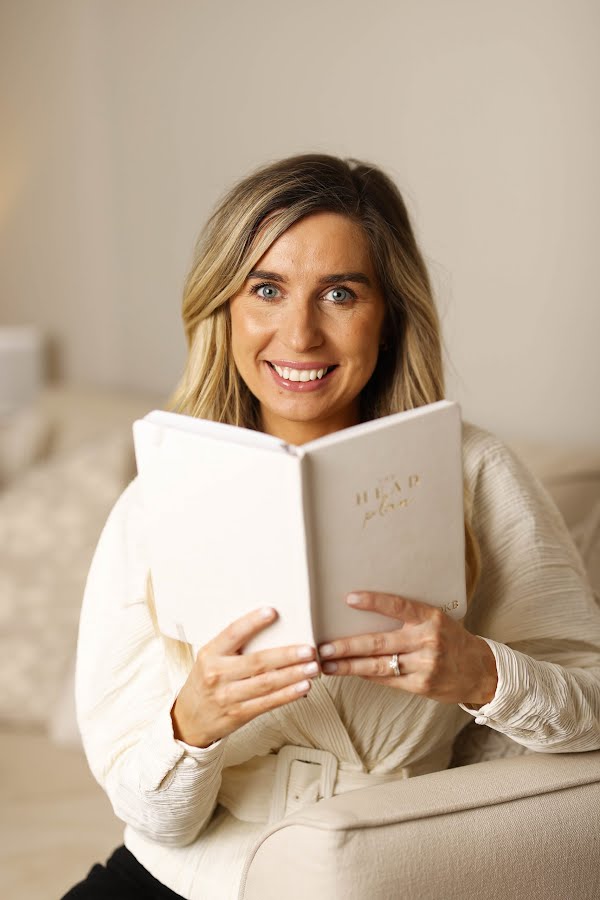
Ever wondered what the true difference between journaling and keeping a diary is? Denise Kenny of The Head Plan broke it down for us and, put simply: ‘Journaling puts you in the driver seat of life and keeping a diary puts you in the passenger seat of life’.

Today is World Meditation Day. A day that might have passed us by unmarked in previous years, if the past few months have taught us anything, it’s the importance of taking a few moments out of our schedules to dedicate to ourselves. 

Our social calendars have been void of activity for quite some time now but the whisper of normality hangs on the air and with it, the pressure to be busier than ever. For some, the prospect is exciting, for others it’s less so – but wherever you fall on the spectrum, checking in with yourself should still be of top priority. 


We spoke to Denise Kenny, founder of The Head Plan Guided Journal and The Head Plan Community app, about all things mindfulness and journaling. A wellness coach and certified meditation teacher, she’s passionate about incorporating balance and self-care into daily life – a change she believes we can all make, and quite easily so too. 

journaling
Conor McCabe Photography

Having dappled in journaling on and off myself for the past few years, I was familiar with the basic idea behind the practice. But there were still a few things I wanted to know… 

First off, how is journaling different from, say, keeping a diary? 

I have kept a journal of sorts since the age of seven. Of course, I started with one of those furry diaries with a padlock on it in which I recorded my day but my methods have changed hugely in the last few years – as have my style in journals!

I feel keeping a diary is more reflective – looking back on the day gone and noting down what happened good or bad in the past tense. Keeping a journal is more looking forward – planning your day ahead and aligning yourself to actions that will make those good moments, achievements and goals happen.

Is it important to physically write out journal entries? 

So important, in fact, I will go as far as to say it’s life-changing! I’ll be honest, it still blows my mind when I meet people and they say they don’t journal. Let me ask you this: What’s your goal in life? What’s your plan? Where do you want to go? Who do you want to be? As an avid journal-keeper, I can answer all of these but someone who does not journal won’t answer with certainty and unbeknownst to them, they may be in fact, caught up in someone else’s plan and just be aimlessly floating through life.

The physical act of taking a pen to paper, not only recording your goals and plans on how you’re going to get there but also having a place to reflect on achievements, is such a powerful practice. Journaling is the secret to getting clarity on what you really want in life and gives you that laser focus on what’s important. The simple act of writing down your goals and aligning your actions to them make you ten times more likely to achieve them. 

You make it sound so easy… does it actually work?

There is science behind it for any sceptics out there! The act of writing out our goals activates the brain’s reticular activating system (RAS), the part responsible for sorting through what’s important, meaning when you get your goal on paper, your brain is literally trained to focus on it.

Freewriting, when we encounter a problem, is also known to help us problem solve and tackle limiting blocks that can hold us back from our best too. Journaling keeps me accountable, focused, motivated, inspired and driven to reach my goals and I know if you start, you will feel this soon too. It’s so empowering.

Ok, we’ve established the importance of putting pen to paper… where’s the best place to start if you’ve never journaled before? 

The best thing about journaling, and one of the reasons I recommend it so much, is it’s so easy to start. 

Now that you’ve got the basics, what are Denise’s top tips for getting into the rhythm of things?

  • The first thing I advise is to make sure you have a beautiful space to write in. This actually helps a lot more than you might think. You feel motivated to write in something beautiful. Have your journal within view – your bedside locker, the kitchen table – somewhere where you will see it.
  • Leave time to plan for the day ahead. I am a huge believer in owning the day and not letting the day own you – with your weekly goals in mind, plan your day and assign yourself one main goal that you would like to achieve, followed by your tasks and actions. Tick them off one by one as you accomplish – this is so satisfying and chances are if you’ve not been in a habit of writing things down you’re about to be surprised. You’re probably doing so much more than you know.
  • Plan your week under six different headings: Finance, Business & Career, Personal Development & Learning, Self-Care & Wellness, Physical Environment, Friends & Family. These headings were adapted from a life coaching tool that aims to help people find balance. Too many times we focus solely on one area in a week and so many of us are guilty of this being business and career!

As for the best method to follow, Denise is a keen advocate for The Head Plan style of journaling – a method that relies on 15 minutes of journaling for the week ahead, followed by five minutes of journaling for the day ahead and then a short five-minute reflection at the end of the day.

I always advise people to start with a style of journaling that we call The Head Plan Method, this is the method that we introduced in our first journal. Our guided journaling practice is broken into sections from long and short term goal discovery right down to weekly goals and your daily actions. So, in order not to overwhelm, I suggest committing to at least one week – starting on a day of the week that suits you to plan for the week ahead.

At the end of the day, I reflect on my proudest moment that day. I practice gratitude, I ensure I have practiced some form of self-care – even if it’s just a cup of tea for five minutes in peace – and then I go again and plan for the following day.

We have a free download on The Head Plan website in which you can experience this method of journaling and try it for a week.

Should journaling be done at the same time every day?

Yes, I am very passionate about building positive habits, rituals and routines in order to bring the best version of myself to the day ahead. I journal every morning and evening at the same time.

If we don’t commit to a set time, especially in the beginning, our journaling can be neglected. I advise building it into your morning and evening ritual.

 Any advice for perfectionists (aka me!) who find it hard just to sit down and write? 

The beauty of journaling is there are no wrong answers… it’s your journal, your style, your words. If I could offer any advice, it would be to dedicate the time, commit to it and just go for it. Once you start and you feel the productivity and positivity levels increase it’s hard to stop. Nothing but good can come from starting a journal.

First launching The Head Plan in December 2019, Denise and her team have gone on to empower thousands of people in over 70 different countries to follow their lead and start journaling.

The Head Plan Journal can be purchased online via their official website, on Amazon or in-store at Arnotts and Brown Thomas.

https://www.image.ie/self/a-beginners-guide-to-journaling-everything-youve-ever-wanted-to-know-about-the-self-care-ritual-267439

Wednesday, May 5, 2021

A woman mailed her diary to a stranger, who added an entry and did the same. People have kept it going for a year.

From washingtonpost.com

Kyra Peralte thought keeping a diary during the pandemic might help her sort out her tangled feelings. Then she decided to drop her journal in the mail and share it with a stranger.

Peralte — a mother of two in Montclair, N.J. — started writing candidly last April about the challenges of juggling work, marriage and motherhood during a global crisis.

Writing was cathartic, but Peralte, 44, wanted to know how other women were doing. Was she alone in her feelings or were other women experiencing the same overwhelming stress? She craved connection.

So she made an unusual offer. She invited other women from near and far to fill the remaining lined pages of her black-and-white marbled composition notebook with their own pandemic tales.

“I wanted an interaction that felt human, and it feels very human to read someone else’s writing,” said Peralte, a children’s game designer.

She dreamed up “The Traveling Diary” — a simple notebook that would traverse the globe via snail mail, collecting handwritten stories and, ultimately, creating a community.

Image without a caption

A year later, seven marbled notebooks have circulated in various locations — from the United States to Australia, Canada to South Africa — and a growing group of strangers have formed an unexpected friendship as a result. So far, 115 women have signed up to participate.

Peralte found her first contributor on a Zoom conference for entrepreneurs, during which she mentioned her diary idea. A woman from North Carolina immediately reached out and said she would like to write in the book. 

From there, Peralte wrote a Medium article, in an effort to recruit more women to get involved. Word spread, and she created a website so participants could easily add their names to the queue. Each person is allowed to keep the diary for up to three days and fill as many pages as they wish, with whatever writing or artwork they choose. Then, they are responsible for mailing it to the next person, whose address Peralte provides.

Women around the world from various cultures, races and lifestyles eagerly signed up to share their stories. They each began filling the pages with their own handwriting, narrating their pandemic experiences, recounting obstacles they faced and sharing lessons they learned. While some women wrote about grief and heartbreak, others wrote about joy and new love.

“Everyone approaches the blank pages in their own personal way,” Peralte said.

The entries all reflect the moment in time when they were written.

Amy Tingle, 52, sat down with the diary last September, in the wake of civil unrest and ongoing protests, and she decided to focus her entry on America’s racial reckoning.

“I couldn’t escape the sadness,” said Tingle, who lives in Maine. “I remember being really disappointed in humanity.”

Writing in the communal diary, “was definitely a therapeutic thing during that time,” she said. As an artist, she also included a collage of women, symbolizing the sense of friendship she felt with other participants.

While writing her own thoughts was healing, she said, it was equally meaningful to read the words of other women who held the book before her.

“It was so fascinating to know that we’re all in the same moment in time, but having such different experiences,” Tingle said.

Kirsty Nicol, 29, who lives in London, heard about the Traveling Diary through a friend. She received the journal two months ago, after it was shipped from New York City.

“It came to me at a challenging time during lockdown,” she said, adding that on top of struggling with prolonged isolation and pandemic fatigue, she also got tonsillitis. Reading the entries allowed her to escape, transporting her into the lives of others and finding bits of wisdom they left.

One woman from Australia had written: “Working with the setbacks. Not against them. Patience and gratitude. It’s a dance. Life is moving and we can stomp our feet in rejection, or we can gracefully embrace the mess, tidying as we go.”

While some women opted to write about broad issues impacting society, others got more personal.

When Colleen Martin, 44, received the diary on her doorstep in Florham Park, N.J., last November, “I had just recently lost my brother,” she said.

Although she had originally signed up for the Traveling Diary months prior, it ultimately arrived at just the right moment for her, she said.

“By the time I actually got it and wrote in it, it was much more of a therapeutic relief,” she said, explaining that she wrote about her grief.

It helped her look for meaning and “the growth and development that occurs in terrible times.”

Martin shipped off the diary to the next participant, and shortly after, Dior Sarr, 33, received it at her home in Toronto just before the new year.

“I wrote about my ambitions, my goals and how I wanted to step into the new year,” she said. It felt meaningful to “to pass on something so personal. It felt like these were women that I had known even though I didn’t know them at all,” said Sarr, who works in health care.

Recently, though, Sarr did meet some of the women whose stories she read, through a virtual get-together that Peralte organized.

“It has really evolved into a community,” Peralte said. She often hosts Zoom events so the women get the chance to get to know one another more, share stories they might have missed and connect more intimately. Some of the women, she said, have actually become close friends.

Nan Seymour, 54, described meeting fellow Traveling Diary participants as a “miraculous” experience.

Seymour, who lives in Salt Lake City, received the diary last month. She learned about the project on social media and immediately signed up.

“I loved that it was a tangible book, and I loved that it was coming by snail mail, operating at a different speed and frequency than our jacked-up Internet-based life,” she said.

Holding the book in her hands, “I felt like I was reading something sacred,” she said. As she slowly examined the 12 entries that preceded her own, “it evoked a sense of awe.”

“I found all the experiences relatable in their essence, but there were definitely reports from lives very different than my own,” she said.

Seymour wrote a personal essay about her 26-year-old daughter, who is transgender.

“I wanted to represent that part of my life, and I thought it might benefit others,” she said, adding that she knew her words would be well-received.

“We’re all drawn to this project from the same heart-based purpose,” she said. “Once you come through this door, you’re meeting people whose values align.”

Although six notebooks are still traveling the globe, the original diary — which contains Peralte’s very first entry about navigating pandemic life and reconnecting with family — is finally back in her possession, with two more books expected to arrive in May.

“It was beautiful to have it again and to read it,” she said. “I carry these stories with me on a daily basis.”

She feels a strong bond with the people who wrote them, none of whom she would have otherwise known.

Peralte’s spontaneous idea, she said, has had a profound effect on her, and she hopes, the other women who were part of it.

“The Traveling Diary is making sisters out of strangers,” she said.

https://www.washingtonpost.com/lifestyle/2021/05/04/traveling-diary-stranger-covid/