Logging daily highlights can help track the patterns of your activities — and frustrations
I’ve kept a diary at various points in my life, but never thought about doing it in a work context. That’s going to change, after talking to journaling enthusiast Ollie Henderson. Ollie is author of an excellent guide to career transition (another good September topic), Work/Life Flywheel.
He posted about his journal on LinkedIn and I was intrigued — so I asked him to share more details with Working It readers.
He got started, it turns out, for the same reason that those of us who love personal diaries keep at it: maintaining a record of our daily lives, before it is lost to unreliable human memory.
Ollie told me that when he started a career pivot, in January 2020, he realised that “thousands of moments that had shaped a decade of my work and life were a blur”. Relatable.
He went on: “As I considered my next steps, I struggled to identify the skills and expertise I could offer to other businesses. That’s when I started my work journal. I started by listing things I was proud of, exploring how I wanted my work and life to evolve, and focusing on what I’d enjoyed in my career. Once I had some clarity, I shifted to ensuring I didn’t forget anything else, noting key moments down each day: achievements, challenges I was struggling with, breakthroughs, and interactions with colleagues, collaborators and clients.”
The practicalities of keeping a work journal will depend on your individual preference, but Ollie started with pen and paper. This fits into your life with very little extra effort (or “friction”, to use the techie term), which is key when you start any new work habit 🔑.
Writing down short entries in a notebook, whether that’s “as it happens” or during a few minutes of reflection at the end of the day, allows you to record small things that otherwise get lost. When you feel you’ve “done nothing” during a working week, the records (let’s hope) will tell you otherwise. Logging progress and achievement can be especially important for people who are self-employed with no manager to “mark the homework”.
I asked Ollie to send me a photo (names redacted).
Ollie’s work diary
One of the great things about diaries (of all sorts) is that they can show us long-term patterns of behaviour, preferences and problems that we can miss in the tumult of our day-to-day lives. As Ollie told me: “I find it fascinating to see which moments I note down, positive or negative, because the same themes keep popping up. What does it say when you consistently highlight how good it felt to present your ideas to your team? You probably want to do more of that. What does it tell you when your manager consistently drains your energy? Maybe it’s time to look for another job.”
Ollie has since taken his journaling digital, because he wants to be able to search and find useful data insights. He could not find an app that did everything he wanted so he’s building his own, with the help of collaborators. (Follow him on LinkedIn to keep up with his progress.)
None of us are going to be able to turn back time (sorry, Cher). Not to get too deep, but work journaling might help us to make sense of the transience of our lives. Final word from Ollie: “One profound impact is my perception of time. It can often feel like time is slipping away. Stopping to reflect on what you’re doing each day gives the sense of time slowing down. Marking important moments helps you differentiate one day from the next. It stops the sensation of life blurring into one.”
In legal tug-of-war, university is resisting pressure to return diary to China
Protected under lock and key at Stanford University, the personal diary of a prominent Chinese political official offers a rare inside look at eight tumultuous decades of Communist Party rule, recounting an unvarnished version of history at a time when the nation’s government is seeking to sanitize its past.
But the late Li Rui’s 94-year-old widow says the diary belongs to her, not Stanford. She’s filed a suit against Stanford, demanding its return to her in China.
“The case has enormous significance,” said Orville Schell, director of the Centre on U.S.-China Relations at the Asia Society. “In chapter and verse, Li Rui documented the myriad ways in which the Chinese Communist Party was very savage, inequitable and unjust.”
In this Oct. 2004, photo and released by Li Nanyang, Communist Party veteran Li Rui reads in his study in Beijing. Li worked for Mao Zedong but later became a fierce critic of the regime. (Li Nanyang via AP)
The fight over its fate played out in an Oakland federal courtroom this week, pitting Stanford’s prestigious Hoover Institution Library & Archives against Li’s second wife and widow, Zhang Yuzhen, who the university alleges is a front for China’s powerful Communist Party.
It’s more than just an inheritance dispute. Historians fear that if the diary is returned to China, the government may alter it to rewrite the past. The trial before U.S. District Court Judge Jon Tigar ends on Thursday, and a decision will come later.
The real opponent, Stanford attorneys say, is not Li’s elderly widow, who likely has little income, but the Chinese government bankrolling the case.
“For political control, it’s very important to have a perfect version of history presented to the Chinese public,” said Perry Link, a leading American China scholar at UC Riverside and an emeritus professor of East Asian studies at Princeton. “What this diary does is undermine that perfect picture.”
The handwritten diary and 40 boxes of other materials — letters, meeting minutes, work notes, poetry and photographs — document the life of Li, a top official and personal secretary to long-time party leader Mao Zedong. He died in China in 2019 at the age of 101.
They were donated by his daughter, Nanyang Li, a physicist and vocal critic of the Chinese Communist Party who lives in the East Bay. According to court filings, Jiashu Cheng of the Stanford Centre at Peking University realized the historical importance of the diaries in 2013 and approached the family about a possible donation. Li feared that the materials would be destroyed by the Party.
The diaries of former Chinese official Li Rui, a prominent critic of the Chinese Communist Party, are at the centre of a U.S. legal battle. Stanford University assets that the diaries should remain at its Hoover Institution, where his daughter donated them, and not be returned to his elderly widow, who has been accused of acting as a front for Chinese authorities.(Hoover Institution)
With her stepmother’s assistance, Nanyang Li gathered diaries and notebooks, according to court filings. She says she carried the materials out of China to honour her father’s wish that they rest at Stanford’s famed archives, where they would be accessible to international scholars.
On the witness stand last week, she tearfully described how she promised her father that she would carry on his legacy. Because the materials were carried to California before her father’s death, they were not part of his estate, she says.
In legal limbo, the materials are stored in the Archive’s acid-free boxes on floor-to-ceiling shelves in a climate-controlled room to preserve their fragile paper.
The Hoover Archives has long been a place where scholars could come pore over its holdings, devoted to war, peace and revolution in the 20th and 21st centuries. They preserve more than 7,000 collections in about 150 languages about the Cold War, the Russian Revolution and the Soviet Union, World Wars I and II, and various political and ideological movements.
In millions of handwritten Chinese characters, the diary includes much material about Li’s routine daily life from 1946 to 2018, such as the weather or an afternoon swim, according to books about the diaries.
But its richest vein is a repository of his political insights, tracing the arc of China’s messy and nuanced climb from a poor and isolated nation to a repressive global superpower.
Born in 1917, Li was an idealistic young man who joined the throngs of young people devoted to the Chinese Communist Party. A brilliant writer and thinker, he quickly climbed the Party’s ranks. He was hand-picked by Mao to become his personal secretary in 1958.
He was unafraid to criticize the Party as it evolved from a heroic movement in the 1930s and 1940s to a corrupt bureaucracy in the 1960s and 1970s, said Perry.
“All through his life, he was consistent in supporting freedom and human rights,” Perry said.
Li was expelled from the Party and imprisoned in work camps from 1959 to 1978, including eight years in solitary confinement, after criticizing Mao’s disastrous effort to modernize the agricultural sector using communist ideologies, causing a catastrophic famine. Following Mao’s death, the more pragmatic Deng Xiaoping came to power, and Li was reinstated into the Party.
Although his writing was censored, Li continued to document the Party’s abuses and stubbornly press for democracy. From his balcony, he witnessed the brutal 1989 massacre of unarmed pro-democracy protesters in Tiananmen Square scene. His diary describes the event, calling it “Black Weekend” in English.
His daughter made the diary’s donation to Hoover just days before Li’s death, when he was in a coma and safe from possible reprisal.
The case already has been heard once, and Stanford lost. The Chinese court gave the university 30 days to return the materials.
But Stanford says that the proceeding was unfair. The Beijing court blocked the university from presenting evidence in that case, said attorney Mark Litvack of Pillsbury Winthrop Shaw Pittman LLP.
Over the past decade, China has sought increasing control over historical narratives to escape responsibility for its past, according to Schell.
China not only silences its own citizens, he said, “but is reaching out around the world to intimidate others from saying, writing, researching and participating in ways that do not reflect kindly on their rule.”
Nanyang Li, daughter of former Chinese Communist Party official and critic Li Rui, says that her father wished that his diaries be kept at Stanford’s Hoover Institution as a resource for people seeking to understand the history of modern China. (Hoover Institution)
Lawyers for Li’s widow argue Stanford can keep photocopy reprints and scanned files of the diaries, according to a brief filed by attorneys of the law firm Skaggs and Faucette.
But Stanford worries that if it returns donated items under pressure, no one will ever donate again.
The original physical archives are immensely valuable, scholars say. Because digital copies can be altered, the Chinese government could assert, “‘The materials don’t say what you claim they do. We have the originals,'” Perry said.
“An archive that sits in ‘hard copy’ form irrefutably documents what happened in history,” said Schell. “It’s immensely important to keep the record correct.”
In October 2021, a man recreated a walk he first completed 62 years ago by climbing just under 3,000 feet to reach the summit of Beinn Damh on the north-west coast of Scotland. The steep ridge walk provided unobstructed views across Loch Damh and Loch Torridon. The combination of dramatic vistas and poignant nostalgia left him feeling energised and restored.
Later that same year, a woman documented regular walks along the banks of the fast-flowing river Thurso, near Inverness, in search of otters. Over the winter months, sightings of wildlife on the riverbanks alongside cheerful exchanges with other walkers strengthened her connection with her local community.
In the spring of 2022, another man recorded the joy of swimming in a loch at the bottom of his garden in central Scotland: "Water was warm and enticing—took me five minutes to get waist deep—then… off I went for my longest swim of the year (5 mins and I was out). Refreshed and alive!!"
All three of these people took part in my environmental research project investigating whether Scottish freshwater environments can provide positive mental health outcomes over time. In total, 45 participants from across Scotland took part, with over 700 diary entries recorded between July 2021 and October 2022. Four groups of Scottish adults completed a three-month-long diary at different intervals during this timeframe.
Completed diaries captured first-hand accounts of the benefits of freshwater interactions and created a large database of freshwater experiences: from sailing and swimming to sketching by the water's edge.
This study was one of the first to use diaries to study our relationship with blue spaces. By analysing thesepersonal stories, experiences and emotions, my diary study adds to the growing body of research quantifying thehealth benefitsof spending time in nature.
Credit: Pixabay/CC0 Public Domain
There were some challenges. Transcribing diary entries was time-consuming and deciphering handwriting was tricky at times. One note about watching young people partying next to a riverside path intrigued me: "the ducks weren't overly alarmed, just retreated as the ravers headed towards them backwards." Months later, during a discussion with a fellow Ph.D. student, I realized they had been rowing, not raving.
Overall, my results highlight the potential for lakes and rivers to improve people's physical and mental well-being. Diary entries revealed that participants held a strong appreciation of Scotland's freshwater environments and consistently felt they gained restorative health benefits such as calmness and improved concentration levels.
Feeling fresh air and the meditative flow of the water led to a sense of escapism from everyday concerns for many participants. Interestingly, despite the timing of the project coinciding with ever-changing public health policies, COVID was only mentioned in two diary entries. Other research has found that the pandemic led to an increased appreciation of inland waterways.
Many participants had an emotional connection to the freshwater environments that they regularly visited. This helped to create a sense of belonging. However, this emotional attachment also meant that diarists could be adversely affected by environmental change.
Litter, agricultural pollution and timber harvesting regularly contributed to negative freshwater experiences. Investment in the maintenance and upkeep of freshwater environments therefore has the potential to have far-reaching benefits, both in terms of public health outcomes as well as biodiversity levels.
The process of journaling also proved to enhance the restorative effect of visiting Scotland's inland waters, as one person wrote: "this diary has been really helpful charting my progress and patterns, that I may even carry it on myself!"
Songs can help demarcate this chapter of your life: It’s a way to mark time, to keep one period of time from bleeding indistinctly into the next
I am putting the finishing touches on my Summer 2024 playlist. This isn’t a collection of the summer’s hottest hits, although Chappell Roan and Charli XCX did make it on there. It’s a mix of the songs that I’ve been listening to this summer, regardless of when they came out — more Barack Obama than Billboard.
I’ve been curating this playlist all summer, adding to it whenever I notice there’s a song or an album that I’ve been listening to again and again such that it’s becoming part of my life soundtrack. My Summer 2024 playlist is not meant to be listened to during the Summer of 2024. It’s for the Winter of 2024, or some far-off day in 2035, when I want to evoke this period of time. This period of time when I rediscovered Genesis and became convinced that their 1983 song “That’s All” might be the best song ever written. When I spent an entire month listening to only “Worth It” by Raye and “You’ll Accomp’ny Me” by Bob Seger until I knew every lyric and drumbeat and guitar riff by heart.
When I hear these songs in the future, they’ll trigger memories from this summer. I’ll be back by the lake where a duck walked right out of the water and stood by my beach chair. I’ll be sitting on the screened-in porch drinking iced coffee while the rain blows in. By making a playlist of the season, I’m delineating a chapter of my life. I’m engineering a mechanism to induce nostalgia in the future.
María Jesús Contreras
This dividing of life into chapters is something I’ve become more deliberate about doing as I’ve gotten older. I don’t want one season to just bleed into the next, the days losing their distinctness, vivid experiences fading as they recede into memory. Anything that can create order out of the accumulation of life lived seems useful. Sometimes I’ll just go around and take photos of my apartment so that I’ll have a record of how it looked in this moment in time: the plants and the bedsheets and the clothes piled on the chair. They’re not photos I want to look at now, but 20 years from now when I’ve forgotten about these details that are mundane but so essential to my daily life.
My friend Grace has been making monthly playlists for the 10 years I’ve known her. She calls them her musical diary. “I don’t keep a written journal, but I can look back at the playlists and remember how I was feeling at that time, what was going on in my life: a breakup, a move, a low, a high,” she told me recently. This is what I want: reliable ways to conjure the feelings, the major and minor events.
I feel a lot of remorse around not keeping a journal, a record of my days. I kept one as a kid, but in college, I made the error of reading those cloth-covered notebooks. It was too soon — I was so embarrassed at my young self’s hopes and concerns and insights (or lack thereof) that I took the diaries and threw them in the dumpster behind my dorm. How stupid! How rash! Ever since, any effort to keep a journal has felt doomed, a stop-and-start affair that’s always tinged with anger at my college self’s impulsivity.
I like the idea of using playlists as a journal. It’s easy to do, and easy to stick with. But while I hope the songs on my playlist will evoke forgotten memories and feelings when I listen to them in the future, they’re unlikely to unleash the complicated thought processes, the quickly vanishing flashes of insight, the tiny observations that you uncover only when you actually sit down and write through them. Perhaps this weekend I’ll listen to my summer playlist and try writing out a companion journal entry, a sort of State of the Season that goes deeper into this moment than songs written by someone else ever could.
Heath Ledger's 'The Dark Knight' diary resurfaces, revealing his last entry and the animal that inspired his iconic Joker laugh
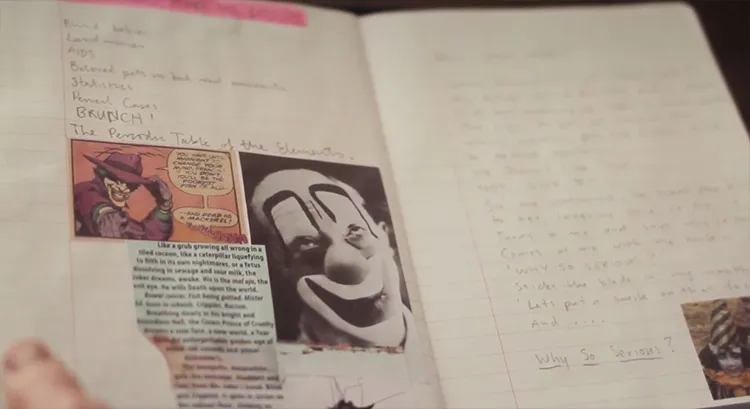
Heath Ledger prepared extensively for his role of Joker in The Dark Knight, keeping a detailed diary containing pictures, text, and more.
Among the pages of Ledger's diary is a picture of a hyena, which many believe inspired the Joker's iconic, terrifying laugh.
Fans have reacted emotionally to the resurfaced diary pages, noting changes in Ledger's handwriting and expressing sadness over the diary's public exposure.
In the vast landscape of Hollywood, few have left an impact on the ever-changing nature of the film industry like Heath Ledger. The brilliant actor left the world in 2008, just months before the world could witness the best performance of his life: Joker in Christopher Nolan’s The Dark Knight. Still hailed as one of the best Joker portrayals of all time, the actor continues to be remembered for his talents, wits, and performances even after all this time.
Recently, a few pages of his ‘The Dark Knight‘ diary resurfaced on the internet, revealing what his last entry was and how he came up with his iconic Joker laugh.
Heath Ledger’s Last Diary Entry and the Animal that Inspired Joker
Heath Ledger as Joker in The Dark Knight | Warner Bros.
Heath Ledger died due to an accidental overdose at the age of 28 (see THR) when he was at the prime of his career. While many initially hailed the actor’s death as suicide due to his role as the diabolical, complex, and devilish Joker in The Dark Knight, which certainly made a significant impact on his mental health (see People), it was later ruled ‘accidental’.
Having passed away just months before the world could witness his impeccable near-perfect, if not perfect performance, Ledger continues to be missed even after decades since the movie was released. In an interview with Empire, months before his death, the actor had revealed the extreme steps he had taken to prepare for the role.
I sat around in a hotel room in London for about a month, locked myself away, formed a little diary and experimented with voices — it was important to try to find a somewhat iconic voice and laugh. I ended up landing more in the realm of a psychopath — someone with very little to no conscience towards his acts.
The said diary has resurfaced on the internet, which was first revealed in Too Young To Die, a documentary made on the actor’s life. Featured in one of the pages of the diary is a picture of a hyena, which fans and others widely believe, inspired his iconic Joker laugh.
The images and text featured in the diary are definitely not for the faint of heart, for some of them feature harrowing details such as his last diary entry, with only the words— Bye Bye— scribbled on the whole page.
Fans React to Heath Ledger’s The Dark Knight Diary
A page from Heath Ledger’s diary via Heath Ledger: Too Young To Die | Broadview TV
In the documentary, Heath Ledger: Too Young To Die, Heath Ledger’s father Kim revealed the diary that the actor used to keep while filming and prepping for his role as Joker. From ideas to scribbled notes to references and more, the diary also contains pictures and more. Instead of Ledger, the diary looks more like it was written by Batman’s greatest nemesis, whom the Australian actor rightly described as an absolute sociopath, a cold-blooded, mass-murdering clown in his interview with Empire.
After some of the pictures of the diary’s images went viral on Instagram, this is how fans reacted:
His handwriting changes, you can tell it’s obsession. -@naitikk_sxinda
Damn not the bye bye in the last page. -karlscfni
So sad. This should have never been made public. Method acting can be dangerous. Is it really acting at that point? -@formertattedteach
Bro was so much into acting that he stopped acting. -@onebignose
Even his hand writing changed from the first to the last entry. That role physiologically changed him. -@jess26127
As fans continue to lament the actor’s death, there is no denying that his portrayal of Joker extended beyond accolades. Even now, his iconic portrayal continues to influence roles and movies across the film industry, leaving an indelible mark on both superhero movies and the broader cinematic landscape.
The washing machine finished. The dog was barking at something, my daughter wanted me, then I had to go to work! On the way home I checked my diary and added this job to the others id not managed to do yet.
It made me think, as a working parent these days we are so often running up hill carrying the weight of our ‘to-do’ lists as well as trying to raise happy, successful, grounded children. It’s not easy!
Then you’ve got someone like me telling you how to be the perfect parent, social media constantly showing you you’re doing it wrong and the government and other people interfering too. It’s HARD.
So I want to tell you I GET IT. I’m a parent too. A working full time one. It’s a constant battle to keep your head above water, to get the never ending jobs done.
So I want you to read today how to take care of YOU. Because ultimately that in turn, makes your children happy and that’s my life’s work.
Make time. Write in your diary “REST” and stick to it. When someone asks you to book something in that day say you can’t. It’s booked. You don’t need to say what with.
Spend time with your friends. REAL time. Alone. How often do we share snatched conversations with other parents because that’s the only time you have?
Go to bed early and turn your phone off. Turn it face down. Get a book, a magazine, watch a movie or anything but don't look at social media. It’s soul destroying sometimes.
Walk outside. Spend a little time every day outdoors, look up. Remember how small you are in the universe. Listen to the world.
Don’t drink too much or take drugs, that’s false happiness.
Be content with who you are. If you’re not work on what being ‘you’ looks like.
Keep a diary.
This seems obvious but I’ve only recently started using a real, paper diary and it’s made a huge difference to my organisation and meant less stress constantly trying to remember things!
Be grateful for all that you have. It’s more than some people.
Be present. Live in the 'now'.
Then look at your children, aren't they just WONDERFUL?
Transit Diaries is a series in which residents of Greater Washington track how they get around the region for a week, shedding light on what’s working well and not so well with our transportation systems. Read past Transit Diaries.
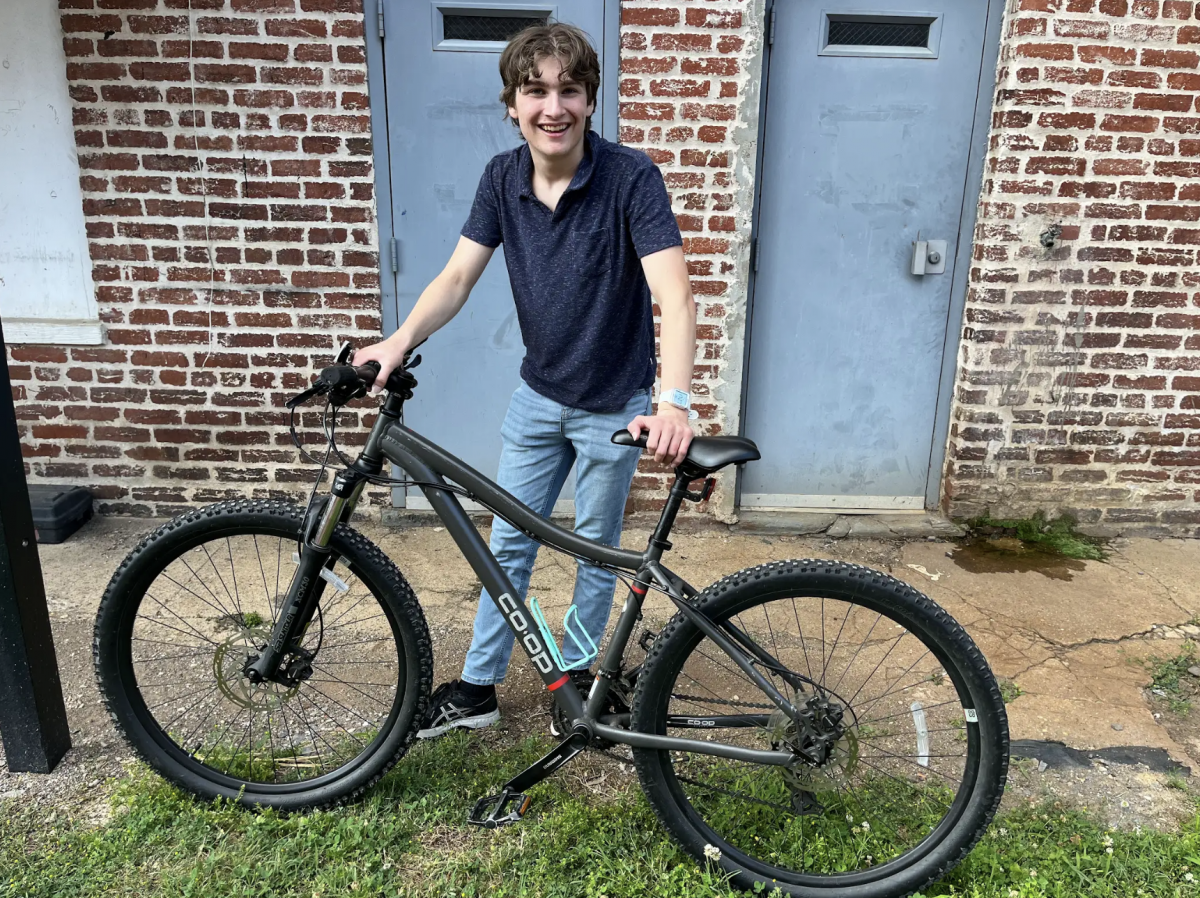
Hello, my name is Beckett Neustad and I was an intern for Greater Greater Washington in the first half of 2024, and am a student at School Without Walls High School, located in Foggy Bottom. I live in the Eckington neighbourhood of Washington, DC, and typically commute via bicycle. I obviously spend most of my weekdays at school, but when I am not at school, I enjoy learning history, playing guitar and reading books. I also often spend my time doing homework, which is unsurprisingly a little less fun.
Day 1: Monday, April 29
I pretty much bike to school whenever I can. I am lucky to have a fairly direct route to my school with enough bike lanes to at least give the illusion of safety. Other than driving to school, which takes 30 to 45 minutes, my next best option is taking the Metro which usually takes roughly half an hour. Today I had to go to the GGWash Navy Yard offices at 1:30 pm for my internship, so I strongly considered taking the Metro from Foggy Bottom (where my school is) to Navy Yard. Ultimately, I decided to get out of my comfort zone and bike there.
I can’t say that the trip was easy. Navigating Southwest DC by bike wasn’t fun. Parts of I and M Streets were particularly bad. There was a lot of road work and the streets that weren’t being worked on were poorly paved. It didn’t help that I hadn’t memorized a route before setting out. The route I took turned out to be fine, but having to navigate in my head made things more stressful. In the end riding there ended up being a lot easier than the way back. I didn’t anticipate how difficult getting around the Capitol would be, leading me to take a roundabout route that added about 10 minutes to my journey.
Total distance travelled: Biking, 9.9 miles
Highlights: Taking the bike lane on Raoul Wallenberg Place was very smooth and made that part of the commute very easy. I just wish the bike lane could continue on Maine Avenue so you could connect up with the trail at the Wharf. The trip to Navy Yard only took about 25 minutes, which was impressively fast considering the bad planning and bad infrastructure.
Hitch: As I mentioned before, the bike infrastructure in Southwest was not ideal and I found myself taking the sidewalks a lot.
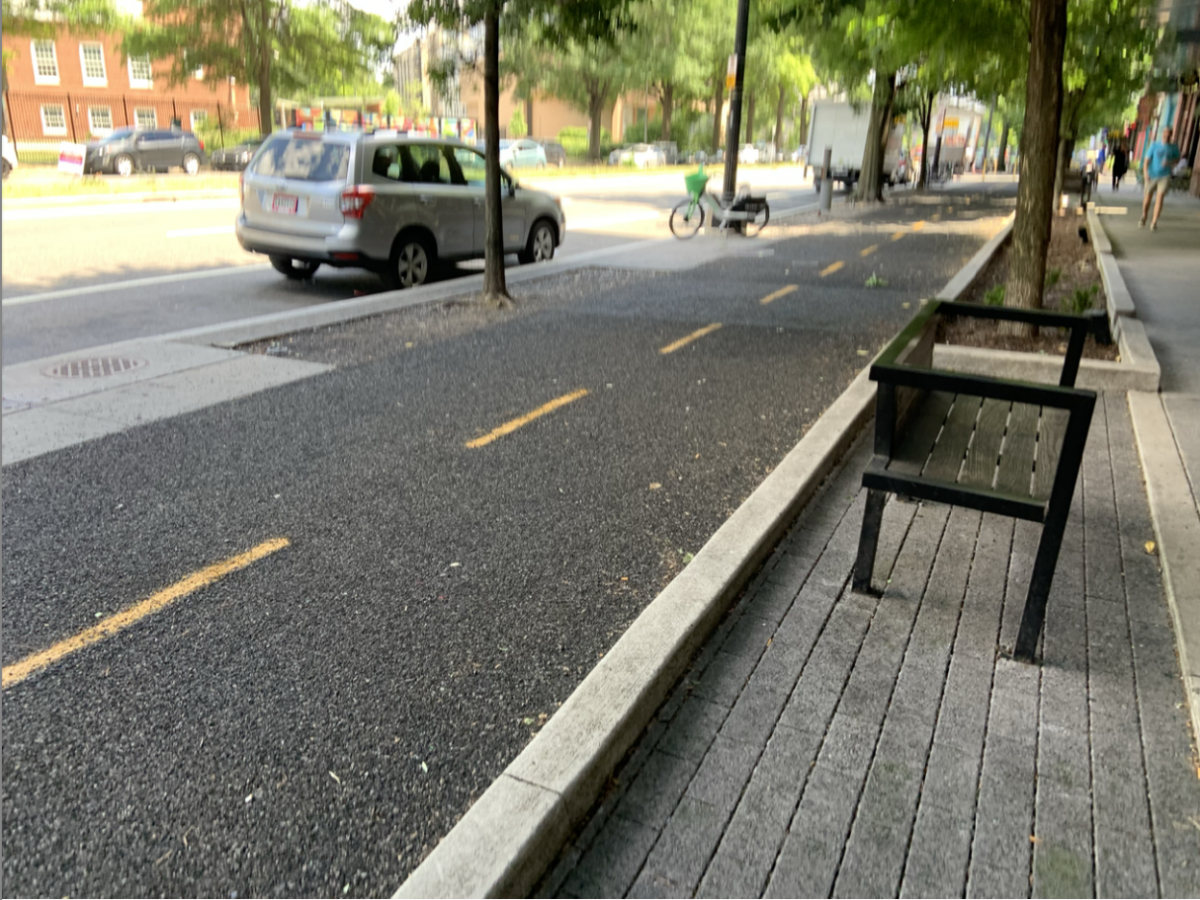
Bike path along the Wharf. Image by the author.
Day 2: Tuesday, April 30
Today was GGWash’s Sweet Sixteen celebration and this made my commutes more interesting. I rode my normal route to school and back without any big hitches. For those who weren’t there, the Sweet Sixteen celebration was down at the Wharf. This necessitated my second trip through Southwest. Luckily, I learned from my previous mistakes and took a much better route around the Capitol, going around the eastern side instead of the western side. I also took an interesting route back from the Wharf, going northward on 12th Street, riding through the National Mall and taking the Metropolitan Branch Trail back.
Total distance travelled: Biking, 14.3 miles
Highlights: Taking the Mall back was very smooth. The sidewalks are wide so you don’t feel like you are at risk of hitting pedestrians. I just want to say that the MBT is absolutely amazing! It always has lots of activity and shows how projects that are geared toward walking and cycling can succeed.
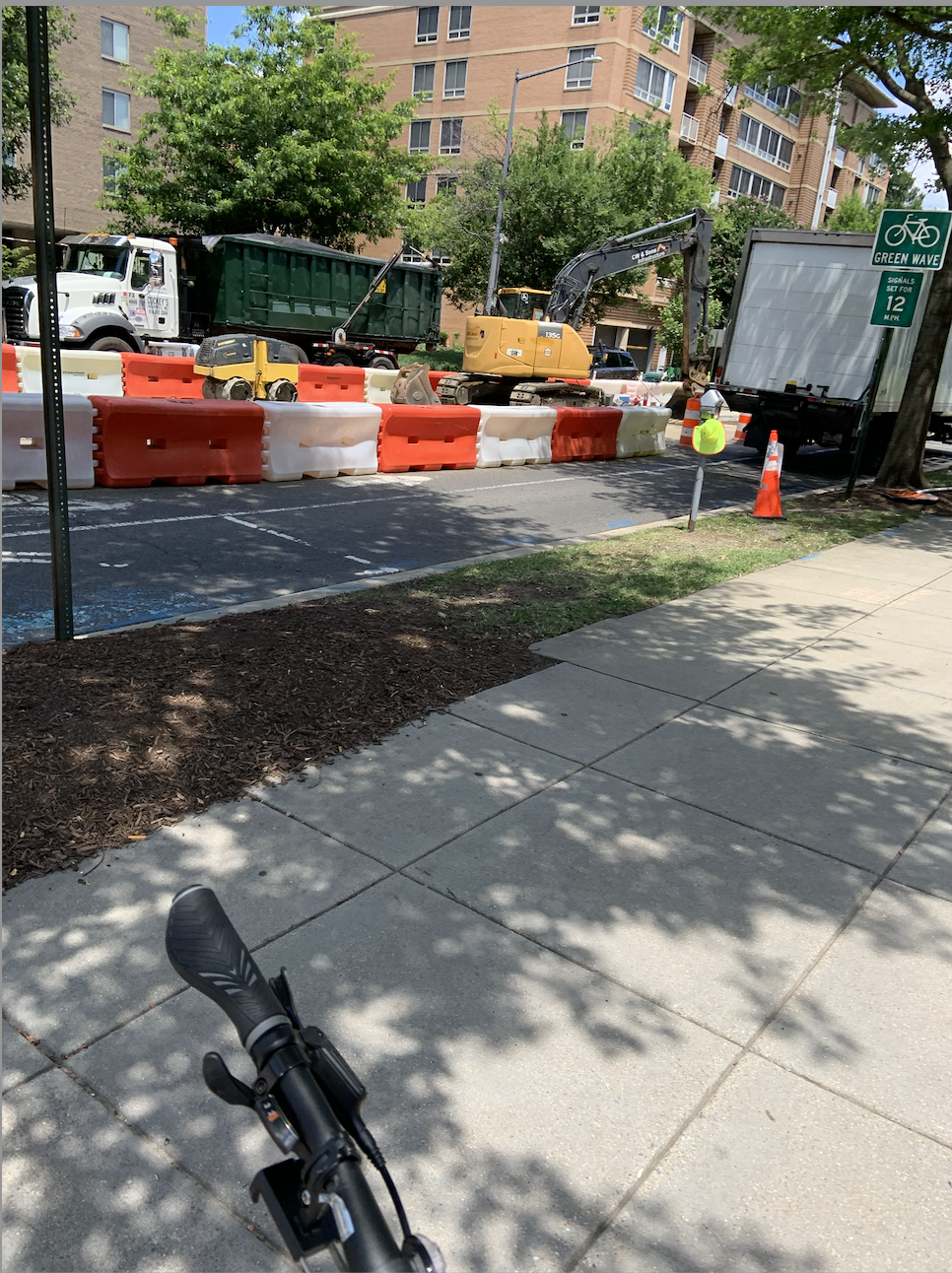
Construction and a blocked bike lane means I take the sidewalk. Image by the author.
Day 3: Wednesday, May 1
After my two days of heavy commuting by bike, I was ready for a break. I did my normal biking commute to and from school. This is a good time to talk about what my commute is like. I like to think I have picked the best route to my school and back, both time- and safety-wise. On the way there, I take R Street until I get to Rhode Island Avenue, which I take to Logan Circle. I then turn onto Vermont Avenue, take it to Thomas Circle, and then turn onto M Street. I take M Street for a while before turning onto 20th Street and finally turning onto G Street, where my school is. On the way back I start by taking the reverse of my route to school, but I deviate from it by turning onto L Street and taking the bike lane there until I turn left onto 13th Street. I take 13th Street up to Rhode Island Avenue, which I take until I turn onto Q Street. I take Q Street all the way to First Street NW and continue on First to R, which takes me home.
Total distance travelled: Biking, 6.4 miles
Highlights: My commute is very fast by bike, solidly beating my time when driving or taking the Metro, despite the poor infrastructure through many parts of the ride.
Hitches: Biking along Rhode Island Avenue can be very scary. There are no bike lanes on the way to school and I have to ride in the third lane, sometimes having to dodge past illegally parked cars. The bike lane on L Street can also be very scary at times. The places where the bike lane shifts to the right to accommodate a left turning lane freaks me out since I have to look back each time to make sure cars aren’t changing lanes.
Day 4: Thursday, May 2
Boy, did I have a busy day in terms of transit! I did my normal commute without any problems in the morning, but my afternoon commute was disastrous! For context, I have wanted to get a new bike for a few months. My current bike is a mountain bike, which is great for mountain biking, but not for city riding. My mountain bike has also had a lot of issues with the gear shifter, which is what plagued my ride back from school. When I was crossing K Street and Connecticut Avenue and tried to shift gears, my chain came loose and got stuck in my gear shifter. This caused me to lose all my momentum and I almost flew off my bike. Luckily I was able to stabilize myself and make it through the intersection with only a few bruises. But my bike was broken. I managed to get the chain back on the bike and got home, but now I need a new bike as soon as possible.
On an unrelated note, today was also my mother’s birthday. We had scheduled a birthday dinner in NoMa, which we planned to walk to. It is a very short walk, but it involves going around Dave Thomas Circle, which is an absolute nightmare. It is being renovated, in a hopefully successful effort to improve traffic flow. Recently there have been people directing traffic during certain hours of the day, which has made things a lot safer. However they weren’t there when we crossed, forcing us to dodge traffic and walk in-between cars stuck in traffic. Other than that the walk was smooth and we took the MBT back, which was, suffice it to say, a lot safer.
Total distance travelled: 9.5 miles. Walking, 3.1 miles. Biking, 6.4 miles
Highlights: Not many highlights today but I can say that the MBT is still amazing. The next time it is suggested that we widen a freeway or road, we should widen this instead. It could certainly use extra capacity!
Hitches: My bike breaking was an obvious hitch, but at least that wasn’t due to poor urban planning. I am sure a lot of people reading this will know this already, but Dave Thomas Circle is one of the scariest places to be a pedestrian. I am hoping that the work will make things feel safer, but I have my doubts. In the meantime, it is terrifying to have to dodge cars in the middle of crosswalks and decipher unclear walk signals.
Day 5: Friday, May 3
I checked my bike last night and determined it would not be safe to ride to school in the morning, meaning that I would either have to drive or take the Metro. Readers of GGWash may be disappointed to know that I opted for the former. While the actual Metro ride is very fast, it involves 15 minutes of walking on either end, greatly extending the journey. This makes driving the second-fastest option after biking. Driving does have another upside: it gives me hours toward getting my provisional driver’s license.
For those who don’t know, there are two steps to getting a driver’s license in DC. First, you get a learner’s permit by passing a multiple choice test; then you need 40 hours of driving and to pass a driving test to get a provisional license. Finally, to get your full license you have to get another 60 hours of driving in. I am currently almost done with my hours and am planning to take my driving test soon, so driving to school does have a silver lining. In addition, because my father has to be in the car with me I don’t have to park.
Total distance travelled: 7.9 miles. Walking, 1.5 miles. Driving, 6.4 miles
Highlight: I took a walk around the GW campus during my lunch break today and the campus is quite pedestrian friendly.
Hitches: Rhode Island Avenue isn’t just a disaster to commute on by bike, it is also a disaster to commute on via car. Drivers are very aggressive and often try to pass you using the parking lane, only to have to honk their way back into traffic after getting stuck behind a parked car. This isn’t so much a hitch as bad urban planning, but there are several places on Rhode Island Avenue where there are crosswalks with no stop signs or lights where cars are instructed to stop for pedestrians. While this may be a good idea in theory, in practice it means that cars can zip past pedestrians who have to run across the six-lane avenue when there is a lull in traffic.
The Metropolitan Branch Trail (MBT). Image by Joe Flood used with permission.
Day 6: Saturday, May 4
My only transit excursion today was going to get a haircut in Takoma Park. The Metro ride took about 25 minutes including walking on both ends. The ride went without any hitches and I made it in time for my haircut. My mother and sister met me there, and afterwards, I drove them back home, getting some more hours behind the wheel.
Total distance travelled: 11.7 miles. Walking, 1.7 miles. Driving, 4.8 miles. Metro, 5.2 miles
Highlights & hitches: The Metro trip was very smooth and fast. The walk to and from the Metro added a little to the duration, but otherwise I was very satisfied with it. Takoma Park is fairly walkable, there are some questionable intersections and the roads feel unnecessarily wide, but it has a car-free area and the sidewalks are passable.
Day 7: Sunday, May 5
This is by far my least interesting day. I spent most of the day on homework and preparing for exams. My one excursion was to my sister’s chorus recital near the American University law school. I drove there and back with my parents.
In terms of my transit decision making there was really no question that driving was by far the easiest choice. The second best option would have been to take the Red Line to AU, but this would have entailed a long walk from the Tenleytown Metro to my sister’s choir recital. A bike trip would have been difficult anyway and was impossible with my entire family going.
Total distance travelled: Driving, 13 miles
Highlights & hitches: The bike infrastructure in Ward 3 is very underdeveloped, making any bike trip difficult. It sure would be nice to have bike lanes on Connecticut Avenue.
While this may not be a highlight or hitch I think it is interesting that when traveling to places in upper northwest from where I live driving is clearly the easiest and fastest choice. Part of this has to do with the lack of Metro stops across upper northwest. The Red Line can take you to the most prominent areas of upper Northwest but there’s no way to get to areas far away from the Red Line without taking a long walk. A line going roughly horizontally across Northwest could help end this problem, though this would be far off in the future owing to WMATA’s current funding woes. Another part of this is the ease of access with a car. It is not hard to find parking and Massachusetts Avenue takes you most of the way there.
Final tally: 30 trips
Mode
Number of trips
% of the total number of trips (rounded to nearest whole number)
Walking
8
27%
Biking
16
54%
Metro
1
3%
Driving
5
16%
Total
30
0
Reflections
This was an interesting and informative experience. I had never really thought about my daily commutes like this. I found writing this diary very helpful for giving myself a document I can look back at to consider how I make choices on how I get around. This week was not necessarily representative of a normal week in my life, what with my bike breaking and having a lot of commuting to Navy Yard in the first two days. I was a little horrified by the fact that I drove the last three days, but this provided a good wake-up call for me and it was affected by circumstances beyond my control.
Keeping this diary also made me concentrate more on the things I would like to see changed. While I often think of these things when I am commuting, it was helpful to write these hitches down and think about possible solutions. My hope is that others will have encountered these problems and brainstormed their own solutions. Writing this has also made me appreciate the many ways in which our region is unique. We benefit from a great Metro system, and for all its flaws, my bike commute wouldn’t be possible in many other American cities. In the end, this reiterated for me the fact that the Washington, DC, region is great but it can be greater.
Beckett Neustad was a spring 2024 intern at Greater Greater Washington. A lifelong resident of the District, he first became interested in urban planning from his experience biking to school. He is also passionate about D.C. history and public policy. For fun, he likes to look at historic maps of D.C. to see how the city has changed over the years and ponder how we can improve it in the future.