From thestar.com.my
When Ula Wagner was told her daughter had been killed on the Ukrainian front line, she thought there must have been a misunderstanding.
Yes, her daughter Savita Wagner had joined the Ukrainian army as a German volunteer – but how could she be in danger, serving as a medical assistant, 50km away from the front line?
It seemed impossible for her to be dead.
But it emerged that Savita had served as a frontline medic, always deployed in the most dangerous places.
On Jan 31, 2024, she was trying to rescue two wounded soldiers when a piece of shrapnel pierced her carotid artery.
That came just a day after a similar fragment missed her by a hair’s breadth.
“I am luckier than anyone else in the world!” she wrote in her diary.
That was her final sentence. She was 36 years old.
For Savita, life on the front line was “hell”. But it was a hell of her own choosing. The world she had voluntarily left behind was perhaps no paradise, but by comparison it was an idyll.
Now, she is mourned by her mother Ula, in the city of Bonn.
On her walls, there are pictures of Savita as a little girl. In one, she is beaming as she hugs her mother, who had just returned from a business trip.
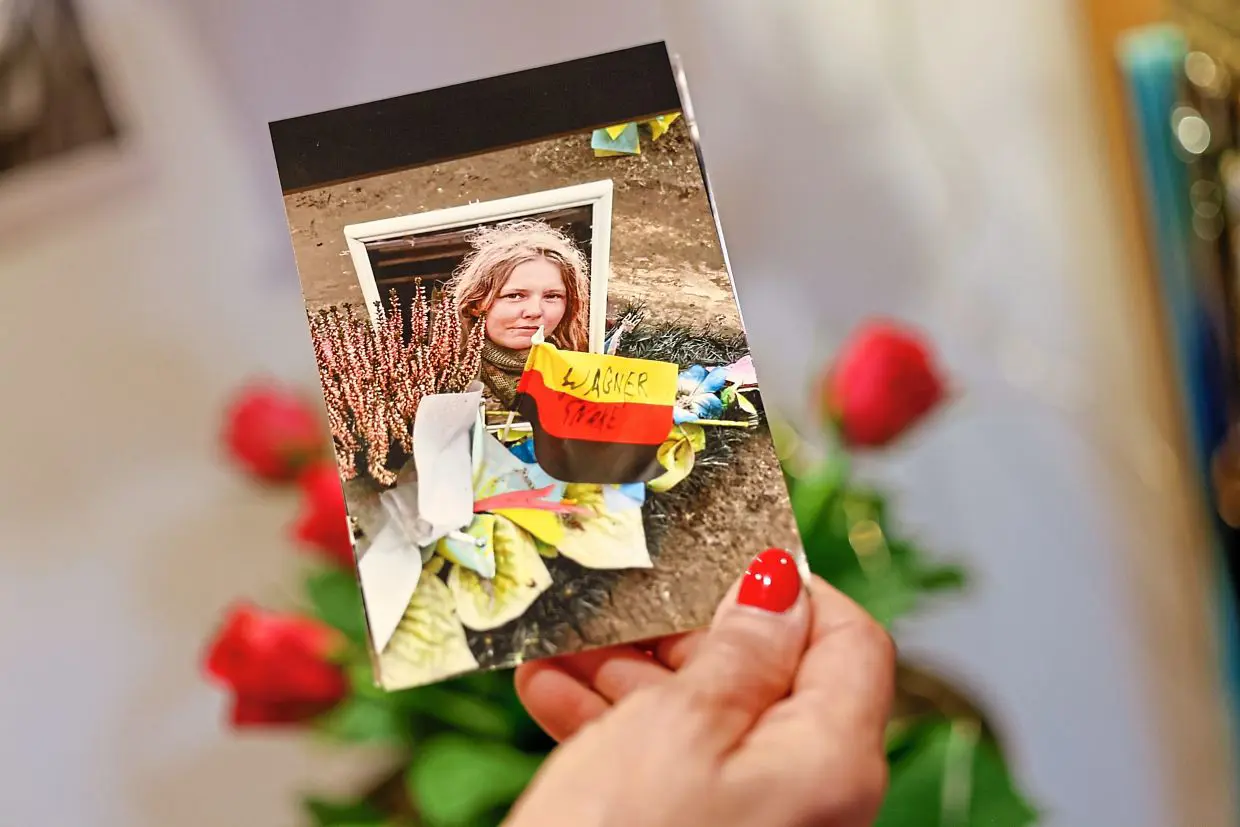
She had a sheltered childhood in the 90s, making it all the harder to imagine she would wind up buried in the Avenue of Glory at a cemetery in Kiev.
“Savita wasn’t the war type at all,” insists her mother, now 73. “She never watched a war film; she couldn’t stand the sight of blood. If someone had told me all this five years ago, I would have said: utter nonsense.”
After finishing school, Savita studied medicine, but dropped out halfway through and began studying mathematics in Halle.
That was when she met Canadian Karl Stenerud online. The two married, and he relocated his job as a software specialist to Germany.
Soon afterwards, on Feb 24, 2022, the Kremlin launched its all-out invasion of Ukraine, launching the war that rages on.
Many people were angry at the time. But Savita felt a deeper rage.
“Her home was under attack; Europe was being invaded. Freedom and democracy were at stake,” is what Ula says of how Savita saw the war.
She wanted to do something concrete, so she volunteered as a driver for aid convoys. That was a political decision.
Then she drove a journalist to Bucha, where she saw the bodies lying in the streets following the massacre carried out by Russian troops.
That changed everything. She then decided that everything she had done so far did not go far enough.
She undertook military training and went to the front as a medic, taking on the nom de guerre “Snake”.
Now, Ula has set up a small memorial shelf in the hallway of her flat for her only child. It features a photo of Savita at the front, in uniform, with a bulletproof vest and a firearm.
She stands bolt straight and even smiles a little.
“I see pride and contentment in her gaze,” says her mother.
Yet in her diary, Savita openly writes, “Of course I’m afraid.”
Afraid of being injured or paralysed. Afraid of being taken prisoner and paraded as a trophy.
“But I’m not afraid of dying in battle.” So people should not pity her if that happens, she said.
After all, she reasoned, in truly dangerous situations, she had no time at all to be afraid. She just focused.
Perhaps it had something to do with the fact that she had been diagnosed with autism.
“I ‘feel’ nothing as long as I have a goal in mind,” she realised. “I don’t know if that’s professionalism or an autistic trait. In any case, I’m happy that my brain works that way.”
Ula, a retired administrative specialist, had no inkling of any of this. Savita did have a blog where she shared her thoughts, but her mother knew nothing of it. Or did she simply not want to know about any of it?
“No,” she says after a moment’s thought. “I really had no idea.”
There is a video that Savita sent her from her post in a doctor’s office, supposedly 50km from the front line.
“Hello Mum,” it begins. “I thought you might like a video. I’m working here as a sort of nurse.”
Insects, spiders and snails everywhere
But another video shows a glimpse of her real life, filmed by one of her comrades. It starts with soldiers sitting in the trenches, bullets whizzing past them. Then there’s an explosion. You hear screaming.
But it wasn’t just this constant danger she had to learn to live with.
“It’s always cold and damp. All my things – my clothes, my sleeping bag, simply everything – are constantly damp. There are insects, spiders and snails everywhere. In the bed, in the food, under my clothes.”
Does her mother mind that she kept all this from her? No, she says.
“She did it to protect me. Otherwise, I wouldn’t have been able to sleep a wink. Just like Karl, her husband. She spared me that. And I couldn’t have stopped it anyway. Once she’d set her mind on something, there was no dissuading her.”
When Savita remained unwilling to return to Germany, even for a holiday, despite repeated urging, Ula finally announced she was going to go and visit her daughter herself.
“That’s when she panicked. Which trench should she have given as her address?”
She then came up with the suggestion that she should meet her mother in Kiev, in early January 2024. Her husband Karl would be there then too.
When they met, Ula realised how much her daughter had changed.
“I had the impression that a different person was standing before me. It was her eyes, above all, that had changed so much. They had a depth that wasn’t there before. Today, of course, it’s clear to me why. Those eyes have seen things one doesn’t want to see.”
No one can say how many lives she saved.
A month later, on Valentine’s Day, Ula was back in Kiev – this time for Savita’s funeral.
Only then did she learn that, through her work as a medic on the front line, she had saved many lives – no one could say how many.
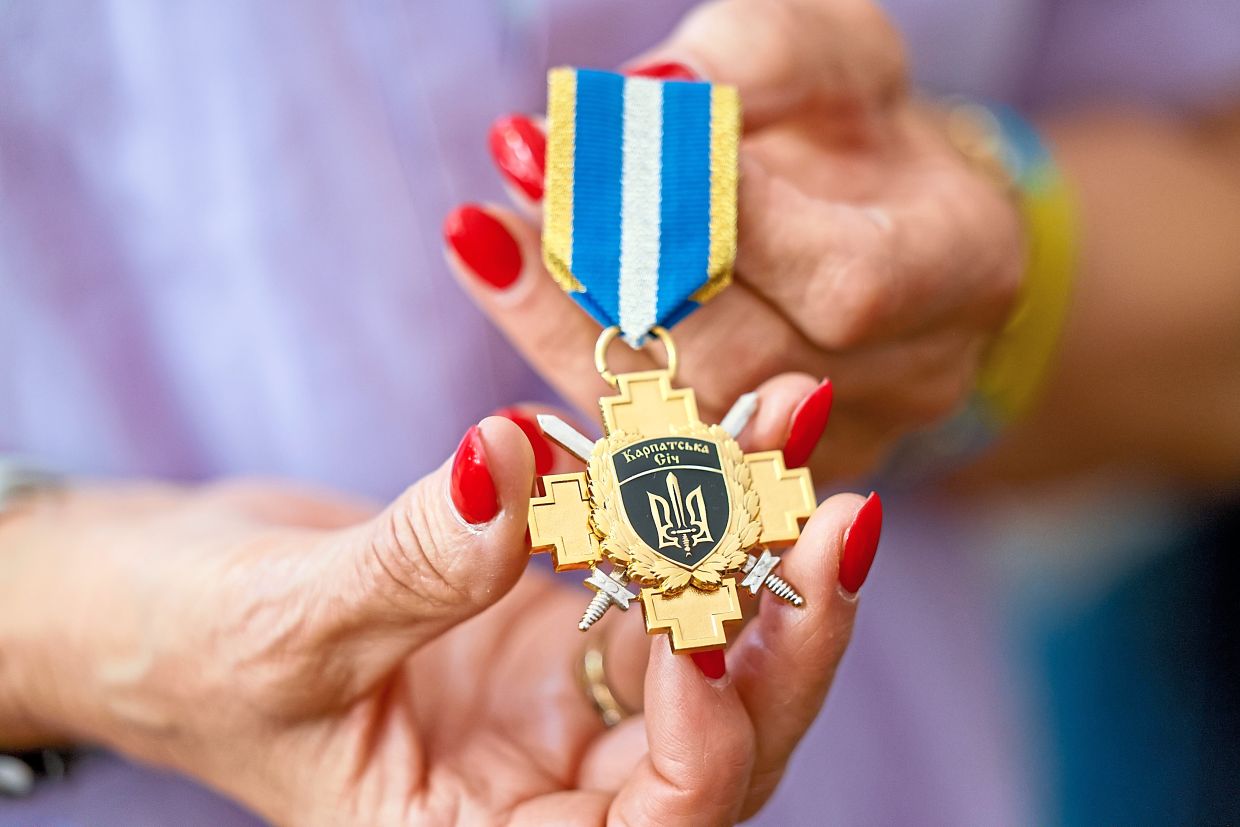
Savita has been awarded four medals for bravery. Two have been given to the Haus der Geschichte history museum in Bonn, at her own request.
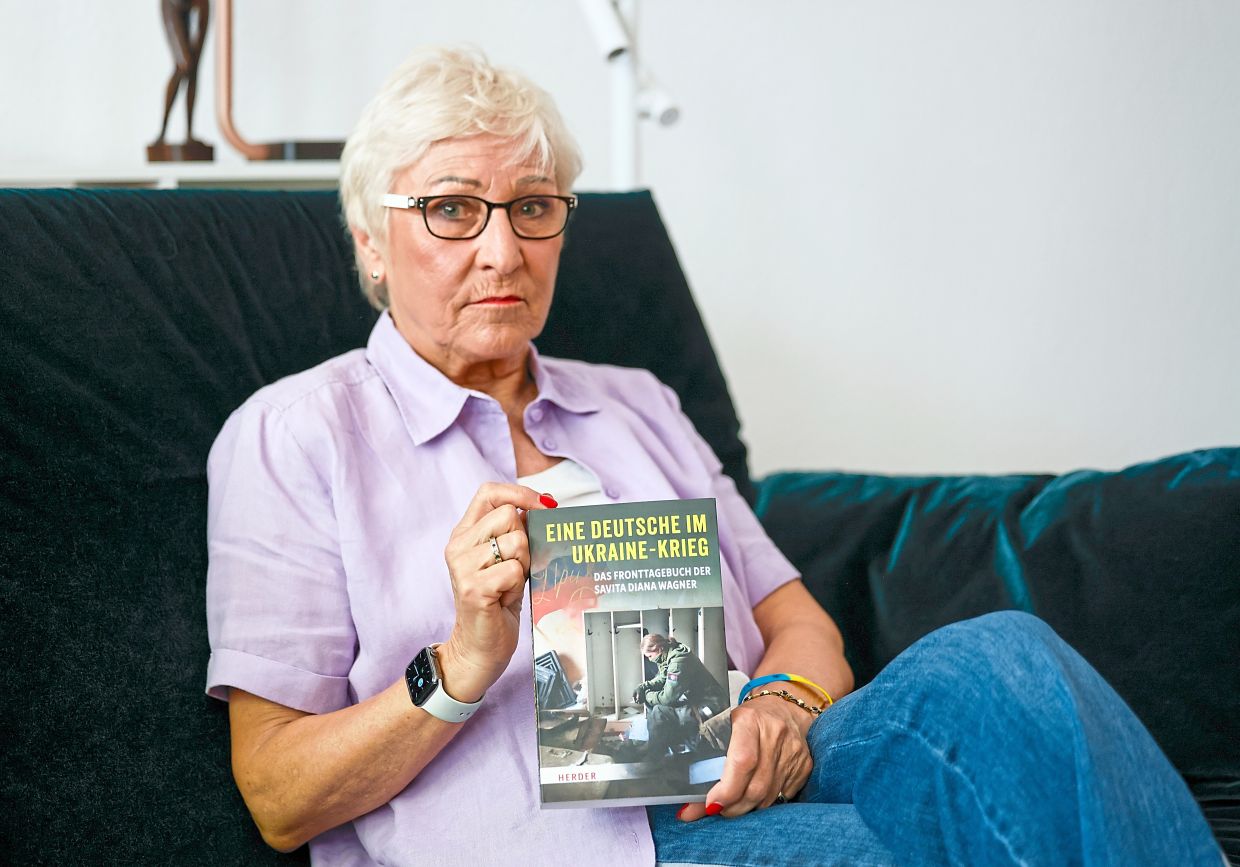
Savita’s boots, her helmet, her field jacket and her frontline diary also went to the museum – and has since been published as a book, too.
“It is important to me that she is not forgotten,” says Ula, and that she carries on her legacy.
Ula is currently setting up a foundation, and plans to add to it part of the proceeds from the sale of her family home in the historic centre of Bonn. She wants the money to support aid projects in Ukraine.
What would Savita say if she could see this? That makes Ula smile.
“She would say: ‘Mum, you’re doing the right thing’.” – dpa

No comments:
Post a Comment