Sunday, March 13, 2022

The "war coffee" diary: How one woman in Kyiv is recording history with a real-time feed of the impact of war

From cbsnews.com

Yaroslava Antipina prefers her "war coffee" black — no sugar. Every day, she sips on the cup, watching a deadly assault unfold outside her window as her life strays further from the one she has always known. 

Antipina has turned her Twitter account into a real-time diary of what it is truly like to be an "ordinary" person living through war, documenting her experience and posting photos since she awoke to the sound of explosions in Kyiv more than two weeks ago. With multiple updates every day, she has amassed more than 82,000 followers as she details the constant rollercoaster of emotions, thoughts and experiences. 

It all started on February 24: "11:45 p.m. in Kyiv. We decided that if we'll sleep a little only fully dressed. The backpacks are ready." 
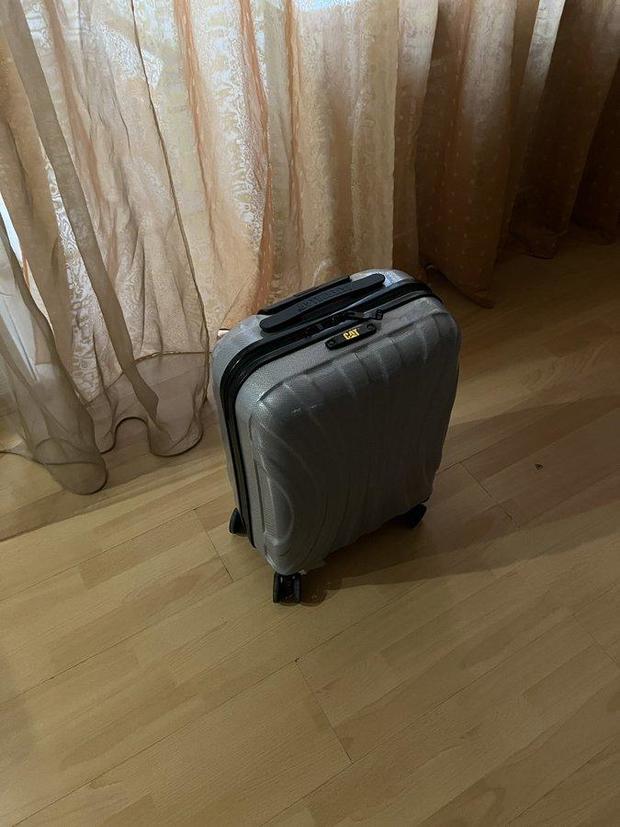
yara-suitcase.jpg
Yaroslava Antipa posted this photo on March 1 as she and her son prepared to leave their home in Kyiv amid the war. YAROSLAVA ANTIPINA

She and her son tried to stay in Kyiv, stocking up on food and staying indoors with only the sounds of explosions breaking a stressful silence. Antipina's mother, who lives in western Ukraine, had been calling her, crying and worried over the situation. Five days after the invasion, they decided to go be with her. 


The day they left, March 1, Antipina posted a photo of a small, grey hard-shell suitcase. 

"It's all I can take with me. All my life is [in] this bag," she tweeted. 

This moment has stuck with her ever since. The suitcase, she told CBS News, represents the despair in leaving a sense of normalcy behind. 

"I don't know, still don't know, if I can return. It's not just the things, the belongings. It's about memories, people, everything I had," she said. "My coffees, my just regular days, all the things I cannot have with me, I couldn't take. I know that I'm lucky because I know people moved without anything, just in clothes as they are." 

Antipina  says she would give anything to go back to that time. Any problems she dealt with don't seem like such a big deal anymore. 

"War is a problem," she said. 

Moments before leaving their home, Antipina took a final look outside their window — a view of Kyiv's newly barren streets as people hid and fled amid freshly-fallen snow. She said that day was the first time it had snowed in Kyiv all February. 

"11:02 am somewhere in Kyiv. It was the last view from my window. My broken heart is crying," she wrote on Twitter. "...We're escaping." 

Before all this began, Antipina said she had an "ordinary" life. She started every morning with coffee and sweets. She worked both in the office and from home during the week, and on weekends, would enjoy a cappuccino, listen to podcasts and read books. Above her apartment lives a "sneezing man," whom she has never met, has no idea what he looks like, and yet often ponders over in her Twitter diary, wondering how he's doing throughout the war. 
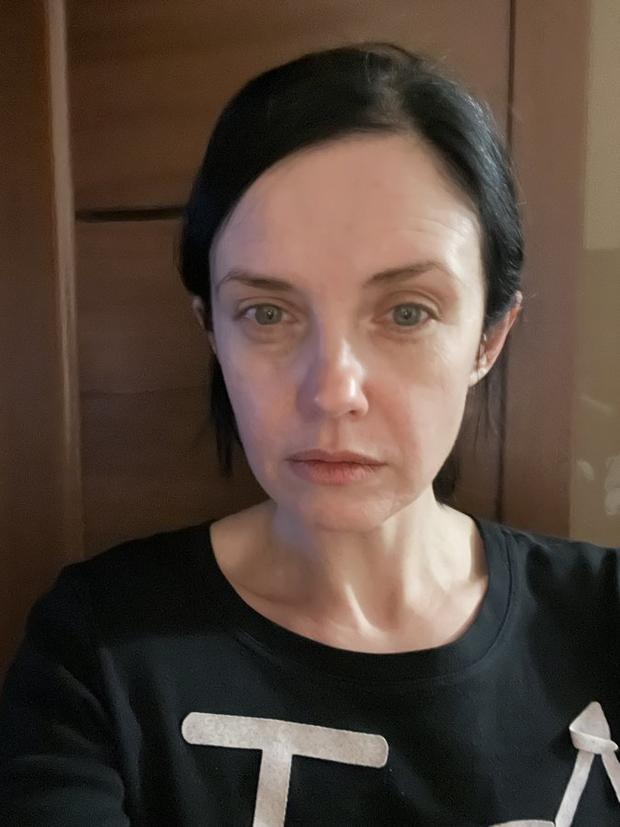
fnbkhuyx0aqp7on.jpg
Yaroslava Antipina tweeted this photo on March 4, saying, "6:10 pm in #Ukraine. Decided to add day by day no make up selfies to my Twitter war diary. The reasons: - I want to keep chronological face moods - I really don't know how much life for me left." YAROSLAVA ANTIPINA

She didn't realize how normal her life was at the moment. Now, very few people roam the streets of her city and children are rarely seen in public. It feels as though "years" have passed, she said.

When CBS News spoke with Antipa, she and her son were in her mother's home, trying to keep some sense of what she calls "that" life.  


"It's two different lives. In that life, I had peace. I had my regular activities. And in this life, I have a war," she told CBS News. "I will never have that life back because I have changed. Our cities have changed. We [Ukrainians] have changed." 

In "this" life, her sister and her sister's three young children have fled the country. Her son, 19, has not joined Ukraine's territorial defence forces, but has said he will if and when it becomes necessary. 

"If he comes to fight, to the territorial defence or to the army, I will join too," she said. "It's impossible for me just to sit here when my son is fighting. It's impossible. ... It's scary because your only child will be in the war." 

Antipa often talks about her "war coffee" in her tweets. There's nothing physically unique about the drink, but it acts as a tangible reminder that everything she craves, loves and desires is fragile, as every passing moment of war could bring a more difficult circumstance. 

The coffee, along with the photo of her last look outside her Kyiv apartment and her and her son's dream of traveling the world with a cat they will name "Victory" — "Victor" if it is a male, and "Victoria" if it is a female — are her "little things of hope."

"War coffee is resistance. Strength," she said. "...We Ukrainians need such things to survive, to be strong. Because for me the very hard thing right now is the uncertainty. You don't know what's going on the next day, next week. But we will manage. ... We have no choice." 

People from all around the world have responded to her tweets with their love, and their "peace coffee" in hand. Photos of coffee mugs have flooded her replies from Tennessee, Seattle, Illinois and countless other places. 

Keeping the diary has helped her cope with the situation and remember how things have evolved. But, she said, it's also for future generations. 

"To show them what the world really is, for you, for us, for ordinary people," she said. "...It's not about only blood, et cetera, but how our life can be changed in one second, and how important [it is] to keep this peace. And how important [it is] to be strong in any situation." 

"But [it's] also for them to be strong, to enjoy life and to keep the peace everywhere in the world, in every country. It's very important because the world is owning everything — families, lives, homes, hearts, everything." 

https://www.cbsnews.com/news/ukraine-war-coffee-diary-yaroslava-antipina/

Friday, March 11, 2022

Journaling Every Day Can Only Be Good for You!

By Dr. Anthony T. Craft  

When you think of "journaling," you might picture a tween girl, laying on her bed with her feet waving lazily through the air and writing about her crush in a diary. Journaling is not only great for girls and their crushes, but they are also becoming essential, and therapeutic for anyone who can express their feelings, and emotions. Effective journaling is any writing that results in a significant change in your way of living.

Journaling has been recognized as a noted asset to promoting good health. Journaling helps, among other things, stress reduction, cognitive performance development and functioning, strengthening the immune system, and many other functions of everyday living. Journaling helps one to analyse individual thoughts to a point where a new perspective can be viewed.

"Whether you're keeping a journal or writing as a meditation, it's the same thing. What's important is you're having a relationship with your mind."
Natalie Goldberg

Journaling causes some of the functions of the brain to go to work. The right side of the brain, for instance, is more conducive to analytical conceptions, thoughts, tasks, while the left side of the brain, which can be recognized for being responsible for the more imaginative, powder puff side of the brain. Both sides of the brain are called to work as one's mind begins to think about what to write and engage in adding together notations to their journal.

As the analytical side, and the imaginative sides of the brain begin to start working, many other effects are taking place throughout the body, which includes the adjustment of mood, self-compatibility is generated, negative thoughts and feelings are reduced, memory is enhanced, and anxiety symptoms and levels are lowered. Overall, Journaling is therapeutic and good seed for the brain.

Writing in your journal daily presents some very important tips that you may need to keep in mind:
1. Find a location that is private and free from diversions
2. Make it a habit to write in your journal every day
3. Be sure that you have your thoughts together about what you plan to write
4. If you happen to be writing about something traumatic that happened to you, please don't hide from the event, but discuss how you felt before, during, and after this traumatic event occurred.
5. Write what you feel!
6. Ensure that ONLY YOU have access to your journal at all times. These are your innermost thoughts and reflections!

Always remember the acronym - W.R.I.T.E.

W - WHAT DO YOU WANT TO WRITE ABOUT?

R - REVIEW OR REFLECT

I - INVESTIGATE YOUR THOUGHTS AND FEELING BEFORE WRITING
THEM

T - TIME YOURSELF AND ALLOW YOURSELF 5 MINUTES TO THINK

E - EXIT SMART, AND LEAVE YOUR WRITING
ENCOURAGING YOUR NEXT DAY OF WRITING (Koopman, Ismailji, Holmes,
Classen, Palesh, & Wales, 2005)

Some say that keeping a journal daily is often more popular than Cognitive-behavioural therapy. Many mental health therapists insist on their clients' keeping journals and being true to themselves about any situation they may encounter.

For me, writing is a way of thinking. I write in a journal a lot. I'm a very impatient person, so writing and meditation allow me to slow down and watch my mind; they are containers that keep me in place, hold me still. - Ruth Ozeki

According to psychologist Barbara Markway;

"There's simply no better way to learn about your thought processes than to write them down."

Therefore, I suggest to you to go out and purchase a journal... they make perfect gifts, and they are not expensive.

https://ezinearticles.com/?Journaling-Every-Day-Can-Only-Be-Good-for-You!&id=10552734


Saturday, March 5, 2022

Sleep journaling could help you get more shut-eye – these are the benefits

From metro.co.uk

Suffer with ‘middle of the night’ anxiety? 

Or perhaps you struggle to get off with so many thoughts whirling around your head every night?

It could be time to try sleep journaling – the process of tracking emotions, thoughts, tasks and reflections in the hours before going to bed.

While it might sound similar to keeping a sleep diary, it’s actually more about concluding your thoughts and feelings on the day. 

And it could help improve your quality of sleep overall.

Ben Treanor, a wellness coach and founder of Mål Paper, says: ‘In the hours before going to bed, using a journal can be beneficial to your mental health and wellbeing, allowing you to process your thoughts from the day – preventing you from overthinking and reflecting when you are trying to go to sleep. 

‘Often when we struggle to sleep, it’s due to overthinking about upcoming tasks or any potential issues.

‘Delaying your sleep in this way can result in a lack of rest for your mind and body, causing you to feel tired and lethargic the next day.’

Ben stresses that what you write in a sleep journal will be personal and specific to you – as it will revolve around your experiences. 

And not only can sleep journaling improve sleep but it can also have a positive impact on wellness, mental health, productivity, and happiness. 

Below are a few of the benefits – and how it could help you get more shut-eye…

It relieves worries

Putting the events of the day out of our brains is easier said than done.

Simply put, switching off can be difficult – especially if we are worried or anxious about certain things.

This is where sleep journaling comes into play.

Ben says: ‘One of the benefits of journaling on sleep is that a journal is the perfect space to vent about your worries. It’s a space completely private to you, and you can use it to express whatever you want.’

Boosts mental wellbeing

‘There is a clear link between poor mental health and lack of sleep. These two issues can form a Catch-22 situation. You can’t sleep because of your bad mental health, but you can’t become better mentally without a proper night of sleep,’ explains Ben.

‘One of the benefits of journaling on sleep is that it can boost your mental health, helping you relax into sleep.

‘Freewriting can help you let out your feelings and explore your creativity. This can help you come to terms with your worries and build self-esteem.’

Sleep journaling can therefore help you break out of a downward thought spiral you might find yourself in at bedtime.

Can be used to analyse sleep patterns

Day one of getting my life into gear
Let it all out before bed (Picture: Getty Images/iStockphoto)

Ben adds that you can also use a sleep journal to look into your sleep patterns and behaviours.

You can do this by asking certain questions before you go to sleep and when you wake up.

Before you sleep, Ben suggests you write the answers to these questions:

  • What did you eat for dinner?
  • How long ago was the meal?
  • What did you do today? (Only a rough summary of major events required)
  • When did you get into bed?
  • When will you go to sleep? 
  • Were any fears or concerns on your mind?

After you get up the next morning, you should immediately write answers to these questions:

  • How long did you sleep for?
  • Did you wake up in the night and how long for?
  • Was your sleep restful?
  • How refreshed do you feel upon waking up?

He adds: ‘These details can help you to spot patterns in the way you sleep. Are certain details appearing repeatedly on nights you couldn’t sleep?

‘Be sure to write as soon as you wake up to ensure your responses are as accurate as possible.‘

https://metro.co.uk/2022/03/03/why-sleep-journaling-could-help-you-get-more-shut-eye-16211234/

Sunday, February 27, 2022

Faber and Profile land Bennett's 'irresistible' pandemic diary

From thebookseller.com

Faber and Profile Books have jointly acquired Alan Bennett’s House Arrest: The Pandemic Diaries, a year of the writer’s reflections on Covid and confinement from March 2020. 

World English rights, excluding USA and Canada, were acquired from Charles Walker at United Agents. The hardback edition will be published on 5th May, a few days before Bennett’s 88th birthday.

Bennett’s diary takes the reader from the filming of "Talking Heads" to thoughts on Boris Johnson, from his father’s short-lived craze for family fishing trips, to stairlifts, junk shops of old, having a haircut, and encounters on the local park bench. 

"A lyrical afterword describes the journey home to Yorkshire from London’s King’s Cross station via fish and chips on Quebec Street, past childhood landmarks of Leeds, through Coniston Cold, over the infant River Aire, and on," the synopsis states. 


Bennett has been a leading dramatist since Beyond the Fringe in the 1960s. His works include "Talking Heads", "The Lady in the Van", the Oscar-nominated "The Madness of George III", "The History Boys", the PEN/Ackerley Prize-winning Untold Stories (Faber) and, more recently, Keeping On, Keeping On (Profile/Faber.)

Dinah Wood, editorial director for drama at Faber, said: "Even during lockdown, Alan Bennett’s diary offers an irresistible combination of memories, jokes, local incident and social commentary. And whether he’s delighting in a hot lunch or mourning the closure of a favourite second-hand bookshop, the entries gain a particular poignancy from his place of house arrest."

Rebecca Gray, Souvenir Press publisher and associate publisher Profile and Serpent’s Tail, added: "This is one of our favourite things to do – not just to work with the legend that is Alan Bennett, but to do so alongside our friends at Faber. These diaries stand alongside his best – witty, reflective, wry. If there’s anyone I want to remind me what being in lockdown was like, it’s Alan Bennett."

https://www.thebookseller.com/rights/faber-and-profile-land-bennetts-irresistible-pandemic-diary 

Saturday, February 12, 2022

Journaling: The greatest hug you can give yourself

From eminetracanada.com

Blog post by Katy Miller

When it comes to self-care, journaling can provide the highest return on investment. Bringing a pen to paper will reward you in all aspects of your emotional, mental, physical and spiritual life.

Clean up your heart

Recording the internal mechanics helps you reorganize your story and prioritize your needs. Your feelings mean you can feel, and by writing them down, you literally move them elsewhere from your heart. This gives your emotions a foot, brings your emotions to life, and authenticates your experience somewhere good, bad, or in between.

Writing down your thoughts can ease the turmoil. With less mind clutter, you can focus on the actual work, such as planning, execution, decision making, and problem solving. A clear mind exists at that moment and creates the ability to live.

Create an outlet

Dr. James W. Penebaker and Joshua M. Smith, pioneers of expressive writing, confront personal thoughts by writing to our basic values, thought patterns, and feelings for ourselves. Say it can affect you. According to these social psychologists who co-authored the book “Opening Up by Write it Down,” having negativeness without creating an exit to disperse negativeness significantly reduces our mental and physical well-being. May cause you to.

Writing about sadness, sadness, loneliness, anger, and fear can be difficult to express, but it can relieve emotional pain. Writing about big emotions gives you better coping, better control, and ultimately better mood. It respects emotions but limits their power over your life.

Journaling allows you to tell a story personally without making any judgment. Some people agree with the writing and tear or burn it after writing the philosophy because they benefit from the writing experience and there is no risk of exposure.


Health benefits

Some argue that the greatest reward for maintaining a journaling habit is an investment in physical health. Studies show that improving journaling not only strengthens psychosomatic medicine, but also strengthens the lymphatic system, boosts immunity, reduces depression and anxiety, lowers blood pressure, improves sleep, and heals chronic pain.

Just keeping a gratitude diary can have a positive effect on your health in just two weeks after you start your regular practice. Dr. Laurie Santos, a professor of psychology at Yale University and the creator and facilitator of the well-being science course, is grateful for the improvement in well-being, not just identifying it. Is to re-experience. To be. The benefits of journaling are cumulative and manifested in the coherence of activity, so it is important to rewire the brain to make this a habit.

Journaling can be as simple or complex as you want, but there is one thing for sure. That is, there is more than one correct way to create a journal. It’s an accessible, personal journey tailored to what resonates with you when you find the mood of your own diary. Give yourself that big embrace when considering the meditative mind-clearing therapy of journaling. The ROI is very large and deserves it.

https://eminetracanada.com/journaling-the-greatest-hug-you-can-give-yourself/413706/ 

Wednesday, February 9, 2022

Keeping Anne Frank’s story alive in Iowa

From dailyiowan.com

Through the Let Me Be Myself: The Life Story of Anne Frank exhibit, a tree planting ceremony, and virtual webinars, Anne Frank’s story is taught, discussed, and kept alive at the University of Iowa 

The cascading reverse-spiral staircase connects the two elements of the Let Me Be Myself: The Life Story of Anne Frank exhibit — past and present.

The life of Anne Frank is chronicled from birth to death with photos and historical information presented in the exhibit, along with various artefacts that relate to her story. The contemporary portion of the exhibit describes the lives of four other young people who face adversity today and are on display in the first-floor rotunda.

Written nearly 80 years ago, the impact of Anne Frank’s diary has persisted. The diary, one of the most well-recognized pieces of literature of all time, has now taken form as a traveling exhibit that has made a stop at the centre of the University of Iowa campus as part of the Provost’s Global Forum, an annual event on the UI campus that is focused on global issues.

As this year’s forum, the theme is “Teaching Anne Frank” — organizers have ensured that the exhibit maintains a distinct focus on education. The museum exhibit is one of many events that contribute to keeping Frank’s story alive in Iowa.

Russell Ganim, associate provost and dean of International Programs, said Frank’s story was chosen to be amplified this year because, along with the universal knowledge that surrounds her story, the general themes addressed in the exhibit are applicable to everyone.

“This is a universal story about persistence and personal triumph,” Ganim said. “Similarly, it’s about discrimination, prejudice, bias, persecution — I think that those are themes that Iowans and really everyone can understand and learn from.”

Despite Frank’s life being marked by tragedy, readers still draw messages of hope from her diary. Carolina Kaufman, director of education and engagement at the museum, said Frank’s story still connects directly with the present, and has the potential to resonate deeply with attendees on a personal level.

“1.5 million children died,” Kaufman said, referring to the children — most of them Jewish — who were killed during World War II. “These things, you know, are hard. They’re hard topics, but we have to talk about them, and we have to do it in a way that invites people to share their own experiences.”

The exhibit will remain open until March 2. Guests can visit on the weekends from 10 a.m. to 5 p.m. for a self-guided tour.  Tours led by peer facilitators can also be scheduled for middle school, high school, and university groups.


                                                                               Jack McGuire
      The University of Iowa welcomes an exhibit on Anne Frank in the Old Capitol on Friday, Feb 4, 2022

Kael Sagheer, education coordinator for the Institute for Holocaust Education, facilitated the training with the peer facilitators at the UI. Emphasizing the importance of personal connection, Sagheer explained that the tour guides are not given scripts, and instead rely on their own knowledge and experiences to share Frank’s story with others.

“We want them to connect with themselves,” Sagheer said. “We want them to connect with each other, and then ultimately, we want them to connect to Anne Frank and the exhibit.”

The exhibit is also accompanied by two virtual webinars moderated by Kaufman. The first webinar will take place on Feb. 9, with a focus on historic events that tie Frank’s story to Iowa. The lens is widened in the second webinar on March 9, looking at the impact that Frank had on the literary world.

Both the webinars and the exhibit work in tandem to allow for discussion and communication. Kaufman said finding ways to remember both the historical content and modern applications is one of the most important aspects.

“The Old Capitol Museum serves as a centre for discourse, and we want to continue inviting that discourse to happen,” Kaufman said. “Anne Frank is one avenue for that. We’ve been fortunate that we were chosen as a site to host that exhibit.”

Frank’s story has several direct relationships to the state of Iowa. As a UNESCO City of Literature, Iowa City is a hub for writers. UI German instructor Kirsten Kumpf-Baele saw the connection between Frank’s writing and Iowa City and developed a plan.

Through her own research and her passion for communicating Frank’s story to others, Kumpf-Baele founded the Anne Frank Tree: Taking Root in Iowa.

On April 29, the UI will plant a sapling at the Pentacrest propagated from a chestnut tree that Frank wrote about in her diary. Kumpf-Baele was involved in the whole process, from initially sending out emails during the foundational steps to planning the planting ceremony.

“Her tree represents so much: a reminder of her and many others’ horrible stories of persecution but also a symbol of beauty, of humanity, of an undying spirit,” Kumpf-Baele wrote in an email to The Daily Iowan. “May generations feel inspired for years to come.”

Frank wrote in her diary that she wanted to go on living even after her death — and she did, Kaufman said.

“Anne Frank was a writer. That’s what she wanted to be,” Kaufman said. “Through her powerful words, we were able to understand what it was like for her growing up as a teenager, being in the family, being a Jew, all these multi-layered aspects of her identity came out through her diary.”

https://dailyiowan.com/2022/02/08/keeping-anne-franks-story-alive-in-iowa/

Monday, February 7, 2022

A voyage to the interior

From gulfnews.com

I enjoy going through my old diaries as I am reminded of experiences and emotions 

Every year I look forward to freebies from banks such as diaries, wall calendars and desk calendars. But these past few years all these organisations have tightened their belts and no gifts are forthcoming.

One bank offered me an exercise book instead, which I disdainfully declined. I thought back to a time when you were offered all these without having to ask. Sometimes, if you pushed your luck, you might even be given more than one of each. Laden with these gifts, you then distributed the extras to family and friends.

I have maintained a diary for more years than I can remember and writing down all that you did each day also served as a reminder of when, where and why. There were certain calendars that were coveted such as those of Air India. The art work was exquisite and when the year ended, you kept them as collector’s items, intending to maybe frame them some day.

Marking important dates on calendars served as a powerful reminder and made sure you never forgot birthdays, anniversaries or appointments. They also helped keep track of the passage of time and there was a sense of satisfaction when you could tear off a page as the month ended. Of course, if there were beautiful pictures or paintings, you just turned it over to the next month.

                                                              Image Credit: Shutterstock


A date in the future

Often you marvelled at how quickly a month had passed or wondered why a particular month seemed so long. I have often wondered why a month with 31 days seems interminably long as compared to 30 days. What difference does a day make? Actually, it does make a difference when you are looking forward to a date in the future and the days seem to crawl.

Calendars are comforting somehow as it is reassuring to know that time can be categorised in units. I know that one can use the calendar on one’s phone for reminders but somehow I remember things better when I can see the date circled. I don’t have to worry that I will forget an important date because all I have to do is refer to my calendar. The day I want to be reminded of has been circled and a little abbreviated note tells me exactly why this reminder is important.

Coming back to diaries, as a teenager this was an important outlet for venting if one felt frustrated by the actions of others. You could pour your heart out in these pages and it was an effective therapeutic tool. Somehow there was a tacit understanding within the family that this diary was not to be read by anyone else.

Historical value

Diaries have historical value too such as those of Samuel Pepys and Anne Frank. My diary might not offer important insights into the time period I have lived in but it is a record of my personal experiences, thoughts and feelings. I wouldn’t want anyone else to read it even when I am long gone.

Nowadays people write blogs or vlogs but these are read by a select few. Keeping a diary helps you deal with stress or negativity as jotting down your thoughts makes you mindful of what you are feeling at a particular time and helps regulate emotions.

I enjoy going through my old diaries as I am reminded of experiences and emotions that were so all-consuming at the time but now, with the passage of time, I can look back without a certain detachment and enjoy the account as something that was in the past and that perhaps helped shape me.

In the words of Martina Navratilova, “Keeping a journal of what’s going on in your life is a good way to help you distil what’s important and what’s not.”

Vanaja Rao is a freelance writer based in Hyderabad, India

https://gulfnews.com/opinion/off-the-cuff/a-voyage-to-the-interior-1.85396600