Monday, November 7, 2022

Living my story, one diary at a time: A personal essay

From dailycal.org

By Eriko Yamakuma

got back into an old habit one and a half years ago, waiting in the bathroom line at the Lund station in Sweden. The wait had been prolonged due to cleaning, so I took out a pen and notebook that I had just purchased at a local stationery store and wrote on the page, “Hello, I’m waiting for the bathroom at the Lund station right now…”

That became the first line of my new diary — my first entry after four years. Since then, I rediscovered the comfort in jotting down my thoughts on a little book I could carry with me everywhere. At first, keeping a diary was a way to kill time, to feel less alone, but slowly, it became a habit; I started recording my days in my diary whenever I had time and felt like it, especially after eventful days.

I first started keeping a diary at the age of 9. Back then, my diary was one of the few joys I had in life. Most of my entries at the time were about my skating life, consisting mostly of some advice my coach had given me during our lessons —mainly some tips on the triple jumps I was working on, or the dance moves in my program, and all the harsh comments and slurs he directed towards me, which I would detail on the page word to word.

I first started keeping a diary at the age of 9. Back then, my diary was one of the few joys I had in life.

Despite my struggles with my skating instructor, however, my biggest threat back then was my mother, who would take away my precious 500 yen (equivalent to five U.S. dollars) if I didn’t do well on the run-through of the day, or yell at me and my brother — even though it was my brother alone who had screwed up in the practice, not me!

But no matter what happened in those years, it felt good to know that, at the end of my busy days packed with skating practices and school, I could always come back to my little diary book. At the age of 18, however, at the same time as I said goodbye to my skating career, I also stopped keeping a diary. 

After a turbulent four years during which I did not keep a diary, I went from an ice rink in Japan to a university campus in Berkeley; my life now looks very different. This fall, unpacking my stored suitcases from my old apartment, I found two old diaries that I had filled since the Sweden trip, together with the two additional ones I had taken with me, which made a pile of four books. Though I don’t have a habit of reading old entries, I decided to give them a read, to get a taste of what my life story looked like in the past years. 

The diaries, it turned out, were goldmines. Contrary to my initial expectation that reading old entries would be boring since I remember all my past experiences anyway, many of the contents presented to me seemed like completely new events — only a few of which I slightly recall. It felt like reading a novel, except it was a true story and I was both the protagonist and the narrator. 

It felt like reading a novel, except it was a true story and I was both the protagonist and the narrator. 

My biggest struggle seemed to be — and still is — relationships, both platonic and romantic. For pages, I would describe my friendship with this girl, complaining about how she’s always unavailable and it’s always me who reaches out first, but on the next page I would write that I had a nice picnic and a fun movie night with her. I would go through a phase of wanting to be in a romantic relationship on one page, only to declare on the next page that I am not interested in relationships – usually after watching too many psycho-killer documentaries with the same female friend I had complained about a few pages ago. 

What I enjoyed the most about reading these old entries was the randomness, which I found to be much like our daily lives. For half a book, all my entries were about my crush on this one boy: listing all the things I liked about him, our cute memories together, describing how I had cried on the train after saying goodbye, and finding lines from K-drama shows that resonated with my experience with him. Occasionally, I would record on the pages my driving coach’s comments on my seemingly terrible (possibly dangerous) driving: “Do not keep the blinker on after having taken a turn, do not ignore the traffic lights, stay in the right lane (LEFT in Japan!) and do not go over the white line!” 

What I enjoyed the most about reading these old entries was the randomness, which I found to be much like our daily lives.

In another book, I wrote about my first-ever hitchhiking experience — how I was scared to death the entire ride and almost peed my pants while my friend was quite relaxed and carrying a conversation with the driver, who, by the way, while kind enough to give us a ride, was “self-absorbed,” according to my diary entry. Of course, this description was followed by a warning to myself on the next page: “Cut down badmouthing people!” followed by another “Never buy jeans again, even if they are on sale (you own too many!)” 


Going through old entries, I realized that while I can never fully remember everything I ever experience, my diary will. Reading the countless emotional entries I made at airports, the descriptions of my romantic struggles with my ex, of eventful party nights and my stress-induced white hairs, I realized that I’ve been through a lot. Being reminded of all the hardships I overcame gave me confidence that whatever challenges I may face in the future, it’s most likely that I can overcome them too.

Going through old entries, I realized that while I can never fully remember everything I ever experience, my diary will.

The most important treasure I found from these goldmines, however, is the sense of authorship in my life story. Though my friends often say that their lives are “eventless and boring,” the fact is, they never are. Each person has their own, interesting life, but it is difficult to see when it’s all scattered everywhere. Besides, we tend to forget most of it, just like I forgot about my old entries. Diaries help us put these interesting pieces back together, and seeing it come out—though in bits, if not all—on paper, reminds us that our life is a story, and it’s ongoing.

Though different in narrative voice and maturity, it’s always been me who wrote my story. As an author, I have the power to shape my story however I like. Knowing this, I tell myself, I’d better write a cool one.

https://www.dailycal.org/2022/11/05/one-diary-at-a-time

Thursday, October 27, 2022

Diary of a 12-year-old Ukrainian girl on what it’s like to flee home: ‘I should not know about types of bombs’

From inews.co.uk

‘I would like the war to stop, I would like to see my friends again,’ says Yeva Skalietska, after her home city of Kharkiv was invaded by Russia

On Valentine's Day this year, Yeva Skalietska, a young girl from the city of Kharkiv in Ukraine, celebrated her 12th birthday. As was her habit, she turned to her diary to immortalise the occasion. “I’m almost a teenager!” she wrote excitedly. “There’s a surprise in my room: balloons! Five of them!”

Throughout the day, Yeva received congratulatory messages from friends and family and held a party in the bowling alley of a nearby shopping mall. The next day’s diary entry reads: “I have lots of homework. Once I’m done with it, I turn on the television”.

As well as her everyday musings about birthday celebrations and schoolwork, Yeva does note that there has been increasing mention on the news of a possible invasion by her country’s aggressive neighbours, Russia. But, she writes, that these are just “rumours and murmurings”. “Up until the early hours of 24 February 2022, my life is peaceful,” she adds.

Just over a week after her birthday, Yeva woke unusually early on the morning of Thursday 24 February. From her bed, in the small city-centre flat she shared with her grandmother, she could hear a “loud metallic sound that echoed through the streets”.

“At first, I thought it was a car being crushed into scrap metal, which would have been weird because [we] don’t live near a scrapyard. Then I realised it was an explosion.”

After years of threats and the annexation of regions of Ukraine, including Crimea in 2014, Russia’s president, Vladimir Putin, had ordered his army to cross the border. Suddenly, the skies above Yeva were filled with fighter jets and the sound of bombs. Kharkiv is in the northeastern region of Ukraine – relatively close to the border with Russia – and was an early target for the invading forces.

Yeva and her grandmother were instructed to go down to a shelter for safety. From inside the shelter, the bombing continued above. Yeva wrote it all down. “I’m leaning against the wall,” she wrote in her diary, “I can feel it shaking. It’s terrifying.”

Like millions of people across Ukraine, Yeva’s life changed irrevocably over the following days and weeks. In her diary she writes powerfully, her words full of confusion and the text littered with exclamation marks. “We are not giving in to despair!” she writes at one point. “Apparently, the first two days of a war are the hardest, but now we are on day three.” Later: “It’s basically genocide against the Ukrainian people at this point!”

The relentlessness of the attacks forced Yeva and her grandmother to flee their home and board a train heading West. During their journey they encountered the world’s media, all of them keen to put a human face to the suffering, and to talk to these new refugees (in Yeva’s diary she notes that she “hates the term ‘refugees’”.)

Outlets would approach Yeva’s grandmother, who directed them instead to Yeva, explaining that she spoke good English, and had been keeping a diary of events. Suddenly, this 12-year-old found herself thrust in front of television cameras, where she spoke about how life as she’d known it had been destroyed.


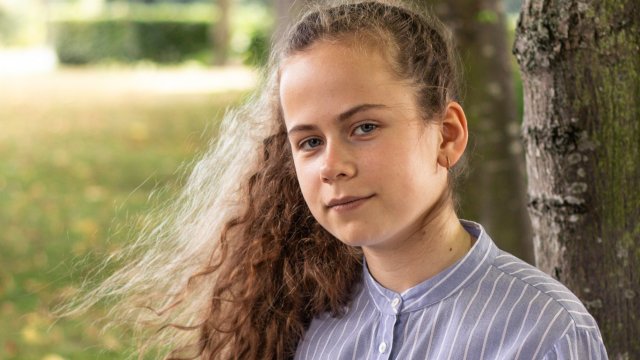
Like millions of people across Ukraine, Yeva’s life changed irrevocably when Russia invaded her country. (Photo: Ger Holland)

Like millions of people across Ukraine, Yeva’s life changed irrevocably when Russia invaded her country. 
(Photo: Ger Holland)

On one particular occasion, mobile numbers were exchanged between a crew and Yeva, and advice proffered. The reporter from Channel 4 News, Paraic O’Brien, told her that Ireland might be a viable destination for her and her grandmother. “But we were happy to go anywhere,” she says, “to escape, and to find a safe, peaceful place where there is no bombing.”

Eight months on, she is talking to i from her new home in Dublin. Sitting in a light-filled living room, wearing a blue checked shirt buttoned, her hair in a high ponytail, Yeva explains that being in the spotlight during that journey was “about staying calm, and telling my story.”

In their new city, a host family helped Yeva enrol in a nearby school. A few months later, she and her grandmother moved into rented accommodation of their own. “It’s a nice house,” she says. “I go to school every day, and I like it, it’s good, I have friends, but then I come home, and I read my phone for the news [from home].”

Yeva explains that unlike her many of her old friends have remained in Kharkiv, unable to get away. “They are scared, and frightened.” They send her photographs from home regularly. One featured her flat, which had taken a direct hit. “So I have no home there anymore.”

(Photo: Yeva Skalietska)

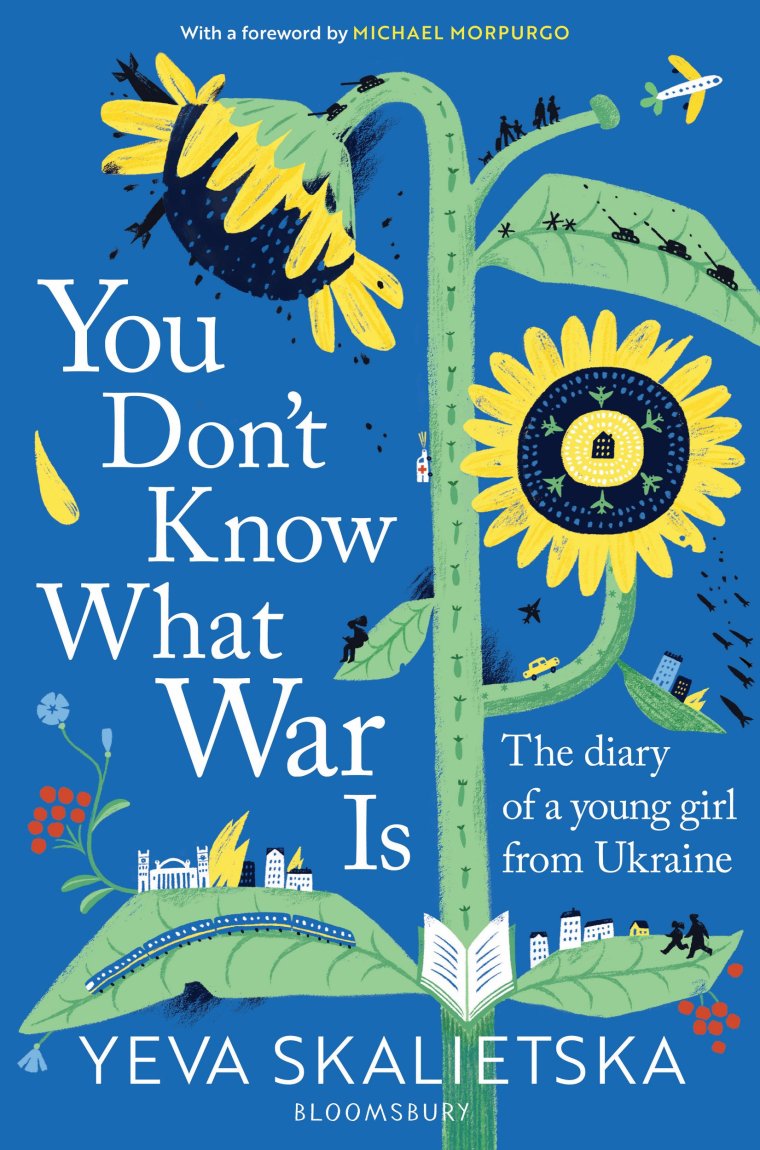
After the TV exposure, Yeva was approached by a literary agent, aware that her diary was living history, and an important testament to the historic events. The diary has now been turned into a book You Don’t Know What War Is: The Diary of a Young Girl from Ukraine and it features an introduction from children’s author Michael Morpurgo.

“No fiction I could write about war can carry the same intensity or power as her first-hand account of the shattering effect of war on her life, on her family, her friends, her community, her country,” writes Morpurgo (Keira Knightly has recorded the audiobook).

“I really want people who read the book to understand what it’s been like for us, even just a little bit,” Yeva says – adding that her friends are proud of what she has achieved. “Children are too small to know what war is like. I should not know about tanks, about types of bombs.”

Home for the foreseeable future will be Ireland, Yeva increasingly aware that a return to Ukraine won’t be possible. That chapter of her life is over – for now. “There are no schools there, no universities; all have been bombed. Who knows, maybe in the future, I will go back.

“I would like the war to stop, I would like to see my friends again, and I hope that one day everything will be rebuilt. But right now,” she says, “right now, I do not know when that will happen.”

You Don’t Know What War Is by Yeva Skalietska is out now (Bloomsbury)

https://inews.co.uk/inews-lifestyle/diary-ukrainian-girl-invasion-leaving-home-1925336

Thursday, September 29, 2022

Intimacy and Manipulation: A Reading List of Fictional Diaries

From lithub.com

At its best, the relationship between novelist and reader is an intimate one. Can I tell you something? whispers the writer, and the reader whispers back, Please do… Of all the forms that the novel can take, the diary is surely the most confiding of all; it’s as if the intimacy level has been turned up to max. Can I tell you something really private; something I wouldn’t share with anyone else…?

A diary has the potential to be funny, by showcasing the idiotic lapses and random thoughts we’re all prone to, but too embarrassed to admit. It can be exciting: a piece of on-the-spot reportage from an eyewitness who was right there today and will be right there again tomorrow. It can be a supremely manipulative text, forcing the reader’s trust, on the grounds that private outpourings are aways going to be authentic. (Are they, though? And what does it mean to call any piece of writing “private”?)

These ten novels could not be more diverse—ranging from the hilarious, to the confidential, to the downright sinister—but they all have the diary format in common.

*

E.M. Delafield, The Diary of a Provincial Lady

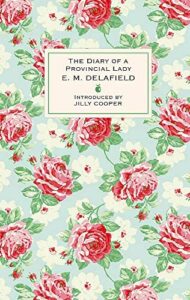
The twee title—and, in the case of my copy, the flowery pink cover design—does this novel no favors. It’s not twee; it’s a work of dryly comic genius. The eponymous heroine is a harried housewife and would-be writer, juggling work, children and social life in a rural village, in pre-war England. Her woes are very humdrum—feeling fed up with her dowdy old clothes, for example, or failing to gel with her grumpy husband, or thinking of a witty put-down long after her snobbish visitor has left—but the provincial lady turns everything to comedy gold with her crisply observant style.

Margaret Forster, Diary of an Ordinary Woman

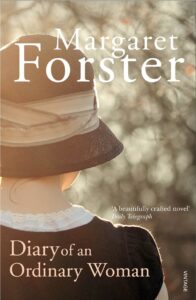
An overview of twentieth-century history that manages to be involving, lucid and concise: this is a tall order for any writer, but Margaret Forster does it, to great effect, in the form of a fictional diary. The “ordinary” woman in question is Millicent King, who begins writing at the age of thirteen, on the eve of the First World War, and continues through to 1995, chronicling her own personal griefs and joys alongside the great events that shook the world during that remarkable century. As a means of getting to grips with history the diary makes total sense, because it echoes the way in which we all experience the world. Shared, public occasions never exist in a vacuum; they are only ever visible through the prism of our own private concerns—and vice versa.

Alice Walker, The Color Purple

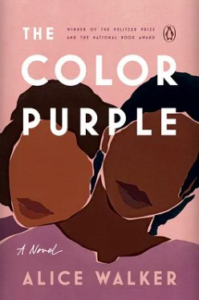
Strictly speaking, The Color Purple is an epistolary novel, but since Celie’s letters are addressed to God it seems fair to include it in this list. “Dear God” comes pretty close to “Dear Diary”, in that both forms of address imagine an idealised audience, with boundless reserves of sympathy, patience and understanding. Celie is certainly in need of a good listener; her life as an impoverished African-American teenager in rural Georgia is harsh beyond measure. Walker’s novel records Celie’s struggles against—and eventual triumph over—a society that seeks to brutalize her physically, mentally and emotionally. Whereas a third-person narrative might tend towards showing Celie’s sufferings, the “Dear God” format allows Celie to use the act of writing in order to think her way through events. Keeping a diary becomes, in itself, an assertion of will.

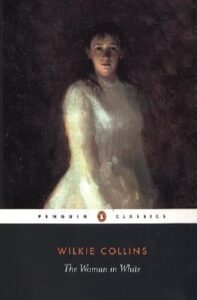
Wilkie Collins, The Woman in White

Perhaps the most sensational of all Victorian “sensation” novels, The Woman in White purports to be a document patched together from various sources, one of which is Marian Halcombe’s diary. Marian is an extraordinary heroine by any standards, but especially when you consider the nineteenth-century norms she’s busting: not only is she permitted to have a masculine face, complete with large jaw and nascent moustache, and to avoid being glammed-up and/or married off by the end, she is also the most intelligent, courageous, loving and resourceful character in the novel. When I read The Woman in White as a teenager, I was very jealous of Marian’s diary: unlike me, she always had something thrilling to write about (when did I ever get the chance to climb about on the roof of a stately home, in the rain, in order to eavesdrop on a pair of villains?), on top of which, her diary had the propulsive narrative structure that mine consistently lacked. Somehow, at the time, it didn’t occur to me that the contrast wasn’t my fault: real diaries can but plod from day to day; only the fictional ones can carry a tightly-honed story.

Bram Stoker, Dracula

Dracula is another Victorian novel composed entirely of letters, diaries and newspaper articles. It opens with the journal of a solicitor named Jonathan Harker as he travels to Transylvania to meet a mysterious new client, at which point events take a turn for the bloodthirsty—in an entirely literal sense. The advantage of the diary format is clear: the reader is able to watch Count Dracula’s horrific schemes unfold with a day-by-day, hour-by-hour immediacy, and from a variety of perspectives. If there’s a disadvantage, it’s in the clash between the fictional narrator’s presumed state of mind, and the actual author’s desire to write lucidly and well, with a slow ratcheting-up of tension. Within the space of a few hours, Harker finds himself imprisoned inside a gothic castle, at the mercy of a man who is able to crawl around like a bat on a perpendicular wall, and very nearly loses his life in an erotic encounter with three vampire women. Do these freakish events mess with his prose style? Not one bit. Aside from the occasional gentlemanly exclamation (“God preserve my sanity!”) Jonathan remains a diligent and cogent diarist.

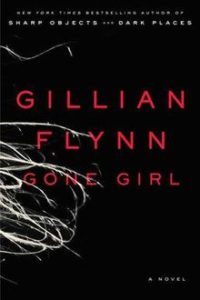
Gillian Flynn, Gone Girl

[SPOILER ALERT] A secret diary is the most confessional and intimate form of writing, and therefore it’s instinctive to want to trust the diarist’s voice. Why would someone be lying when they are only writing for themselves? In Gone Girl—twistiest of thrillers—Flynn uses this intuitive trust to great effect, confusing readers into believing that they really, truly know Amy Dunne, because they’ve read her "secret" diary. Turns out they're wrong...

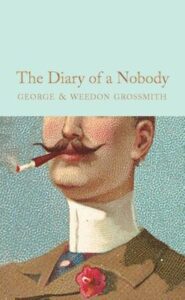
George and Weedon Grossmith, The Diary of a Nobody

“Why should I not publish my diary?” Charles Pooter demands, at the start of this deftly comic satire on life in 1890’s suburbia. “I have often seen reminiscences of people I have never even heard of, and I fail to see—because I do not happen to be a ‘Somebody’—why my diary should not be interesting.” Quite. When it comes to keeping a diary, there is always the potential for pomposity: what, after all, makes any of us believe that our daily thoughts and actions are sufficiently important to be placed on record? Charles Pooter is a middle-class London clerk, with worries and concerns that are far from grandiose (“Will the butcher sue me, after tripping over my boot-scraper?” “Do my ill-fitting trousers make me look like a sailor?” “Would it be a good idea to paint the bath-tub red?”), but for all his pretentions, he is oddly endearing. Perhaps it’s because he’s so recognisable. There’s a little bit of Charles Pooter in every one of us who has ever kept a diary.

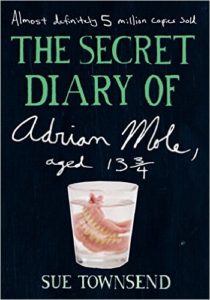
Sue Townsend, The Secret Diary of Adrian Mole aged 13 ¾

Although written a century later, and purporting to be the outpourings of an adolescent boy rather than a middle-aged man, this hilarious YA novel is a close cousin to the Grossmith brothers’ Diary of a Nobody. A self-styled Intellectual with a loathing for Margaret Thatcher, a terror of acne, and a passion for Pandora Braithwaite, Adrian Mole is a wonderfully Pooter-ish mixture of pretension and lovability. Under the cover of humour, Townsend’s novel also offers a glimpse into working-class Midlands life during a difficult decade for Britain, when unemployment was rife and class division very real.

Dodie Smith, I Capture the Castle

A diary is so often a teenager’s best friend, so it’s the perfect vehicle for a coming-of-age story. I Capture the Castle may not be as laugh-out-loud funny as Adrian Mole, but it’s humorous and touching in its own quiet way. In 1930s England, Cassandra Mortmain records the ups and downs of life in a crumbling castle, where she resides with her eccentric family. Their lives are changed, for better and for worse, by the arrival of two dashing American brothers, Simon and Neil Cotton. I discovered this book when I was about fourteen—the perfect age—and fell in love from the very first line. “I write this sitting in the kitchen sink,” Cassandra tells us, engagingly. “That is, my feet are in it. The rest of me is on the draining board.”

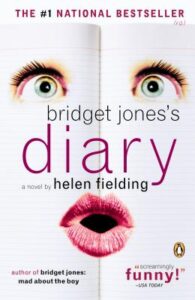
Helen Fielding, Bridget Jones’s Diary

A very 1990s take on Jane Austen’s Pride and Prejudice, and one of the defining books of the decade, it’s difficult to imagine this novel in any other format. Bridget’s insecurities, and her preoccupation with daily calorie-intake, cigarette-count and weight gained or lost, are the kinds of things a heroine can only really confide in the pages of her dairy. Fielding’s writing is so good that the plot—Bridget’s gradual disillusionment with caddish Daniel Cleaver, and growing appreciation of Mark Darcy’s true worth—seems to unfold effortlessly, in and among the hilarious descriptions of Turkey Curry buffets, Tarts and Vicars parties, and blue-string soup.

https://lithub.com/intimacy-and-manipulation-a-reading-list-of-fictional-diaries/ 

Sunday, September 11, 2022

Portsmouth, New Hampshire: Naval Shipyard worker's diaries cover 50 years on seacoast up to 1907

From eu.seacoastonline.com

Robin Silva  |  Portsmouth Athenaeum

In 2021, local historian Larry B. Keech called the Portsmouth Athenaeum with a simple question. 

Would the Athenaeum be interested in a digital transcription of a set of more than 40 diaries penned by local resident Supply Foss Trefethen? These diaries recorded day-to-day life in Rye and Portsmouth spanning the 50 years from 1856 to 1907. They capture events from the mundane to the notable: notes on the local weather; births, deaths, and marriages of friends and family; working at the Portsmouth Naval Shipyard; references to shipwrecks; and commentary on local and national politics - including assassinations, executions and the Civil War. 

So, absolutely yes, the Athenaeum was interested.

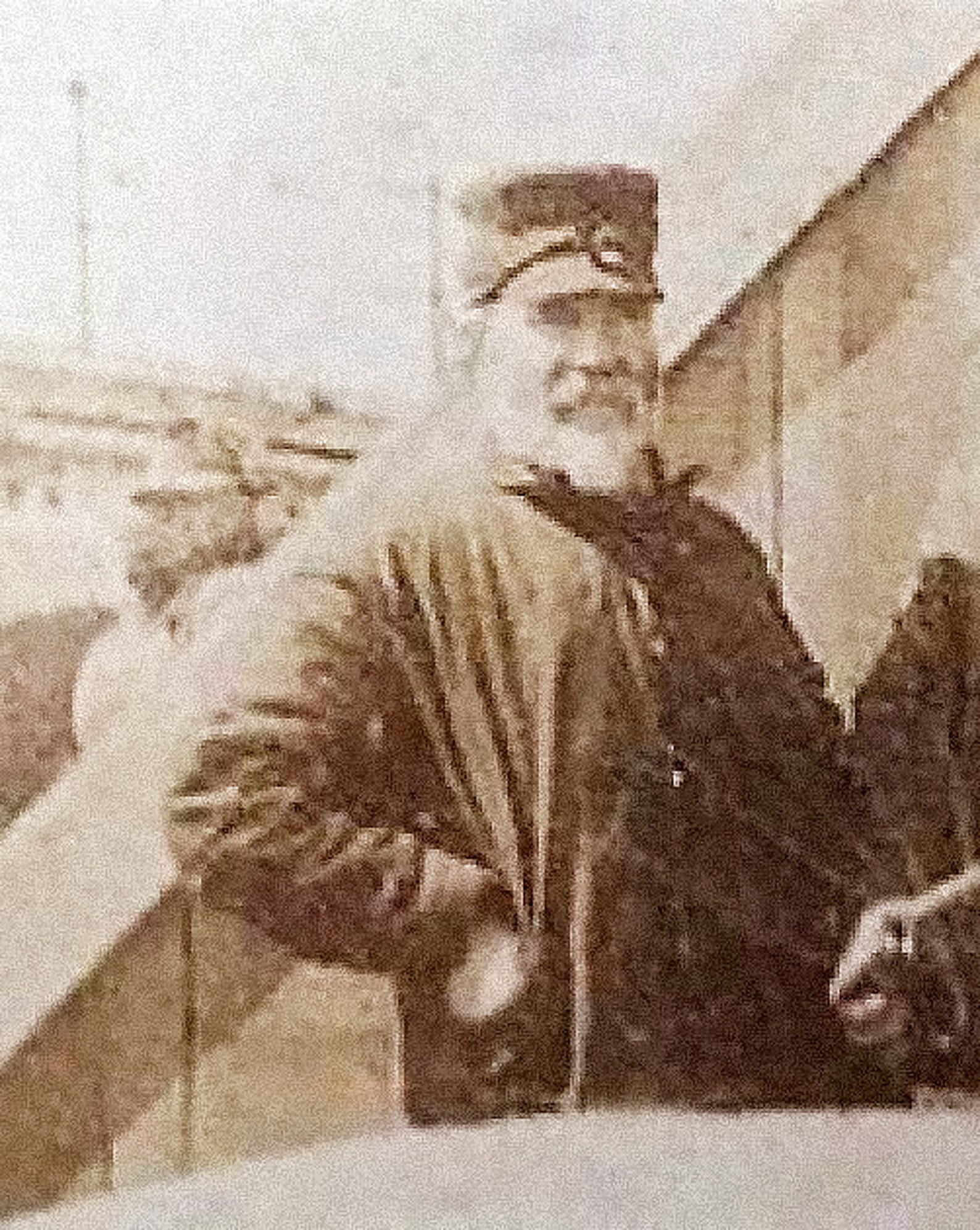
Supply Foss Trefethen (1833-1907) kept diaries for five decades. A shipwright at the Portsmouth Naval Shipyard, he was also was a house carpenter and a Rye farmer.
Supply Foss Trefethen (1833-1907) kept diaries for five decades. A shipwright at the Portsmouth Naval Shipyard, he was also a house carpenter and a Rye farmer.  
COURTESY OF THE RYE HISTORICAL SOCIETY

Who is Supply Foss Trefethen?
Supply Foss Trefethen, a resident of Rye, was born in 1833 and died in 1907. He wore many hats: son, brother, husband, father, shipwright, house builder, carpenter, farmer, landlord and politician among others. 

He saw the change at the Navy Yard from wooden ships to ironclads in the 1860s and steel or iron ships required by the Navy in the 1880s.  He witnessed the electric trolley line that ran right by his house. By 1907, he bemoans the “tombiles” (automobiles) that increasingly raced down the street. He served as a member of the New Hampshire House of Representatives for Rye in 1905. The same year he discusses the “great blast” of the blowing up of Henderson’s Point to improve navigation in Portsmouth Harbor.

What's in the diaries?

The diaries start in 1856 when the 23-year-old Trefethen was living with his older brother, Joseph P. Trefethen, in Portsmouth at 1 Dearborn St. In January 1857, he notes the Piscataqua “freezing” and walking across the ice to Kittery, Maine, with friends. 

Throughout the years, he describes the major fires in Portsmouth, Rye and Kittery. During the Civil War, he follows the war campaign and is very forthcoming in his opinions of the success of those efforts.

For 40 years, he worked as a shipwright at the Portsmouth Naval Shipyard. However, employment at the Yard was inconsistent, being dependent on government contracts and funding. So like many civilian Naval Yard workers, Supply supplemented his income as a house carpenter and farmer.

Supply bought land and built a couple houses, one on Sagamore Avenue in Rye and one on Lincoln Avenue in Portsmouth. 

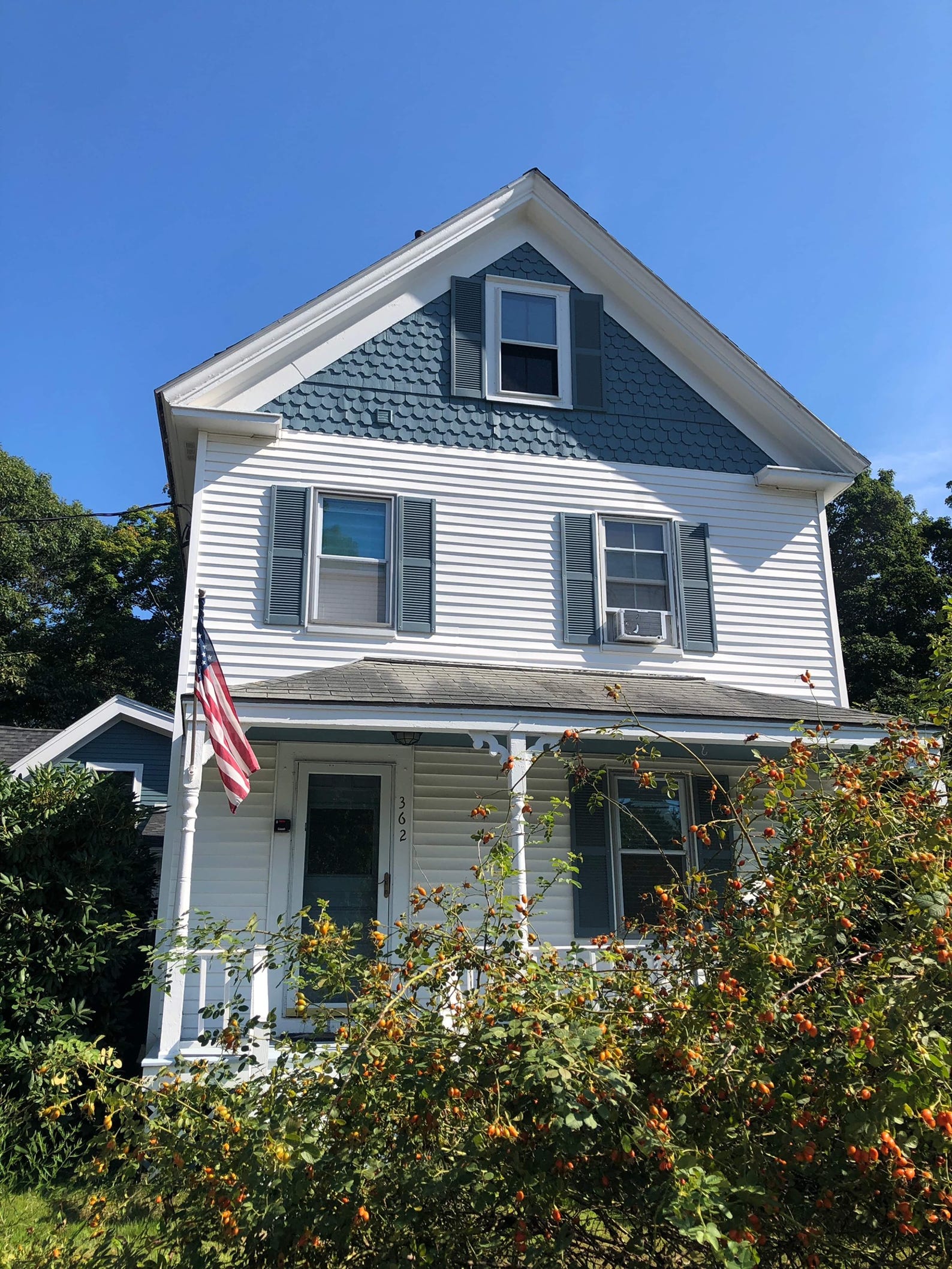
This house at 366 Sagamore Raod in Rye was byuilt by Supply Foss Trefethen. At the intersection of Sagamore and Clark Avenue, the spot was once know as Trefethen's Corner.
This house at 366 Sagamore Road in Rye was built by Supply Foss Trefethen. At the intersection of Sagamore and Clark Avenue, the spot was once known as Trefethen's Corner 
COURTESY OF THE PORTSMOUTH ATHENAEUM

He also worked for Frank Jones at the brewery and worked extensively for Alfred Langdon Elwyn at the Langdon-Elwyn farm (now the Urban Forestry Center).

As a farmer he supplemented his grocery budget and his income. Over the years, he expanded his acreage. He grew vegetables, especially potatoes, had fruit trees, and raised chickens. Toward the end of his life, he had 75 to 80 chickens and was selling eggs and meat regularly to friends, neighbours, and the Rockingham Hotel. 

Supply Trefethen was a diverse and active member of the community. He was also observant and opinionated. 

As a shipwright, he described the working day at the Portsmouth Naval Shipyard, including several workplace accidents, some resulting in death. 

As a farmer, he noted the weather on a daily basis and the price of eggs. 

As a resident, he recorded the evolutions of families, neighbourhoods and daily life. 

As a politician, he considered the effects of local and national events. 

All of these notes, experiences and musings are a wealth of information to genealogists and historians.

Transcribing, cataloguing Trefethen's diaries

Though maintaining a diary was common in the 19th century, not many diaries have survived over the decades. In fact, many diarists directed that their diaries be destroyed upon death. 

For years, Larry Keech has been transcribing the Trefethen diaries, owned by the Rye Historical Society (which has the originals in its collection). 

He not only deciphered the scrawling penmanship, but also edited for easier reading, and provided annotations for genealogy and historical context based on his extensive research. 

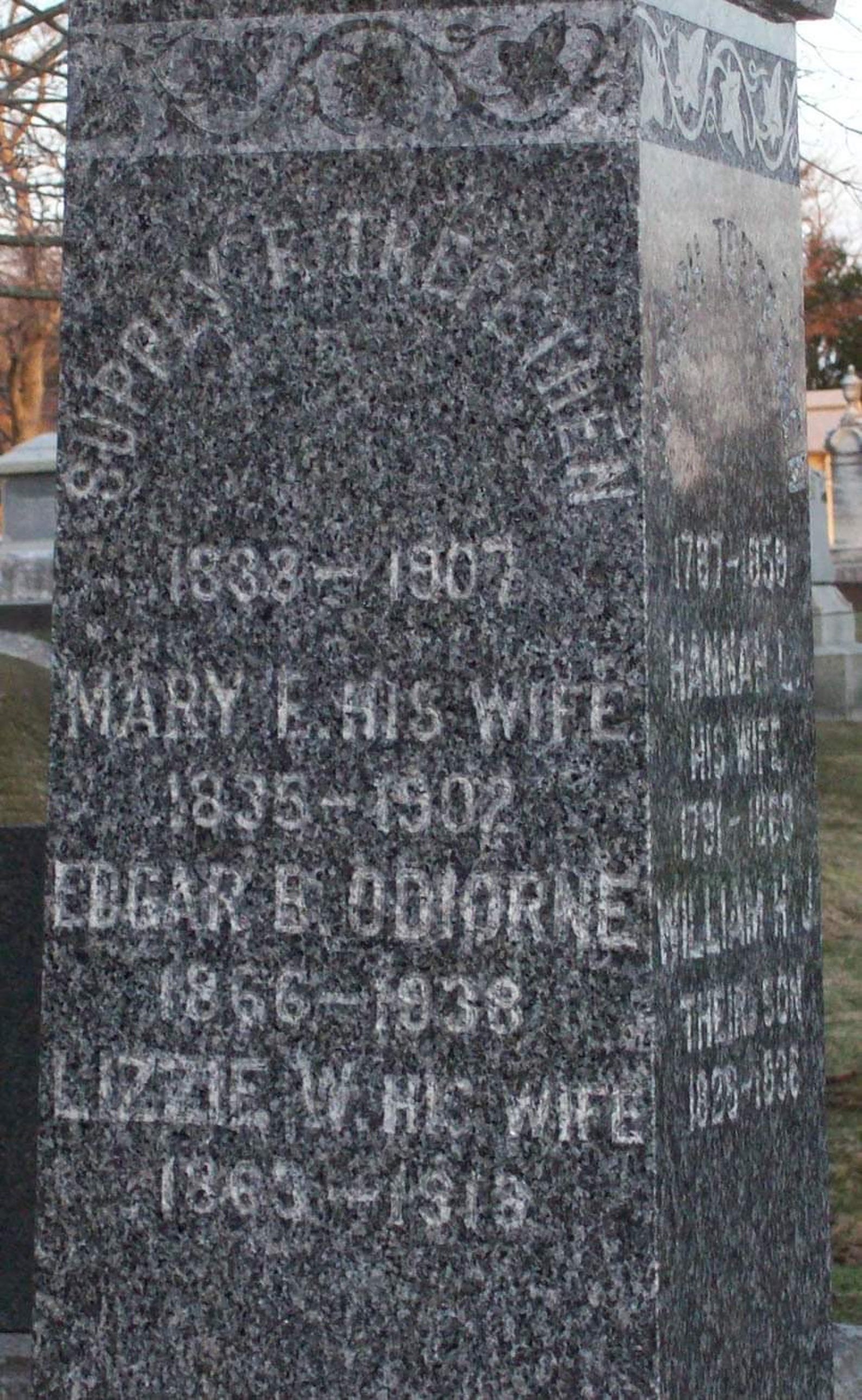
A photo of Supply Foss Trefethen's gravesite in Portsmouth's South Cemetery.
A photo of Supply Foss Trefethen's gravesite in Portsmouth's South Cemetery.  
COURTESY OF THE FIND A GRAVE WEBSITE

Portsmouth Athenaeum librarian Robin Silva then catalogued the 1,000-plus-page transcript, building a searchable cross-reference of people, places and events that is now available to researchers on the Portsmouth Athenaeum website portsmouthathenaeum.org. 

With 450 named people noted as well as almost 175 businesses, ships and localities, this is a rich look at life in the local area in the second half of the 19th century.

The Portsmouth Athenaeum, 9 Market Square, is a membership library and museum founded in 1817. The research library and Randall Gallery are open Tuesday through Saturday, 1 to 4 p.m. Masks are required. For more information, call 603-431-2538 or visit www.portsmouthathenaeum.org.

An excerpt from Supply Trefethen's diary

“Today has been the coldest day on record in Portsmouth. This morning at 6 o’clock the thermometer was 27 below zero in some parts of the city. There never was known to be so much ice in the Piscataqua River before. It is passable by ice from Pray’s wharf to Badger’s Island. But a little way above, hundreds have crossed and crossed for the fun or oddity of the thing on the ice, keeping up the sport all the forenoon, I was one of the numbers. In the morning I thought I would take a walk over to the mechanic’s shipyard on Nobles Island (where I work when we have the right temperature) to see if all was right and meeting some friends. They invited me to cross for the fun of the thing. I accepted and we embarked and had a fine trip as all the ice was quite smooth. We started from Nobles Island just at the stern of the ship on the stock and went to Badger’s Island, crossed Badger’s Island and back then down to the Navy yard and back, thinking it quite a novelty to hand down to antiquity.”

https://eu.seacoastonline.com/story/entertainment/2022/09/10/portsmouth-nh-athenaeum-portsmouth-naval-shipyard-worker-diary/7999457001/


Monday, September 5, 2022

Do you maintain a journal or diary?

From rvtravel.com

Do you write down your thoughts, or keep a diary of your activities on a regular basis? That’s what we are curious about today.

Here’s a definition of each of these terms we found doing a Google search. We think it’s pretty good. It says:

“A journal and a diary are similar in kind but differ in degree. Both are used to keep personal records, but diaries tend to deal with the day to day, more data collection really, and journals with bigger picture reflection/aspiration.”

Here’s an example, also found with a Google search:

“Regarding work and career, a diary might be about appointments, meetings and tasks completed. A journal, on the other hand, might be about big picture things, like your career goals, dreams and aspirations.”

“In a journal, you might write as if you were writing to a very dear, best friend, with what was on your mind.”

https://www.rvtravel.com/poll1068b/


Saturday, September 3, 2022

Dear diary: You belong in everyone’s lives

From baylorlariat.com

By Kameron Brooke | Reporter

At some point, we’ve all probably kept some sort of diary or journal — it’s OK, you can admit it. It’s not a bad thing. Whether it’s been kept up with consistently is another discussion, but overall, keeping a journal gives you a safe place where you have the luxury of being truly honest without the worry of a reaction.

In my experience, I have always been someone who loves to talk and express my thoughts. Keeping a journal was always second nature to me. As my thoughts come, I put them on paper and then let them go. I’ve had over 30 journals in my life, and each one reflects a different phase through growth, pain and happiness.

Journaling has become such an essential practice to me that I can’t go a day without it. Why would you want to do that? A valid question — and you certainly don’t have to — but journaling does encourage mindfulness, which helps you to be present, keep perspective and regulate emotions.

According to the Greater Good Magazine, “people had been keeping diaries long before scientists thought to put them under microscopes. But in the past 30 years, hundreds of studies uncovered the benefits of putting pen to paper with your deepest thoughts and feelings.”

Journaling is a simple practice that provides so many benefits and can open doors to other aspects of a healthy lifestyle. Getting started is simple: Make an effort to write every day. If you set aside a few minutes every day to write, it will help make a habit of journaling.

There’s no right or wrong way to keep one; write whatever feels good to you, as it is your private place to discuss and create whatever you want. There is truly power in opening up.

I understand why many people avoid journaling. It can be scary to face ourselves, not only confronting which external factors brought negativity into our lives but also being honest about the negativity we may have brought into someone else’s life.

It almost seems better to keep one’s emotions inside or to let them pass, and they will eventually pass, but they will always come again. So, it’s extremely beneficial to pursue a greater sense of meaning through journaling.

It’s important to understand journaling is a problem-solving tool. The negative emotions you were feeling prior to writing may still linger, and the problem may still exist. That being said, journaling forces you to organize your thoughts instead of having a collection of ideas and emotions circling in your mind.

A major part of our decision-making lies in our subconscious and intuition, which can be difficult to access, so working through one’s thoughts on a page creates clarity and makes us better at making conscious decisions.

Journaling is certainly not a guaranteed fit for everyone; it takes all types of people to make the world go round. However, this is one practice that is guaranteed to bring benefits. Hopefully, keeping a journal can even be the source of inspiration, self-acceptance, encouragement and problem-solving it has been for me for so many years.

I’ve seen the darkest and brightest parts of myself through my journals, and it has allowed for an immense amount of self-acceptance. We all have strengths and weaknesses; it’s important to understand what they are in order to improve our lives and how we function in each other’s lives.

I encourage everyone to keep a journal. It warms my heart to see fellow humans practicing something so beneficial. Having read this piece, if you’re not online ordering your next journal right now, what are you doing? Practice makes permanent. 

https://baylorlariat.com/2022/09/01/dear-diary-you-belong-in-everyones-lives/