Friday, May 27, 2022

Creativity And Self-Development: Why We Need To Keep A Diary And 5 Creative Ways To Do It

From kdrtv.co.ke

Although everyone has a smartphone that stores all the notes, keeping a diary is still helpful. There are many reasons why paper notebooks are superior to electronic ones. But most importantly, a day planner is more reliable and interesting, it develops a person creatively and gives emotional peace of mind. Here’s how you can get creative with a day planner and why it’s worth keeping it in the first place.


Bullet Journal

Designer Ryder Carroll created this planning system almost 10 years ago. Thanks to it, you can keep all your most important notes in one place and not get confused. It’s a mix of a day planner, to-do list, and personal diary. Not only is it handy to take notes but also to draw and even to sketch. Here’s how to design Bullet Journal better. 

The first pages are the place for the table of contents. The spread after it contains a six-month plan of the main things to do. Divide the page into three sectors with the names of the months. Then, the planning for the month’s events comes. On the left, write the numbers and days of the week in columns, events, and appointments. On the next page, write goals and plans for which you don’t know the exact dates yet. 

Next, add your daily activities. Under each date, write your important tasks, using a special notation system:

  • A black dot is a current task.
  • A blank circle is an event or meeting.
  • A long dash is a note.
  • An asterisk is an urgent task.
  • An exclamation mark is something important you should remember. 

In Bullet Journal, you can create collections (for example, interesting books or articles you would like to read), keep track of your expenses or track your habits. You can jot down anything you want in here, you can draw and sketch. Just be sure to number the pages and put each section in the table of contents.

The “Autofocus” System

This technique will help you to cope with the chaos in the notes, with it, you will never lose important events and ideas. Any notebook will do for such a diary. Write down all the tasks that first came to your mind. If some are tied to dates, indicate them. Once all the urgent tasks are done, open the notebook and look for the items on the list that you feel most passionate about. Cross off what has already been done. 

You can use this technique to write down your plans, dreams, interesting ideas, and so on. Keeping a diary doesn’t require much time, you don’t have to divide something into categories or memorize different designations. The “autofocus” methodology is suitable for chaotic people whose moods change rapidly, and planning isn’t their best trait.

Diary for Freelancers

This system is designed for freelancers and creative people. Each hour is divided into blocks: 45 minutes for creative work, and the rest of the time is allotted for chores, like washing dishes, cleaning, and laundry. If you work in an office, sort papers or make copies of important documents in these 15 minutes. 

Many tasks are subject to planning, then no extra time will be spent thinking. Mark not just “become a pro in a particular betting strategy”, but as follows: “Monday – gather general information about live betting in Tanzania, Tuesday – pick a particular strategy, Wednesday – watch how experts use it, Thursday – try implementing it yourself in a demo mode”. You should write down the activities that you should devote time to each day. The entries can be supplemented with drawings, colourful strips, or plant ornaments.

List of Things Not to Do

This method will help not to be dispersed on a lot of small ideas and choose only the most important ones. Divide tasks into three lists: important to-do’s, completed, and “not to-do’s.” Include no more than three items in the first section, less important items go to the “not-to-do” list. Write the completed tasks from the first section into the second one. This psychologically increases your productivity. You will see how your tasks are completed. 

This system allows you to figure out which tasks are important and which can be done later. This simple and convenient method is suitable even for beginners. But for those who like to structure everything, this methodology may seem chaotic. The diary can also be supplemented with stickers and pictures.

The 1-3-5 System

In such a diary, you can plan for the day a total of nine things. In the first place, there is the main task of the day (a mandatory one). The next three tasks are placed in order of importance. The remaining five tasks are small tasks to begin with, but only if there is some free time. What is not done is carried over to the next day. 

The advantage of this system is that it is convenient, as such a diary is quick to keep and easy to arrange in any notebook. So you learn to prioritise, even if you have never kept a diary before. This methodology will not suit too busy people. The limit of nine tasks will be too small, they will have to choose for themselves another system.

Why Keep a Diary

Keeping a diary is useful, it calms, and adjusts in a creative way. With it, a person has no fear that all the information will suddenly disappear. After all, gadgets can break, hang up, run out of power, and the information on paper remains unchanged. Knowing this, a person stops being nervous. He knows that important notes are always available to him. 

Affairs, dreams, plans, and even passwords are safer to record on paper. They are kept that way for decades, you can find everything you need even after a long time. It also calms you down and relieves your brain considerably. There’s no overabundance of information, you can easily focus on what’s important. It has been proven that people absorb handwritten information better. 

But one of the main pros of a paper diary is creative development, and room for imagination. In the electronic version, you can’t put a sticker, draw a funny picture or make thematic spreads. In a written diary, you can create and relax.


https://www.kdrtv.co.ke/entertainment/creativity-and-self-development-why-we-need-to-keep-a-diary-and-5-creative-ways-to-do-it/ 

Tuesday, May 10, 2022

I’m a gardening expert – here are ten easy steps to take right now to prep for summer

From thescottishsun.co.uk 

By Anita Markoff

GETTING your garden ready for summer might seem like a daunting task.

But it doesn't have to be, according to an expert.

There are some easy steps you can take right now to make sure your plants are blooming by the time the warmer weather arrives.

And May is the month to make that happen.

Chris Bonnett, founder of GardeningExpress.co.uk, said: "May is the ideal time to begin planting vegetables and mulch your existing plants for their longevity. You can also start to plant the last of your summer bulbs, carry on deadheading and create some natural pest deterrents.

"By aiming to get this prep done now, you can make sure your garden is ready for you to enjoy throughout the summer."

Here are 10 tricks which will make sure your green space is looking in the pink.

Keep a gardening diary

Write down what seeds you are sowing and planting this summer, so you are prepared when autumn rolls around.

Summer is a busy month for jobs around the garden, so keeping notes on what new plants you are growing will help you keep track.

Collect rainwater

Take advantage of any late spring showers by placing a large bucket or water barrel in your garden.

This way you will be able to water your garden easily during the hot months, even if a hosepipe ban gets put in place.

Tidy plant beds

Make sure to deadhead your spring flowers and keep them well watered.

This will mean your flower beds look fresh and have the longest possible life span.

Pansies, for example, can last until midsummer if they are properly maintained.

The expert says it's good to keep a diary of the seeds you're showing
3
The expert says it's good to keep a diary of the seeds you're showing

Grow some tomatoes

Keep some young tomato plants in the sunniest corners of your house before planting them in your garden at the end of May.

They will ripen just in time for the first barbecue of summer.

Quirky looking ones like the Costoluto Fiorentino can add some variety to your views.

Mow the lawn

If you have not started taking care of the grass yet, May is a good opportunity to tackle it before the hotter months.

Patience is key though, and it is best to gradually lower your blades of grass over the summer to give the garden a smooth finish.

If you attempt to cut it all in one go, it may turn out uneven.

Plant hanging baskets

If you want to add a spot of colour to your garden in time for summer, May is an ideal time to pick out types of flowers to compliment your space.

This is also a good solution if you have a limited amount of space to grow your blooms.

Open your greenhouse on warm days

Let some fresh air in to your crops to prevent them from suffocating on days when the sun is shining and greenhouse temperatures start to rise.

Make natural deterrents for pests

If you want pest deterrent that is poison free, there are two good natural solutions which will protect your growing plants.

You can scoop the flesh out of a melon or grapefruit, and leave it near your buds.

Slugs will be more attracted to the fruit than the flora, and you will be able to spot them munching the next day and remove them from your garden.

You can also buy natural wool pellets and place them around your plants as a barrier.

After they are watered they will expand and become an itchy deterrent insects will not want to go near.

Plant bulbs

May is the last chance to plant any bulbs, with warmer weather so close by.

If you want to have summer flowering plants in your garden, like gladioli, then prioritise planting these at the start of the month so they bloom in time.

Plant vegetables

May is a perfect month for sowing.

The expert suggests planting radish, cabbage, broad beans, beetroots, or swedes.

This should produce some excellent salads that you can enjoy in your little paradise in the sun.

It's the last chance to get bulbs planted
3
It's the last chance to get bulbs planted
https://www.thescottishsun.co.uk/fabulous/8826190/ten-tips-garden-before-summer/

Sunday, April 24, 2022

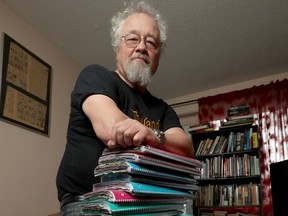
The COVID diaries — one man's journey, 25 notebooks and counting

From ottawacitizen.com

George Goracz works in the restaurant industry and is a dedicated world traveller (69 countries ticked on a map on the kitchen wall) so the pandemic truly gripped him — coming and going — at home, of dreams abroad.

“I was planning a trip to Mauritius,” we safely say, are not words from the casual tourist.

When the enormity of COVID-19 restrictions began to descend in March 2020, Goracz, 63, who has a fondness for writing, began to create a record.

“I thought this is an historic event. I just have to document this. So I went out to Shoppers and got three spiral-bound notebooks.”

Well, three turned into 10, and 10 has turned into 25 — and he isn’t done yet. In his small apartment in Lowertown, Goracz has stacks of notebooks on the floor, and weeks of newspapers yet to sort through. The notebooks are a combination of hand-written diary, pasted news clippings, editorial cartoons and collections of photographs.

They capture every wave, the vaccine milestones, the number of deaths, the yo-yo ICU counts, his own travails.

“For me, it was trying to make something worthwhile out of this horrible thing. A silver lining might be someone able to come back, years from now, and read a first-hand account of how this affected us.”

He is, in fact, on to something.

In the U.K., just before the outbreak of the Second World War, a project called Mass Observation had hundreds of ordinary citizens keeping diaries of their daily lives, no matter how mundane, that later proved invaluable for historians and researchers looking into war-time social change.

George Goracz has been keeping a journal since the COVID-19 pandemic began, more than two years ago.

Goracz was (and remains) a server at Feleena’s Mexican Cantina on Bank Street. He and co-workers lived the ups-and-downs of the early restrictions, not knowing if the initial closure would last weeks, or months, or prove economically fatal.

“I will make it through this. I will get by. I will get strong again. Went to work, found the restaurant was closed. I was in shock,” reads one of his first entries.

By the end of April 2020, he was settling into a COVID routine, and — like all of us — struggling to understand how transmissible the virus was, especially on solid surfaces, like counters or doorknobs. Sample entries from that month:

“The streets are deserted, almost all stores are closed, no one can be closer than six feet. I hold my breath passing people on the street or going on the elevator. I wish I could go down the street and have a pint of Keith’s.

“Hard to believe that we’re entering our fifth week since the shutdown. It’s like a different life now … stores closed, restaurants closed, no traffic on the street. That other life seems so foreign to me now.

“My cleaning routine when I get home now. Take off clothes, wash hands, take a shower, disinfect phone with alcohol on bathroom towel. Wipe door-handle and lock, disinfect any food or beer I bring home with sanitizer or paper towel, wash handle of my sandwich cooler for sixty seconds. Wash my hands often for sixty seconds too.”

Goracz said he was able to continue working with a construction company (a second job) but writes of the hardship caused by the loss of his restaurant income.

“I’m at work now but limping quite a bit (sore foot). Good thing $900 CERB came today and I could pay my Christmas bills.

“I like the downtime but I’m really missing the money and have to pay bills. I don’t want to hit up the federal government for more money, in case I have to pay it back.”

A movie buff, he later laments the closure of theatres.

“First movie in a long time: I choked up a bit when I crossed this threshold. It’s been five months since I’ve been here and I (usually) come three to four times a month.”

There are also entries about navigating to his cottage near Perkins, Que., when interprovincial travel was restricted, and the isolation felt by his 91-year-old mother. There are also many segments about the Freedom Convoy in February, when he could hear truck horns from 7 a.m. until midnight.

“On the fifth day, I just blew up. I was boiling mad.” He travelled to the main blockade on Wellington Street and proceeded to give any trucker a single-digit salute and a piece of his mind. (The diary has several photos.)

“I yelled at every one of them.”

Goracz plans to leave the journals with the National Archives of Canada. He is, fingers crossed, hoping to travel overseas later this year.

https://ottawacitizen.com/news/local-news/egan-the-covid-diaries-one-mans-journey-25-notebooks-and-counting 

Friday, April 8, 2022

5 Reasons Diary Writing is a Great Habit To Imbibe. Start Today

From news18.com

It allows you to practice writing styles, flesh out ideas, and preserve a record of occasions you don't want to forget.

Everyone has a different motive for keeping a diary. There are several types of journals to maintain. From trip journals to dream journals and prayer diaries, it doesn’t even have to be about anything in particular.

There are several advantages to maintaining a diary, but it is most beneficial when utilised as an outlet for creating, experimenting, and managing various aspects of your life. It allows you to practice writing styles, flesh out ideas, and preserve a record of occasions you don’t want to forget or stuff you need to remember. 

Here are a few of the reasons why you should begin writing a diary today:

Collect your thoughts: 

Diaries help us arrange our ideas. You may keep track of daily happenings, as well as your thoughts and feelings regarding certain experiences or viewpoints. It allows you to tag and archive your thoughts, allowing you to find whatever you’ve written in a moment. They may be memory banks for anything you want or reminders for whatever you need.

Improve your writing skills:

Journaling allows you to hone your writing skills. Starting a diary is the finest way to practice or enhance your writing skills. You might not have the ideal topic. All you have to do now is start writing your ideas in the diary. The more you write, the better your writing gets.

Set & achieve your goals:

A diary is an excellent place to record your aims, goals, dreams, and new year resolutions. By maintaining them in a diary, you can track your progress and stay inspired to reach your next goal!

On-the-fly recording of ideas

The advantage of maintaining a diary is that you can write all of your ideas at any time and anywhere. You can jot down ideas in your notebook as they occur to you. You may then return to these concepts later to explore for additional connections, conclude, or perhaps acquire a new idea!

Relieve stress.

Writing your emotions allows you to “brain-dump" your worries, disappointments, and sorrows into a diary. This might assist you in reducing and releasing any tension that has built over time. You may also make a mood tracker in the diary to identify your intensity of feelings.

https://www.news18.com/news/lifestyle/5-reasons-diary-writing-is-a-great-habit-to-imbibe-start-today-4948517.html

Wednesday, March 30, 2022

1942: Churchill's darkest hour

From historyextra.com

If 1940 was the year in which Winston Churchill’s reputation was forged, 1942 was the one in which it was almost destroyed. Taylor Downing chronicles a terrible period for the prime minister – both on the battlefield and in the court of public opinion


On Saturday 14 February 1942, Japanese forces advanced to a point just a few miles from the city of Singapore. But in a corner shop in the Yorkshire town of Dewsbury, the conversation was about events much closer to home. Two days earlier, three large German warships, the Scharnhorst, Gneisenau and Prinz Eugen, had sailed up the English Channel and passed through the Strait of Dover in broad daylight. It was the one topic every customer in the Yorkshire grocery store wanted to talk about. “What have they been doing to let them ships escape? They’ve made fools of us, haven’t they?” exclaimed one woman.

The fact that Britannia no longer seemed to rule the waves – could not even stop German warships from passing within a few miles of the white cliffs – caused indignation. “By gosh, it’s time we bucked up, what with one thing and another – there’s only the Russians doing owt,” commented one male customer. “They wouldn’t have let them slip, you can bet.” Meanwhile, a woman complained that “it happened under our noses”.

These words were noted by the sales assistant, who was keeping a diary for Mass Observation, the social research project that recorded everyday comments by people across the land. Such remarks, plus other data, were used to provide regular assessments of morale for the Home Intelligence unit of the Ministry of Information. Today, Mass Observation records offer a unique insight into the concerns and attitudes of British people throughout a tumultuous year of the war.

A series of blunders and abysmal communication failures had allowed the German warships to pass within a few miles of the English coast. It was a humiliation for the Royal Navy. The press erupted in outrage, and the normally loyal Daily Mail led the charge with an attack not just on the government but specifically on the prime minister, Winston Churchill. Up to this point, most government criticism had avoided attacking Churchill himself. But now the Daily Mail asked: “Is it any longer true to say that we trust the prime minister, though we do not trust the government?”

Singapore surrenders

More bad news arrived that same weekend. After two months of retreat down the length of the Malay peninsula (what’s now mainland Malaysia), on 15 February the supposedly impregnable fortress of Singapore capitulated. Almost 100,000 British and imperial troops yielded to a far smaller Japanese force. It was the largest surrender in British history.

No one could hide a sense of shame – including the prime minister, who later said that the fall of Singapore was “the greatest disaster to British arms which our history records”.

Japanese troops advance through Burma (now Myanmar) in 1942
Japanese troops advance through Burma (now Myanmar) in 1942, following their invasion. (Image by Getty Images)

On becoming prime minister in May 1940, Churchill had also appointed himself minister of defence. Every aspect of Britain’s military performance came under his supervision. He was responsible for the strategic direction of Britain’s war effort, so could not escape blame when things went wrong.

On a Royal Air Force (RAF) base at Digby in Lincolnshire, a young Women’s Auxiliary Air Force (WAAF) officer detected a new tone among her colleagues after the surrender of Singapore. As a Mass Observer, she dutifully wrote down what she heard. “Up to now,” she recorded, “the government has been criticised often, but always with the reservation ‘Churchill’s all right’. But now Churchill is condemned with the rest.”

Britannia no longer seemed to rule the waves. It could not even stop German warships from approaching the white cliffs

As one young WAAF said: “A month ago, if people had been talking about Churchill like this, we’d have called them fifth columnists, but now...” One of her friends said: “It’s time we had a new government – Churchill’s taking too much upon himself these days.” Another was reported as saying: “He roared all right in his time, but he’s outlived it.”

Churchill was thrown into a mood of despair by the disasters of that fateful weekend. After a cabinet meeting on 16 February, Foreign Office civil servant Sir Alexander Cadogan wrote in his diary: “PM truculent and angry – and havering [vacillating].” The next day, Churchill told the House of Commons that he would not allow a debate on the fall of Singapore, aiming to avoid a public discussion at such a tense time “in a mood of panic”. MPs were outraged. Labour MP Frederick Bellenger told the prime minister that “there is in the country, and indeed in the house at the present moment, a feeling that we have not got the right kind of persons to direct this war to a satisfactory conclusion... we have not got the right kind of government.” At this, the house cheered.

“Papa is at a very low ebb,” Churchill’s daughter Mary wrote after a private lunch with her father later that month. “He is not too well physically and he is worn down by the continuous crushing pressure of events. He is saddened – appalled by events.”

Outclassed again

The military disasters continued throughout the spring of 1942. In Burma (Myanmar), British and imperial troops were once again totally outclassed by mobile Japanese forces. After the capture of Rangoon on 9 March, British-led troops retreated 900 miles across jungles, mountains and ravines. When they crossed into India at the beginning of May, they looked as “gaunt and ragged as scarecrows”, according to their commander, General Slim. It was called the “longest retreat” in British history, and it left the Japanese at the gates of India.

The 'longest retreat' in British history, from Burma (Myanmar), left the Japanese at the gates of India

When a Japanese naval task force of five carriers and four battleships sailed into the Bay of Bengal at the start of April, panic ensued. In three days, 23 merchant ships sailing between Madras (now Chennai) and Calcutta (Kolkata) were sunk. Many began to fear that an invasion of India was imminent. An Eastern Fleet was hastily assembled but it was no match for the Japanese navy and their dive bombers, known as “Vals”. Two British heavy cruisers were sunk off Colombo in Ceylon (Sri Lanka), and a light carrier and a destroyer went down outside Trincomalee. All of the ships were lacking effective fighter cover. The admirals seemed to have learned nothing since the loss of HMS Repulse and the Prince of Wales four months before – sunk by Japanese bombers in the South China Sea with the loss of hundreds of lives.

Churchill was plunged further into despair by the devastation inflicted by the “Vals”. When RAF bombers failed to score any hits on the German battleship Tirpitz, lying up in a Norwegian fjord, he sent an angry note asking for an explanation of “how it was that 12 of our machines managed to get no hits as compared with the extraordinary efficiency of the Japanese [air] attacks?”

Under siege

Back in the Mediterranean, the island of Malta was under intense siege. In the early months of 1942 the British naval base was put out of action, and the cruiser squadron and submarine flotilla based there withdrew. Continuous air raids – sometimes more than a dozen in a day – devastated the island’s three RAF airfields. The city of Valletta was pulverised, its narrow streets reduced to rubble, and many of the island’s architectural jewels were destroyed. One convoy bringing supplies had to turn back. Three vessels of another convoy finally got through, carrying vital supplies of food, ammunition and fuel. But as Maltese dockers unloaded these ships, the Luftwaffe attacked again – and within 72 hours all three vessels had been sunk, with most of their precious cargo lost.

Supplies did, however, continue to reach the Eighth Army, which was contesting the see-saw desert war fought up and down the Libyan coastline. A huge base was built up around Gazala and Tobruk, with vast amounts of fuel, rations and ammunition. Infantry units were brought up to strength, and armoured brigades were re-equipped with new tanks including American Grants. In Cairo, General Claude Auchinleck waited for supplies to arrive but his foe, German general Erwin Rommel, was less patient.

A field gun bombards German tanks during the second battle of El Alamein, an Allied victory that turned the tide of the war in the desert. (Image by Getty Images)

On 26 May, he launched an offensive at Gazala. At first it faltered, and there was an opportunity for a counter-stroke that could have smashed the German and Italian forces. But Eighth Army commander General Neil Ritchie hesitated and, by the time he attacked, Rommel had reorganised his position. By 8 June, 220 British tanks had been knocked out, including many of the Grants. Churchill cabled Auchinleck from London: “Retreat would be fatal. This is a business not only of armour but of willpower.”

Sadly, the necessary willpower was lacking. Ritchie led a retreat to the Egyptian border but ordered Tobruk, well supplied and garrisoned, to hold out, as it had done the previous year. Rommel had a different idea. On Saturday 20 June, he launched an assault on the garrison. Following a shattering air raid, his engineers advanced to clear mines for his panzers. By afternoon, they had reached the harbour. The following day, the British surrendered. In 1941, Tobruk had held out defiantly for eight months. In June 1942, it collapsed in just one weekend.

Churchill was at the White House with President Roosevelt when the news came through. Some 33,000 British-led troops had surrendered to an Axis force of perhaps half that size. Churchill was shattered. “This was one of the heaviest blows I can recall during the war,” he later wrote, adding: “Defeat is one thing. Disgrace is another.”

Summer of discontent

Across the country, faith in Churchill’s leadership was crumbling. Mass Observation reported that July was “a month of discontent and disappointment”, recording a 55-year-old man as saying that: “We’ve made a balls of it everywhere.” A middle-class woman keeping a diary for Mass Observation in Hampshire recorded a neighbour saying that “she thought we would be under German rule here before too long”. Another friend “pleaded guilty to having lost faith in Churchill”.

The military debacles created a major political crisis for the prime minister and his government. One MP picked up “an atmosphere of disappointment, bewildered rage and uneasiness” in the house. A vote of no confidence was put down. The Labour MP Aneurin Bevan summed up the mood of many with a memorable aphorism: “The prime minister wins debate after debate and loses battle after battle. The country is beginning to say that he fights debates like a war and the war like a debate.” Despite the rhetoric, Churchill easily defeated the no confidence vote.

A friend of Churchill opined that: 'If we are beaten in this battle, it’s the end of Winston'

However, a credible alternative leader had emerged. Sir Stafford Cripps was an austere figure and an able communicator who captured the mood of the nation at this point of the war. Moreover, having been ambassador in Moscow until the beginning of the year, he cleverly associated himself with heroic Soviet resistance to the German invader, in contrast to repeated British failures. Mass Observation recorded that he was seen as “the first alternative leader-figure since the fall of Chamberlain”.

With a new offensive due in Egypt, Churchill desperately needed a military victory. Brendan Bracken, a close friend and supporter, said to a colleague: “If we are beaten in this battle, it’s the end of Winston.”

After a tense few months, though, Churchill finally got what he needed. In early November, Montgomery’s Eighth Army smashed the Axis forces at Alamein. Four days later, in a campaign dubbed Operation Torch, US troops landed in French North Africa (in what’s now Morocco and Algeria). The fighting in the desert was a long way from being over but victory looked increasingly certain. Churchill’s standing quickly revived, and by mid-December a Gallup poll recorded that satisfaction with Churchill’s leadership had been fully restored.

It was an upbeat end to an awful 12 months. 1940 is usually viewed as Churchill’s most difficult year as prime minister, marked by the fall of France, the Battle of Britain and the Blitz, but in fact it proved to be his “finest hour”. It’s often imagined that from that point he enjoyed plain sailing along the long, slow route to victory in 1945. But that was not the case. Churchill’s blackest hour came in 1942.

When, in 1950, he dictated his memoir-history for this period of the war, he described the long run of disasters in 1942 as “galling links in a chain of misfortune and frustration to which no parallel could be found in our history”. He reflected that, if he had been dismissed during the year of military disasters, he would then “have vanished from the scene with a load of calamity on my shoulders”. But Churchill survived. Military victory brought a revival of his political fortunes. As he later wrote: “Before Alamein we never had a victory. After Alamein we never had a defeat.”

Taylor Downing is a writer, historian and broadcaster. His latest book is 1942: Britain at the Brink (Little, Brown, 2022)


https://www.historyextra.com/period/second-world-war/1942-churchill-darkest-hour-reputation-public-opinion/


Friday, March 25, 2022

Diary from Ukraine’s struggle

From voxeurop.eu

A group of students from Lviv, a major city in western Ukraine, are keeping a collective diary for Voxeurop. As far as the situation allows, they write about the Russian army's attack and its impact on their daily lives 


25 March 

My generation

Kateryna Panasyuk

What will happen after the war? Ukrainians don’t ask this question. We ask: what will happen after we win? It makes such a little difference verbally yet such an important message stands behind these words. Ukrainians don’t give up or give in, cowardice is not an option here. Oh I do get a rush when I say this, you know. It’s true. 

Personally I would say there aren’t more than one or two things I love more than my homeland; this land, even this soil itself, is truly the dearest to me. A colleague of mine, Alex from Kharkiv, recently said “What will I say when my children, nephews, grandchildren ask about the war and my participation in it? Will I say that it was interesting, but somehow it passed by me because I spent most of it listening to lectures via Zoom and working on deadlines? Seriously?!”, it was a thought of his in the context of our conversation about studying during war. 

It surprised me, I never thought everyone has these thoughts, but it turns out they do. I prefer to keep learning, but the thought of children… Every time I feel like giving up, I remember my generation must be the last one to suffer from Russian imperialism. Our children will not, their children won’t either. They will live on this land freely and they will love it so very deeply.


24 March

Daria’s grandpa and the news

Hanna Shypilova

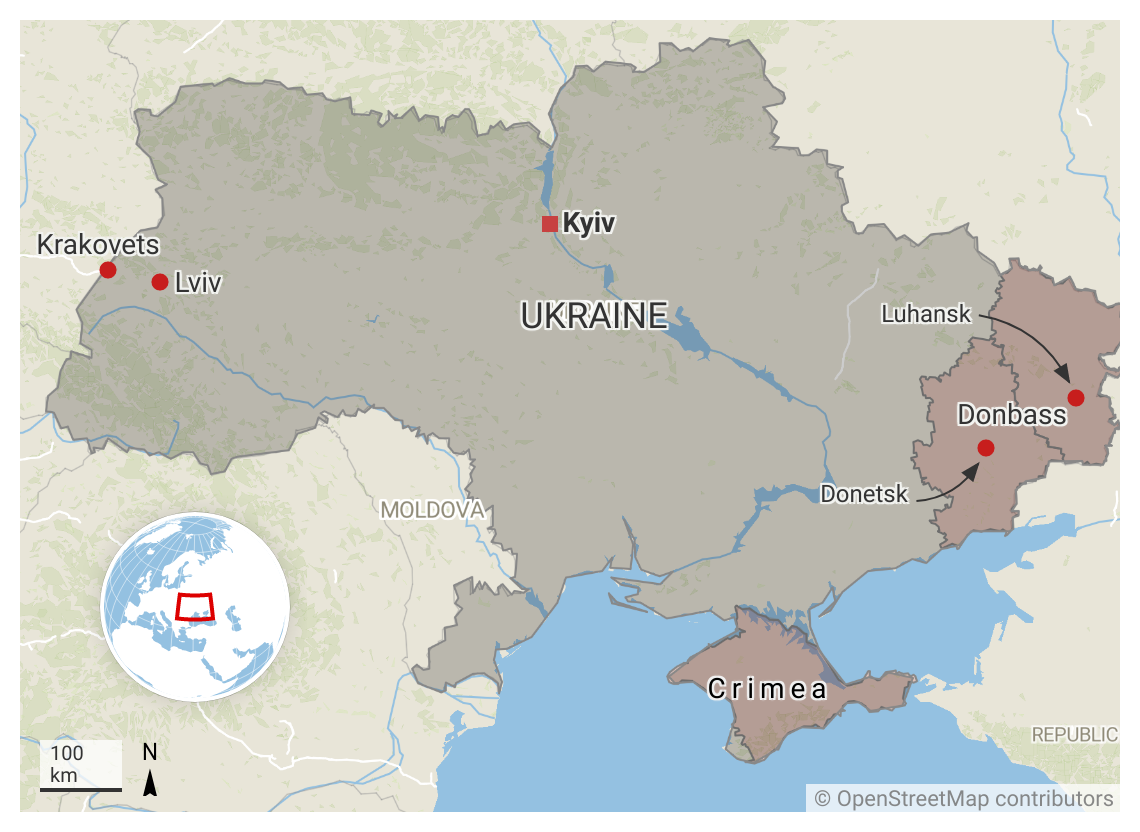
Daria is 19 years old. In 2014 she and her parents were forced to leave their home city, Luhansk, because of the Russian invasion. Now they live in Kyiv, whereas her grandparents moved to Russia. This particular day has separated them not only territorially but also mentally and politically. 

On 24 February the war came into Daria’s life for the second time. Her grandpa called them in the morning, wondering how they were. 

“Later, we heard a loud explosion next to us. There were already some videos of it on the Internet and at that time Kharkiv was already being heavily bombed. We sent the video and photo to my grandfather, to which he replied that it was all fake. He spoke with all those phrases that are imposed on Russian television: our President Zelenskyy is a drug addict, we are bombing ourselves. All the rest is nonsense for him.”

Daria’s grandpa always supported Russia. He even tried to pursue her to study in Rostov, because life with “Ukrainian neo-Nazis” is unacceptable to him. 

“He does not miss a single news release, and there are morning, afternoon and evening ones. We have not been able to convey the truth and reality to him since 2014, and now everything has only gotten worse. I don’t want to put up with this, but he became a real victim of propaganda. I still respect and love my grandparents, because they are my family. But while he is watching Russian propaganda, he supports everything that is happening now in my country, where children, women and other civilians are being killed.”


23 March

A Story from Mariupol

Hanna Shypilova

“There was no access to drinking water in the city for more than a week, so we started going to the river to collect water.  One day when we went to the river and the shelling began. We were lucky, but a shell killed three people who were higher up the hill. On the way back home, we saw many people covered with sheets. They were killed by shells”.

That is the story of a 30 year-old Julia, published by Hromadske. Julia has lived in Mariupol all her life. On 24 February, when Russia launched a full-scale war, the first shells were dropped on her city. Since 2 March, the local people's task was to survive without connection and access to water, gas, and electricity. Only on the 20th day of the war, an opportunity to leave Mariupol appeared. 

“I went with my boyfriend and his sister. We cooperated with several other young couples with children. We heard that the road is dangerous, part of it is mined, but it could be seen. There was no thought about whether it was scary to go or not: every day we went to bed and did not know if we would wake up. When you know that there are people who have left, you have hope.” 

Now Julia is in Zaporizhzhya, but more than 300,000 people in Mariupol still need food, water, and medicine, while the Russian army is blocking access to humanitarian aid.


21 March 

Bohdan, volunteering on the Ukraine-Polish border

Khrystyna Dmytryshyn

“When Russia started a full-scale invasion of Ukraine, I dedicated my time to helping Ukrainian refugees at the Krakovets checkpoint. There, more than 2,000 people cross the border daily. The hardest work is when it is cold outside. You have to inform all the people with small children in line that they can go to the tent where it is warm, they can drink tea and eat well”,  Bohdan, a young Ukrainian volunteer, told me.

“As volunteers, we always carry small children in our arms to help the parents. Those scared kids are shaking because they are freezing. At night, we put them to sleep with their parents at our volunteer base, where they may warm up. We also give refugees clothes and help to find a doctor. There are many Polish doctors whom we help with translation”, Bohdan added.

“I remember very well one man leaving the country with his two little daughters. It was cold outside, but he did not want to enter our warm tent. However, he agreed later on. He talked quietly and kept a stone face. The man was running away from Kharkiv because the Russian army had destroyed the apartment where he lived. His wife died of cancer a few years ago, and he had to prove this fact with a document to be able to cross the border. I think he was ashamed to leave, but he had to; he is the only parent to his daughters. I think he will come back when we win.”


20 March

Children of war

Marta Belia

From time to time, the local volunteer centre, where I go to help, organises activities for children. Usually, participants are children from our city, but there were many displaced children this time. Children who were forced to leave everything because of the Russian aggression. They are the same children, they are just as enthusiastic about drawing and running, but you can see that the eyes of these kids have already seen the war and felt its consequences.

The war affected them personally. They are very cheerful and talkative, but there is a sense of adulthood in their words. These children calmly and thoughtfully speak about relatives: fathers, grannies, siblings – who remained in the hot spots, who refused to leave.

They describe how they heard the explosions and how they left their cities. I could barely hold back the tears as I listened to them, but they continued the story calmly. They are still so small, but a lot has happened to them, and they endured it bravely.

I have to admit, I cry and stress because of less horrible things: the air alarm in the middle of the night, horrible news I read; but these children are calm and balanced, although they have suffered much more.

That's why these children impressed me. I'm sorry that the war forced them to grow up too soon, but I'm stunned by their resilience. And I really want everyone who took their childhood away from them to be punished.


18 March

Studying in times of war

Kateryna Panasyuk

It’s incredibly difficult to study now, but I’m happy to do it. It happens that my family and I are blessed with relatively quiet skies and the warmth of our own home – for now. Every night my city, Lviv, wakes up to the sound of sirens. Every night I get yanked out of the warmth of my bed by a horrible rush of adrenalin, change clothes, put on the warmest socks, grab my backpack and run down 8 floors to spend up to 4 hours in a cold bomb shelter. Regardless of all this, my mind is still thirsty for knowledge. It’s always been, but now it’s fuelled with anger. There is no way I will let Russia stop me from reading and learning. There is no way I will let anyone make me useless or less intelligent. I’m not too strong physically, I can’t shoot well and I’m no doctor. But when the time comes, I want every Russian to pay the price for what they did and every Ukrainian to live in a country they deserve. Who else will do it if we stop learning now?

Olexandra Besarab

I understand very well why my university is resuming studies, it is really necessary

But personally, my story – I can not do it. I can't study, not at all. I feel like I'm wasting my time just because the information doesn’t reach my brain, because my head is full of other things.

Nikita Vorobiov

The format which is now practiced in my university works well for me. All lectures are being recorded, so I can always watch a recording when it’s convenient. For example, a student can work during the day and study in the evening. There is also a big relief regarding the deadlines: some assignments were postponed or taken down completely. There is not too much pressure on students now. I live abroad now, no running down to the bomb shelter for me now. But we will see how it goes next week when I come back to Ukraine. For now I think we simply cannot afford to stop studying in these circumstances.

Roman Rozhankivskyi

I feel this bottomless fatigue. My mind finds comfort in involuntary deafness. I hear sounds, but I don't catch their essence. It's as if I'm falling asleep to the voice of the lecturer. And the noise of the Zoom call drives me crazy. I don't have the strength to think about homework or the curriculum. It is difficult for me to develop now. Sometimes I ignore people because of oversaturation with stimuli. And sometimes I experience a phantom air alarm. It feels like it's about to begin. I hear high-frequency sounds and it becomes so scary.


16 March

Nikol, seeking for help in Mykolaiv

Khrystyna Dmytryshyn

Today, I'd like to share this excerpt I translated from a story I've read on Hromadske, an independent news outlet. It was written by Ksiusha Savoskina, and I believe it tells a lot about the situation in Mykolaiv:

“Hi, my name is Nikol, and I need some warm clothing,” said a girl coming to our volunteer centre in a small town in the west of Ukraine. We started opening boxes for her, showing all kinds of sweaters and coats, but she ignored that. Nikol picked a blanket for herself and one for her 2-year-old sibling. “Can you imagine that a small part of a ballistic missile fell right by my high-rise in Kyiv?”, she said with fear and excitement at the same time.

After we hardly gave Nikol two packages of warm clothes, her mom came to the room. When we brought her hair care box, the woman’s hands started shaking terribly, and she cried. “I did not wash my hair for almost two weeks. I cannot even remember what shampoo I used to buy. I am afraid to take a bath and leave my children alone. I hear bombing constantly in my ears. Did you hear it tonight?”

It was the second day the family was spending in Mykolaiv, a small town in the Lviv region. That night, the Russian missiles bombed the Lviv region for the first time. So far, I have concluded that seeing refugees is the most complicated and emotionally painful thing you face during your life. Especially when those refugees are running away from the war that is going on in your country, and you cannot even assure them that the country’s region they came to is a safe place.”


15 March

Two testimonies

Anna Valchuk

Today, I want to share the testimonies of two girls I met earlier in Lviv:

Nadila, 21: "I’ve started volunteering at the Lviv railway station since the early days of the war. At the beginning of that experience, I was highly offended by any reproach, raised voices, pushing, or cursing. First days on the railway station were chaotic: both in people’s heads and on the platforms. That mess exacerbated all the feelings. I burst into tears many times for various reasons: for someone is leaving and someone has to stay; for there are those hastily rushing forward, and others humbly waiting for hours when their turn comes; some are sincerely grateful, and some think what is given to them is not enough.

What struck me most was the short dialogue with a girl my age who was leaving on the fifth day of the war. 

She met me, shook my hand, and said with a friendly smile, 'Thank you for what you’re doing.' 

I cried."

Diana, 19: "After my university became a shelter for students’ families from cities where hostilities occur, it was my first time I got acquainted with many refugees. Besides, many friends volunteer at various spots, including refugee centres.

Many of them join the volunteer community at the university – and that’s great! 

After all, it allows going the limit, even after resuming studies and work. People are mainly relatively calm, sensible, and happy to talk. Children are primarily cheerful and active. 

In my opinion, Lviv welcomes people from other regions with great dignity. Residents open many hosting places on their initiative, even in gyms, studios, etc. And many people I know personally provide shelter in their homes. Those who have a car regularly help people get from the station to the border."

14 March
Sorry for not sending new material yesterday. I will send more today. Our region had an air strike for the first time. We are okay, but it is somewhat difficult to keep my schedule going with 4+ hours in a bomb shelter. Sorry for the delay once again. – Kateryna

10 March

Maternity Hospitals and Infirmaries as Military Targets

Alina Voronina,Vira Saliieva

While Russians are claiming they only damage military targets, more and more Ukrainian civilians, including women and children, suffer from the bombings every day. The maternity hospital and the children’s hospital in Mariupol were bombed by the Russian military forces on 9 March.

At least 3 people died, with 1 child being among them. There are 17 injured people, and the obstruction removal still continues.

“How did [those hospitals] threaten the Russian Federation? Were there Bandera children there? Pregnant women were going to shoot at Rostov? Did someone in the maternity hospital humiliate Russian-speakers? What was that? Denazification of the hospital? This is already beyond atrocity," said president Volodymyr Zelensky in his speech. He also claimed that the air bomb thrown on the maternity hospital is the major act of the genocide of the Ukrainians.

Innocent people all over the country just like us, simple students, are beyond terrified with the ruthlessness of the attack. "They crossed all the borders a long time ago, and I thought that none of their actions could impress me anymore. I was wrong”, says Oleksandra Besarab. She is a second-year politics student at Ukraine Catholic University (UCU), and Mariupol takes up a special spot in her heart; she took part in the ULA course there. “A maternity hospital. I can't even get my head around it. When I was scrolling through photos and videos, I felt nothing but emptiness and pain that couldn't be expressed through words. We won't forgive. For every child who wasn't given a chance to be born and explore life. For every mother who lost the most precious gift she had. Nothing on the Earth could justify this."


7 March 2022

We Are Ukraine, and We Love Freedom: A Strong No to Evacuation to Russia

Hanna Shypilova, Khrystyna Dmytryshyn